She was five days short of her thirty-seventh birthday. Hayden Panettiere was found unresponsive at a residence in Greenville, South Carolina on Sunday afternoon, and by the time help arrived there was nothing anyone could do. Greenville police say officers and EMS responded to a report of an unresponsive woman at around 1:51 p.m. and that she was pronounced dead at the scene. She was 36. For anyone who came up on network television in the back half of the 2000s, that sentence refuses to sit right, because Hayden Panettiere played the girl who could not die.
Her father, Skip Panettiere, said it better than the rest of us are going to manage. “It is with profound sadness that we share the tragic passing of our beloved Hayden,” he said. “She was an incredible light and a force of nature who brought immeasurable love and joy to all who knew her, and to the millions who watched her onscreen.” Her representative confirmed the death and said the investigation is ongoing, with the Greenville Police Department and the Greenville County Coroner’s Office working the case together. Police have said the preliminary investigation shows no signs of foul play or suspicious circumstances.
A cause of death has not been determined and the coroner has not filed a report, so we are not going to speculate about one here. There is already plenty of that circulating and none of it is knowledge. What we can talk about honestly is the thirty-two years of work she left behind, which is a longer career than most actors twice her age ever get to build, and the fact that she spent the last stretch of it telling the truth about how hard some of it had been.
For anyone who came up on network television in the back half of the 2000s, that sentence refuses to sit right, because Hayden Panettiere played the girl who could not die.”
She started before most kids start school. Panettiere was on “One Life to Live” as Sarah Roberts at four, moved to “Guiding Light” as Lizzie Spaulding, and voiced Princess Dot in “A Bug’s Life” at nine, which is a genuinely absurd sentence to write about anyone. Then came Sheryl Yoast in “Remember the Titans” in 2000, the coach’s daughter who knew more football than the grown men around her, and if you are of a certain age that performance is welded into your memory of that movie. The child-star pipeline chews people up and spits most of them out by twenty. She kept working through it, stacking up “Racing Stripes,” “Ice Princess,” “Bring It On: All or Nothing” and a recurring run on “Malcolm in the Middle” before she could legally vote.
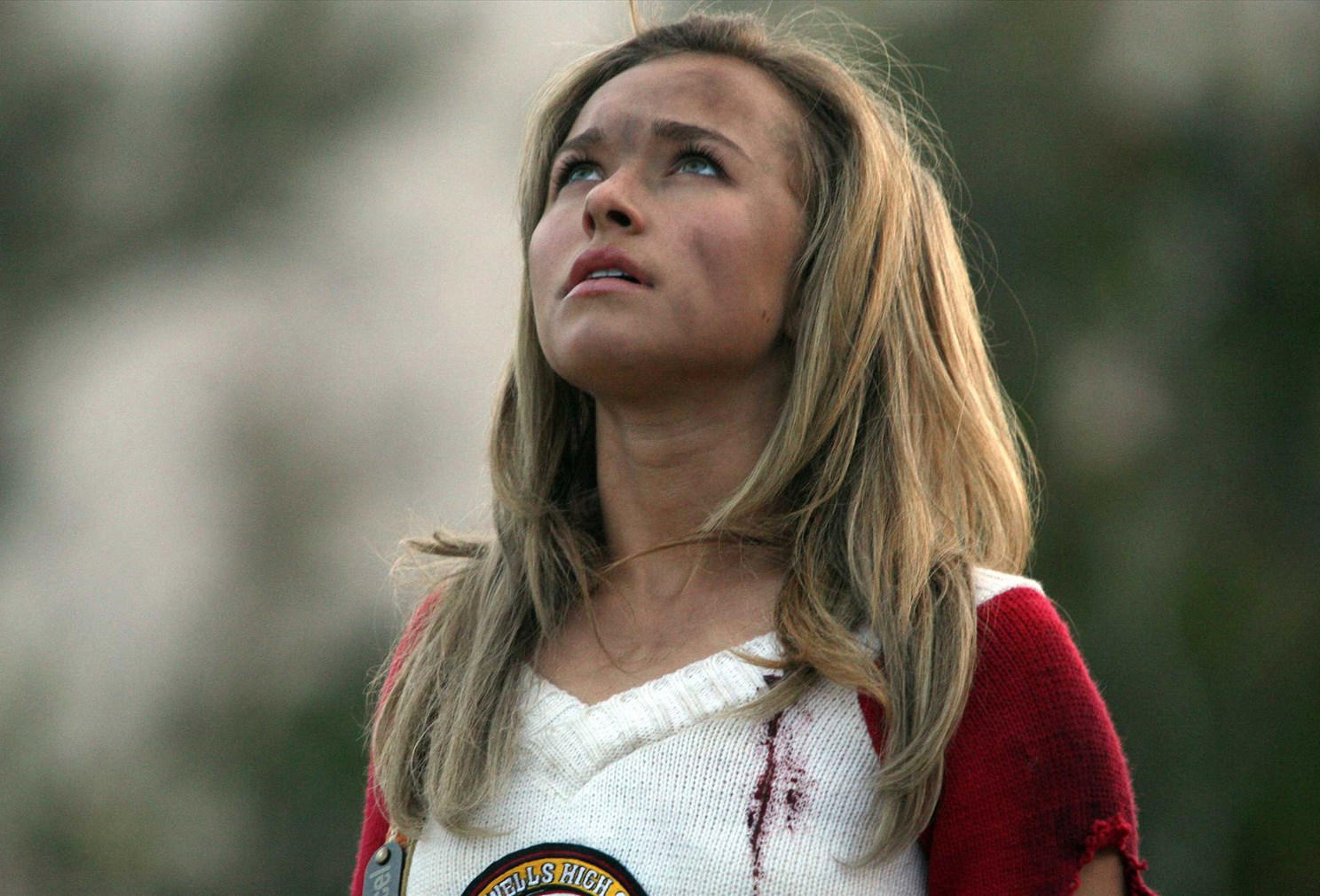
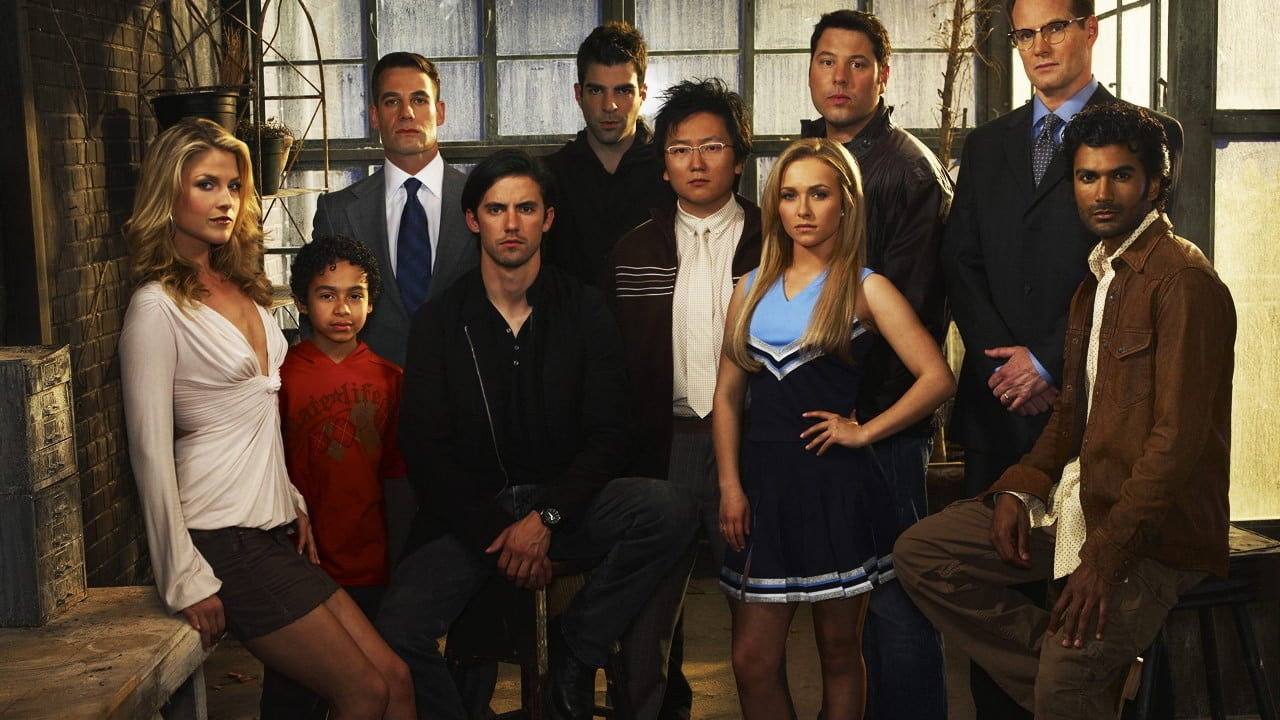
Then 2006 happened, and a marketing line did what marketing lines almost never do. “Save the cheerleader, save the world” was the hook NBC hung an entire hit series on, and the cheerleader was Claire Bennet, an indestructible Texas teenager who kept discovering the limits of her own body by breaking it. “Heroes” was built to be an anthology, with the plan to rotate in fresh characters each season. That plan died on contact with the audience, because Panettiere and Milo Ventimiglia’s Peter Petrelli were too popular to rotate out, and she ended up leading all four seasons of the show.
What made Claire work was never the healing factor, which is a special effect. It was that Panettiere played her as an ordinary teenager who happened to be unkillable rather than a superhero who happened to be sixteen, and that reading is why the character outlasted a show whose quality fell off a cliff after the writers strike. She was seventeen when the first season aired. She was carrying a network’s flagship drama and a slogan printed on a million T-shirts, and she made it look like nothing, which is the trap of being very good very young. People stop noticing that it is hard.

The second act was better than the first, and it is the one this site would argue is her finest work. Juliette Barnes in “Nashville” was a monster and a wound at the same time, a manufactured country-pop star clawing at legitimacy while Connie Britton’s Rayna Jaymes stood in her way, and the show ran on the friction between them for six seasons. Panettiere did her own singing. She also refused to soften Juliette into something likeable, which took nerve on a network drama, and the two Golden Globe nominations she picked up for it were the industry catching up to what the audience already knew. Give her a character with claws and she would use them.
Horror fans have their own claim on her, and it produced one of the strangest afterlives in modern slasher history. She played Kirby Reed in “Scream 4” in 2011, the movie-literate final girl who talked a killer through a horror quiz and got a knife in the stomach for it. Kirby was left ambiguous rather than confirmed dead, and for twelve years fans argued about it loudly enough that Kirby came back, alive, in “Scream VI” in 2023. Very few horror characters get resurrected by audience demand. Kirby did, because Panettiere made her worth arguing about, and she got to play the survivor rather than the victim.
The years in between were rough, and she told us so herself rather than letting anyone else tell it for her. She has spoken publicly about the postpartum depression that followed the birth of her daughter Kaya in 2014, about addiction and recovery, about her split from former heavyweight champion Wladimir Klitschko and the decision to let her daughter live abroad, and about losing her younger brother Jansen in 2023 at twenty-eight. In May of this year she published “This Is Me: A Reckoning,” three hundred and twenty pages of it, put out by Grand Central Publishing. It came out three months ago. Reading the coverage of it now is a strange experience, because the whole point of the book was that she had come out the other side and wanted to say so in her own words.

The tributes started within hours and they came from every corner of her career, which tells you something. David Arquette, her “Scream” co-star, posted simply “I love you Hayden.” Melissa Barrera, who fought beside her in “Scream VI,” wrote “Rest in peace sweet Hayden.” Viola Davis, who worked with her twice, called her “an old, wise soul with such a deep heart” and said she had “a burning curiosity about who you were becoming.” Bethany Joy Lenz remembered a child actor who understood “scenes and nuance and human struggle like no child I’d ever seen on camera.” Selma Blair’s message was three words repeated: don’t be gone.
Thirty-six is not an age. It is a midpoint that somebody stopped at. The BR team has spent the last day going back through the work, and what lands hardest is not the highlight reel, it is how much runway was obviously still in front of her. There was a memoir out, a career in the middle of a genuine reset, an audience that had been on her side since she was a kid, and a fanbase still campaigning for Kirby to come back again. She was five days from thirty-seven. She should have had the birthday, and then another forty of them.
What Do You Think? Which Hayden Panettiere performance is the one you’ll go back to first, and does it surprise you that it’s the one it is? Was Juliette Barnes the best work of her career, or does Claire Bennet’s four-season run on “Heroes” still edge it out for what she managed at seventeen? And what should the “Scream” franchise do with Kirby Reed now, given the fans spent twelve years bringing her back once already?
Rest in peace, Hayden Panettiere. Thank you for all of it.