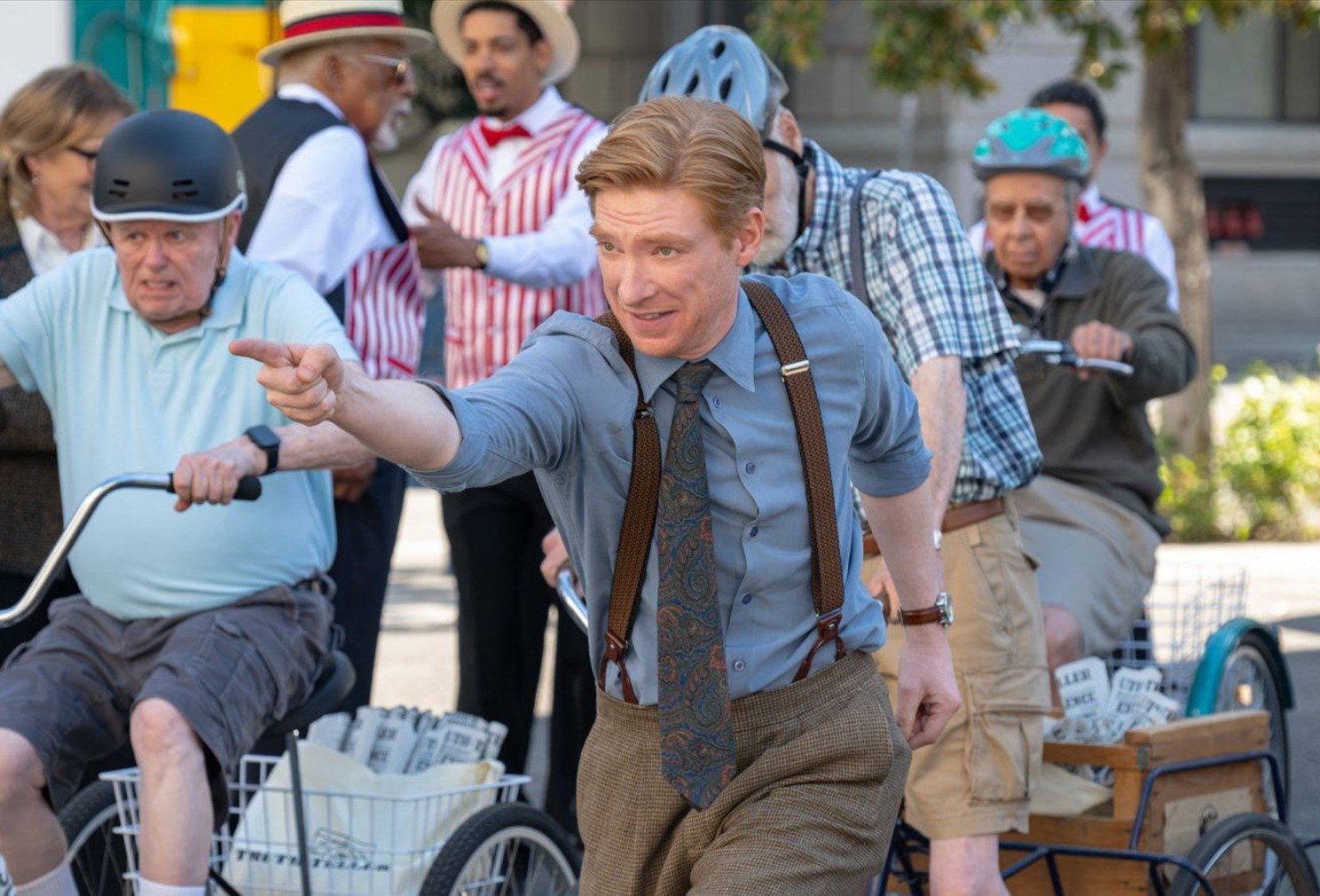
Ned Sampson (Domhnall Gleeson) spends ten episodes of “The Paper” Season 2 hunting the one story that would make the Toledo Truth Teller matter to somebody outside Ohio, and in the final twenty minutes he hands it to somebody else. Not to a rival paper, not to a wire service. He hands it to Mare Pritti (Chelsea Frei), who by that point has taken a job at the Cincinnati Chronicle and is no longer his to impress, or his to date. It is the best decision this show has made since it started, and it is the moment Season 2 quietly admits what it has actually been about all year.
All ten episodes landed on Peacock at once on 9 September, the same all-at-once release Season 1 used, and they move fast: 23 to 27 minutes each, with the finale the longest of the set. The season opens on a victory lap. “The Best of Us” picks up after the Truth Teller has swept the Ohio Journalism Awards, and the first thing Ned does with all that goodwill is hunt for the right moment to ask Enervate CEO Marv Putnam (Allan Havey) for a bigger budget. He does not get one. Trophies are not money, and the gap between the prestige and the payroll is what drives the rest of the year.
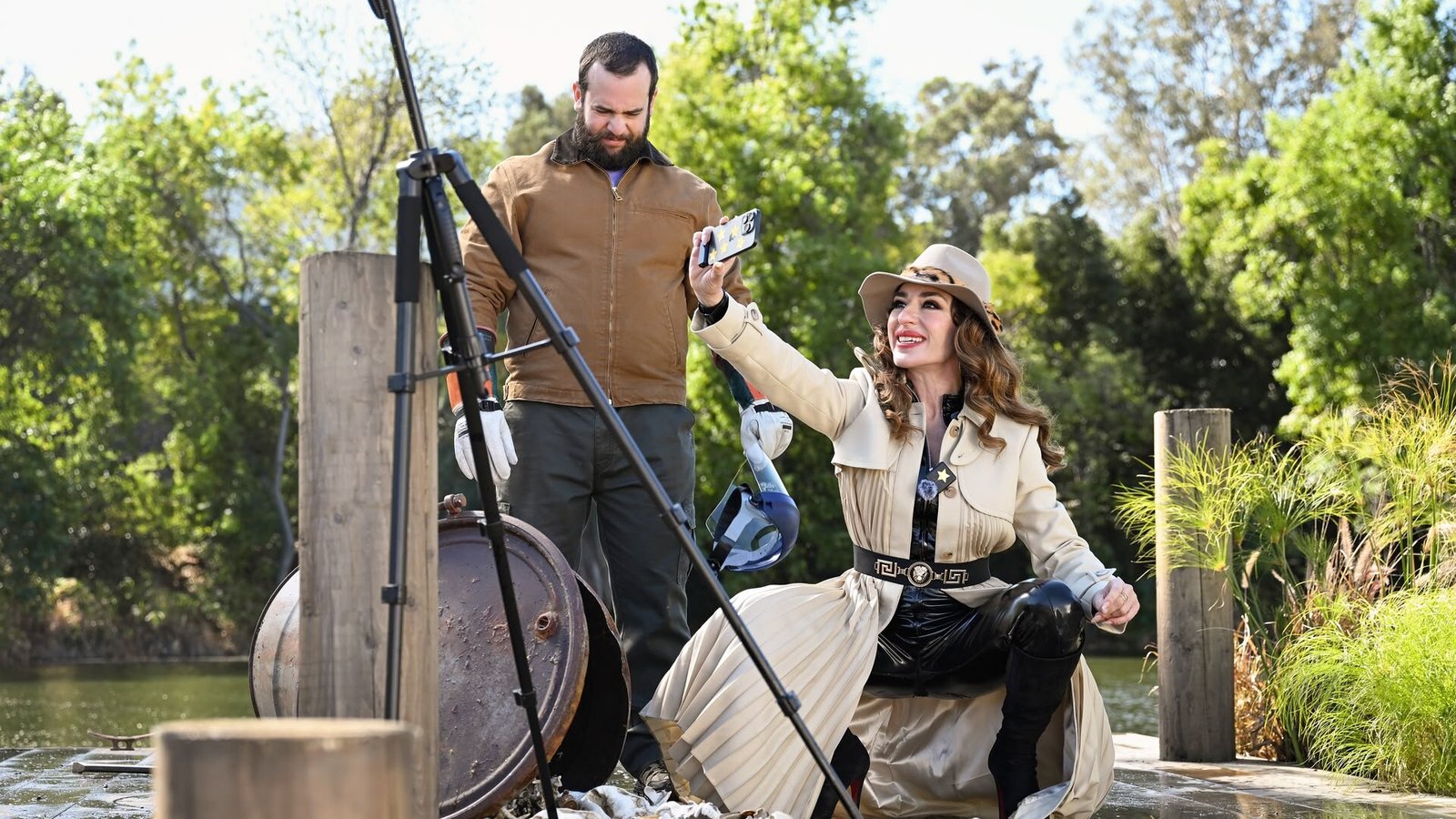
What Ned wants is a crusade. When we broke down the Season 2 trailer back in August, the line that stood out was a pitch meeting suggestion: we pick an issue and we just hammer away at it. The season takes that literally. The issue is the Glass Club, a private members club in Toledo with a misconduct problem and, awkwardly, a standing advertising contract with the paper that helps cover the wages in the room. That conflict is the entire season, and it is a sharper engine than anything Season 1 built an episode around. Warning beyond this point there are spoilers for “The Paper” Season 2, the Glass Club investigation, Mare’s departure and the finale.
It is the best decision this show has made since it started, and it is the moment Season 2 quietly admits what it has actually been about all year.”
The opening stretch is the show at its loosest. “Weekend Ned” has Ned and Mare ditch the documentary crew for a weekend, which leaves Adam Cooper (Alex Edelman) and Adelola Olofin (Gbemisola Ikumelo) running the weekend edition while Esmeralda Grand (Sabrina Impacciatore) recruits Ken Davies (Tim Key) to pose as her son’s pretend dad. “Hearst’s Mistress” is where the crusade hunt properly begins, and it is also where the season starts running its best background joke: Oscar Martinez (Oscar Nuñez) negotiating the rights to Mr Digit with Marv, a subplot the show keeps returning to with the patience of a writers’ room that knows exactly how funny it is.
“Impressing a Cop” does something a lesser version of this show would not have risked. Ned goes to his police source’s gun range, has a bruising time of it, and the story that comes out of the trip is not his. It is Mare’s. She finds it while he is standing right there, and the episode declines to soften that for him. Esmeralda spends the same half hour planning a haunted house that is not remotely scary, which is the correct use of Esmeralda. Then “Duelling Pencils” stalls the crusade outright because the paper’s new podcast gets too spicy, and Esmeralda pays a genuine price for embarrassing the company, one of several places this season where a consequence is allowed to land instead of resetting by the credits.
The romance runs underneath all of it, and it is the element critics have split hardest on. Season 1 ended on a kiss, Season 2 opens with the two of them together and hiding it, and in a mockumentary that is the most doomed arrangement available. The AV Club’s read is that Mare becomes the show’s emotional core, which is the generous version. CBR’s is that the chemistry Gleeson and Frei struck in Season 1 fizzles once they are actually a couple, and that the writing keeps Ned in what it calls his golden retriever box rather than making him answer for dating a reporter whose assignments he controls. Both readings are fair. The season turns out to be more interested in the second one than the early episodes let on.

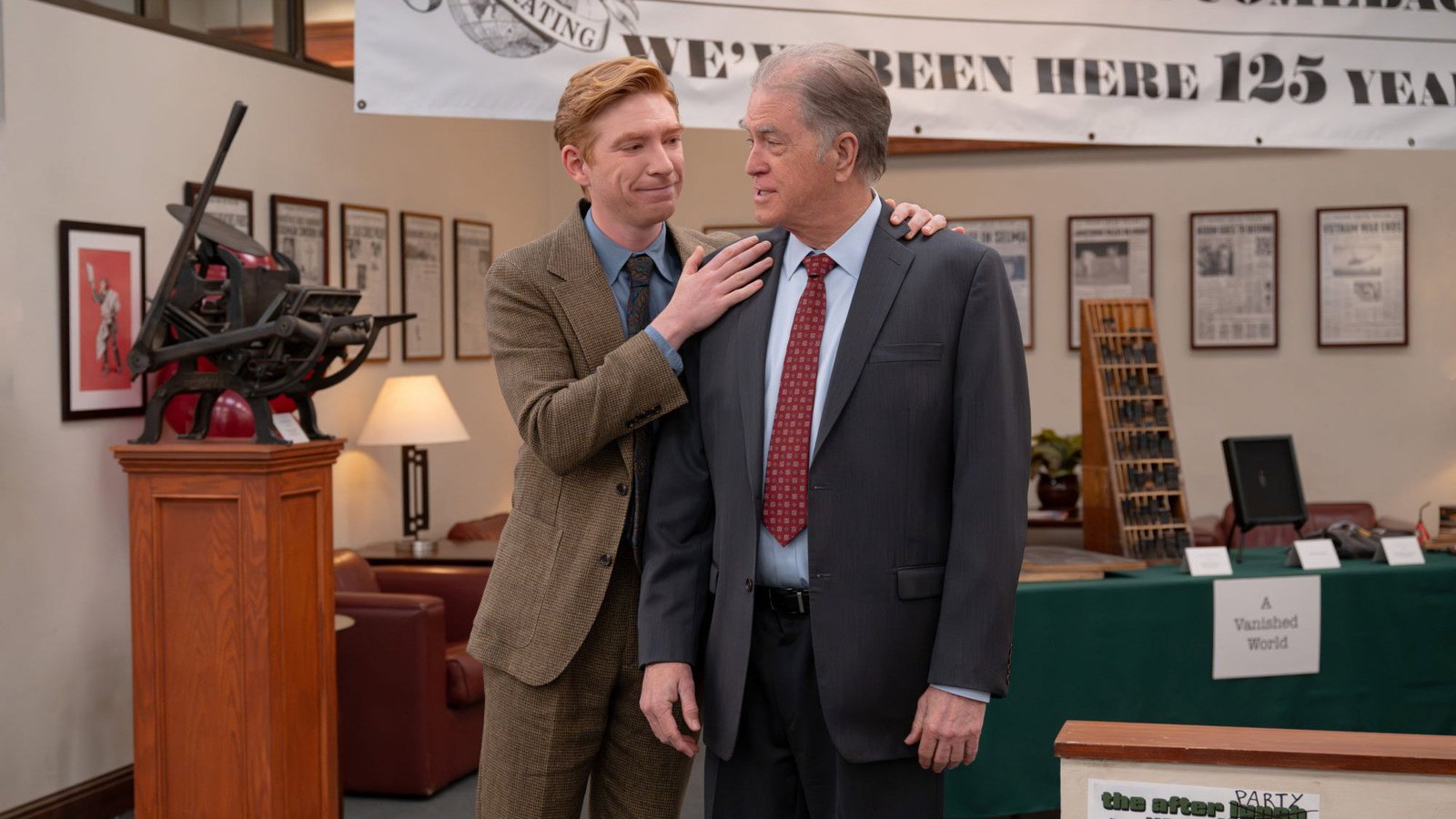
“125 Years Young” is the episode where the format turns on itself. The Truth Teller hits its 125th birthday, Ned invites other journalists in to cover the occasion, and he learns what it feels like to be the story rather than the person writing it. That is a good joke and a better structural idea, because a documentary crew has been filming this newsroom for two seasons and nobody inside it has ever had to sit with what that means. Esmeralda, meanwhile, has to make up years of skipped HR training and gets creative about it, a sentence that should worry anybody who has met her.
Then there is “Tornado Alert,” which is the best episode of the season and arguably the best half hour the show has produced. A tornado threatens Toledo, Ned’s emergency messaging goes badly wrong, and Travis Bienlien (Eric Rahill) and Adelola go storm chasing in a car with no business being anywhere near a storm. Collider called the sequence at its centre the wildest two minutes you will see on TV in 2026. The episode also does something sly with its cutaways: it visits the Cincinnati Chronicle newsroom, where the staff regard Mare as primitive. She has moved up, and the bigger paper is worse company. Esmeralda spends the episode trying to prove she is not a narcissist.
The ensemble around all this is genuinely stronger this year. Travis and Adelola have gone from one-liner delivery machines to characters with their own weather, a shift the AV Club singles out and one that holds up across the ten episodes. Nicole Lee (Ramona Young) tells Detrick Moore (Melvin Gregg) she wants out of their situationship and some space to think, and Detrick’s answer is to become the best reporter in the building, which is the most Detrick response available. Critics disagree sharply here: the AV Club finds Nicole’s arc abrupt and petty, while CBR calls the Nicole and Detrick material an exceptional part of the season. On the evidence of the back half, CBR has the better of it.

“Secret Team” is where the advertising conflict finally bites. Ned is told he cannot cover the story, so he builds a secret team to chase it anyway, and Esmeralda promptly assembles her own covert squad to work out what his squad is doing. It is the cleanest piece of construction in the season, because the two plots are the same plot: a workplace where information is currency and everyone is quietly running an operation. It also sets the terms for the finale, since a secret investigation into the company’s own advertiser was only ever going to end one of two ways, and the show has spent eight episodes making sure you know which two.
“Who’s Marv Marving?” then pays off a Season 1 thread most viewers had filed away. Marv and Ann Putnam (Nancy Lenehan) go undercover to help with the investigation, which is a delightful development given that Marv’s Season 1 arc was being quietly, hopelessly in love with her. Ned spends the episode trying to protect Mare from nasty rumours about how she got where she got, which is the workplace-romance bill arriving with interest, and it is the first time the show makes him look at the cost of the thing he wanted. Esmeralda, on a parallel track, interviews to become the consort of a powerful ninety-year-old, an errand the show plays completely straight.
Esmeralda is the season’s biggest swing and its most divisive element. Impacciatore plays her without a safety net, and Collider’s Tania Hussain called her a real knockout this season, noting that she can completely take over a scene without making everyone else disappear. The AV Club is harder on her, comparing her finale arc to “Scott’s Tots” for sheer unwatchability, which is either the worst thing you can say about a comedy plot or a compliment about its nerve, depending entirely on how you felt about “Scott’s Tots.” CBR’s line is the most useful of the three: she was too annoying in Season 1 and is now properly calibrated, bringing equal parts humanity and caricature to a character who could easily be neither.
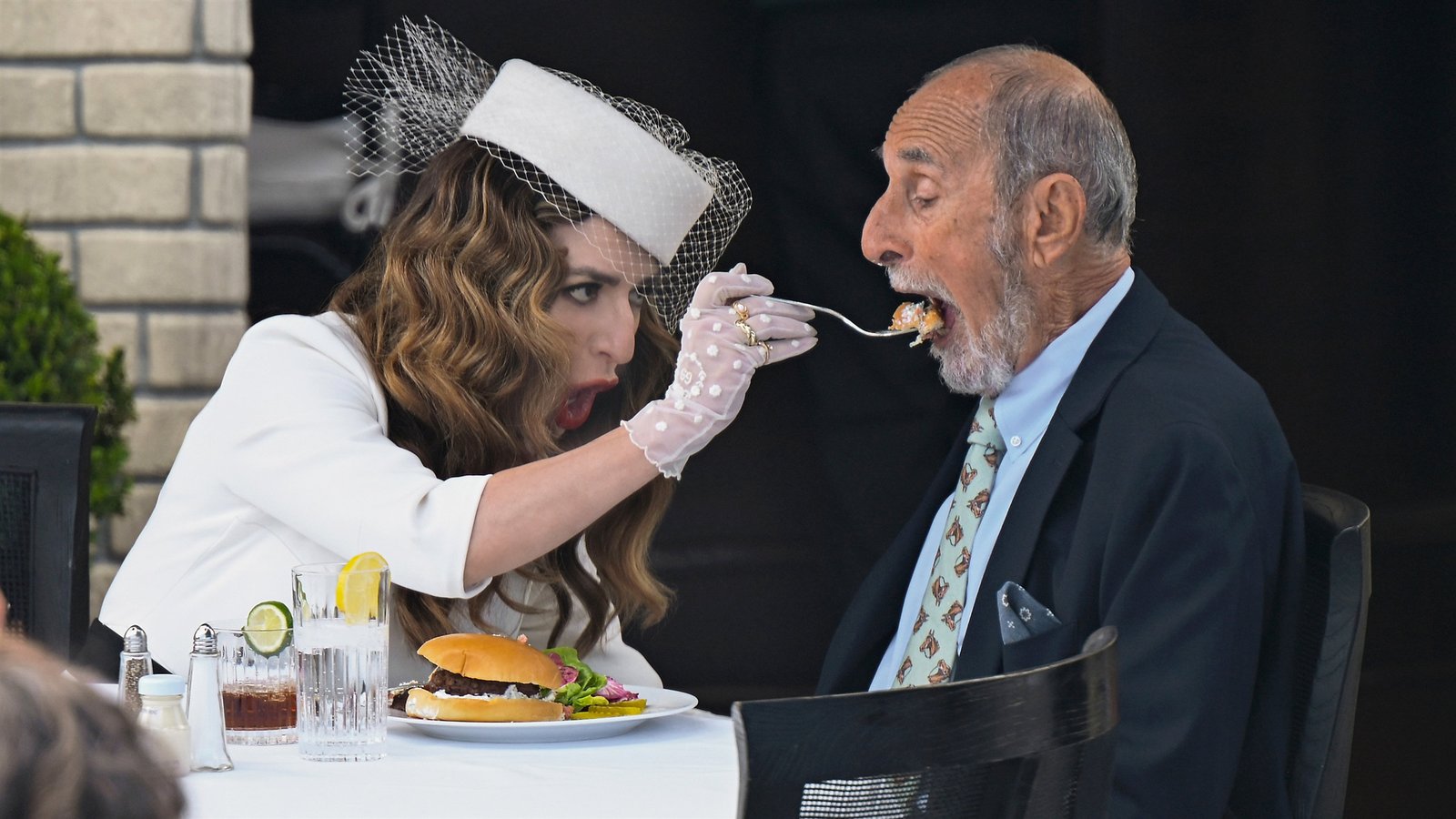
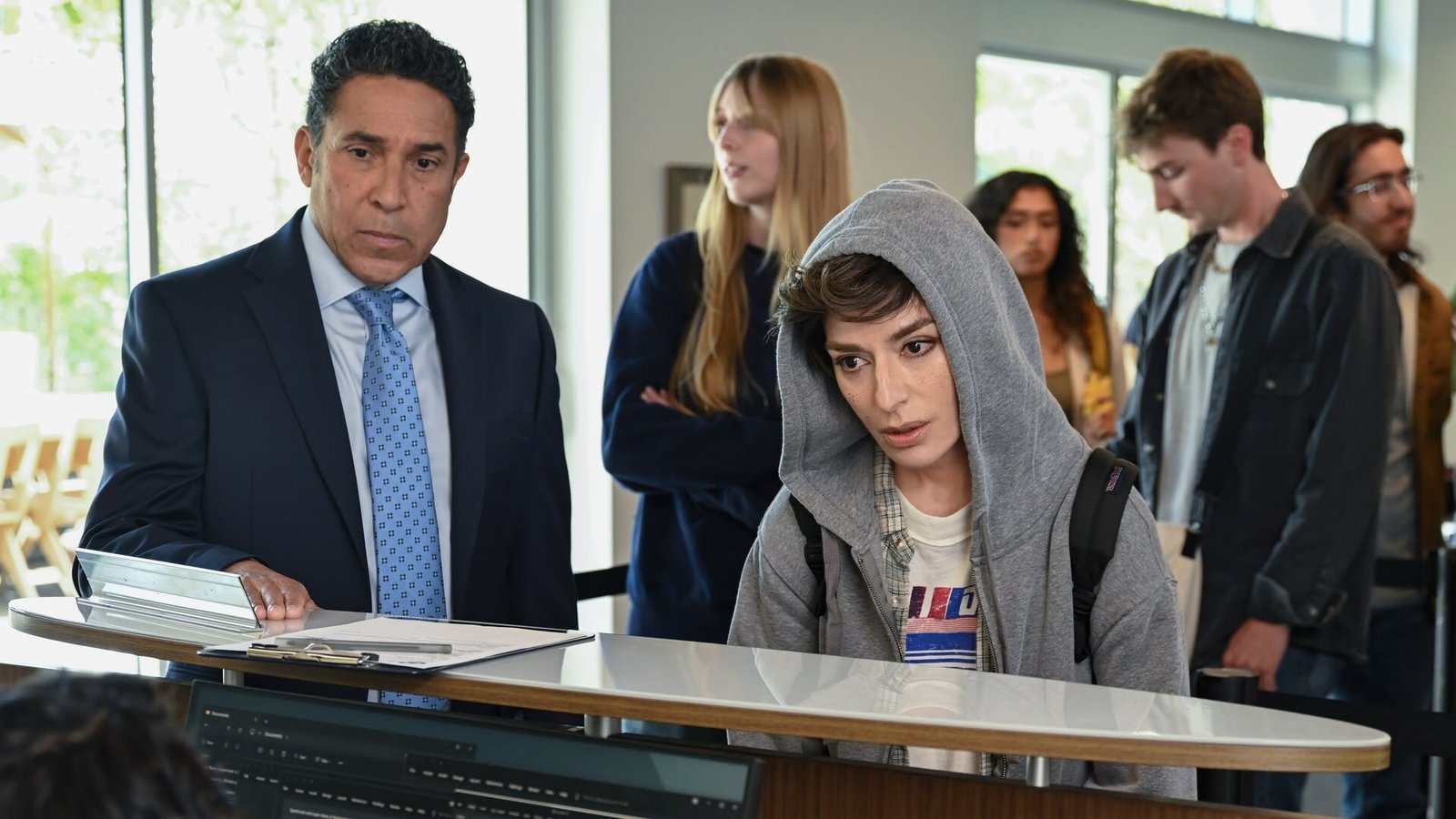
Which brings us to “The NS Board.” Ned discovers that publishing the story he and Detrick have built will require sacrifices, and the sacrifices are not abstract ones. Esmeralda goes undercover to expose prejudice, a plot that hands Impacciatore her best material of the year. And Mare has a choice to make if she wants to play in the big leagues. The resolution is the thing this whole review has been circling: the Glass Club investigation, the crusade Ned has chased since the third episode, becomes Mare’s story. He gives it to her. They do not end the season together, and the show is honest enough to leave the feelings unresolved rather than tidy them away.
The Office connections are handled with more restraint this year, and there is a good story behind why. Oscar Nuñez is still here as Oscar Martinez with less screen time than Season 1 gave him, and co-showrunner Greg Daniels told Collider that a far bigger reunion was written and then cut. In it, Oscar takes a call for help at the weekend and says he is sorry, he is halfway to Pennsylvania, before turning around, having met Angela and Kevin for a birthday party at a restaurant. Daniels’ reasoning for losing it was that it felt unnecessary to the story and would grab too much attention, and that he and Michael Koman prefer the little Easter eggs that remind you of the original without trying to take over. Havey is one of those himself: he played Henry Bruegger in two Season 9 episodes of “The Office” long before he was Marv.
The reviews landed at 85 percent on Rotten Tomatoes on 2 September, a full week before anybody outside the press could watch a frame. Collider gave it 8 out of 10 and wrote that the show now feels less like something living in the shadow of “The Office” and more like a workplace comedy that can stand beside it. CBR gave it 7 and called it better but uneven. Comic Book Club’s Alexander Zalben went the other way entirely: perhaps worst of all for a comedy, he wrote, it is just not that funny. CBR also raises the argument worth having, which is that dumping all ten episodes in a single drop for the second year running buys one weekend of attention and then silence, on a show whose central problem has always been that not enough people have found it.
In August we closed our trailer breakdown with three questions, and this season answers all three. The tornado subplot is the best use of the mockumentary format the show has managed, not the moment it cracks. The hammer-away-at-one-issue premise absolutely does give the Truth Teller a better engine than Season 1 ever had. And running Ned and Mare as a secret office romance turned out to be neither a nod to Jim and Pam nor the mistake we worried about, because the show broke them up and sent her to a better newspaper. That is the one outcome “The Office” never had the nerve to try, and it is why Season 3 has somewhere to go.
What Do You Think? Was handing the Glass Club story to Mare the most romantic thing Ned has ever done, or the most self-defeating? Does sending Mare to the Cincinnati Chronicle give Season 3 a better engine than keeping her in the Toledo newsroom would have, or has the show just written out half of its best double act? And after two straight years of dropping the whole season in one go, is the binge release helping “The Paper” find its audience, or burning the only week of attention it gets?
Catch up properly: every Office Universe series in chronological order on our Timeline Hub’s Office timeline.
See you on the next binge!