A circle of skeletons in hooded robes stands around a bonfire chanting about blood, and the girl tied up in front of them points out, reasonably, that she is not actually a virgin. The lead skeleton considers this for a moment and tells her it does not really matter. That exchange lands inside the first ninety seconds of “Golden Axe,” and it is a fair warning about the fantasy series this is going to be. The show is far more interested in what the people inside a video game would actually say to each other than in anything heroic.
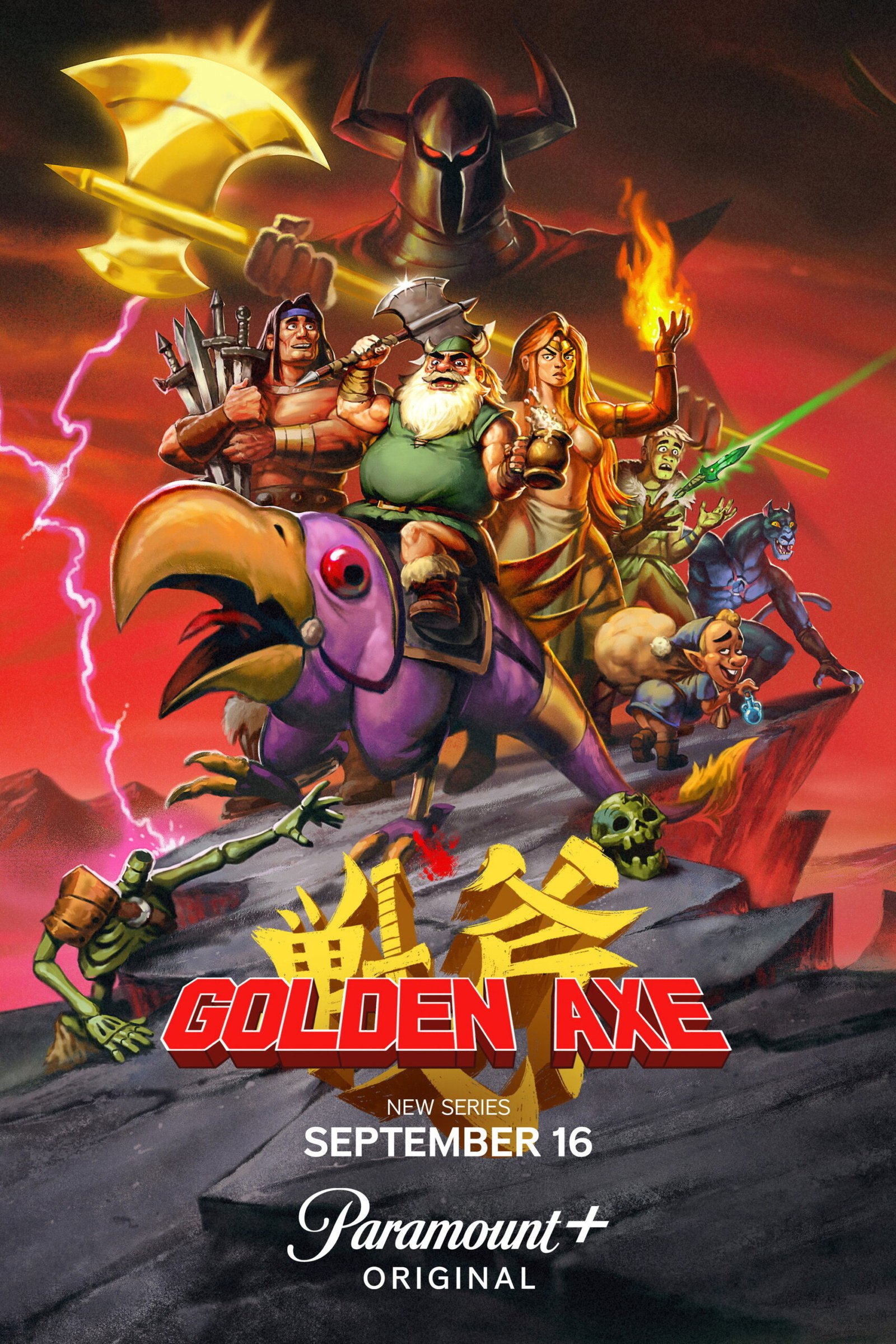
All ten episodes arrived on Paramount+ on 16 September, created by Mike McMahan and Joe Chandler, who also co-wrote the premiere and executive produce it. The voice cast is the real headline: Matthew Rhys plays the battle dwarf Gilius Thunderhead, with Danny Pudi as the rookie Hampton Squib, Liam McIntyre as Ax Battler, Lisa Gilroy as Tyris Flare and Carl Tart as Chronos “Evil” Lait. Warning beyond this point there are spoilers for the first two episodes of “Golden Axe,” including who walks out on the quest, what the Emerald Blade actually does, and how this version of Yuria handles magic.
the show is far more interested in what the people inside a video game would actually say to each other than in anything heroic.”
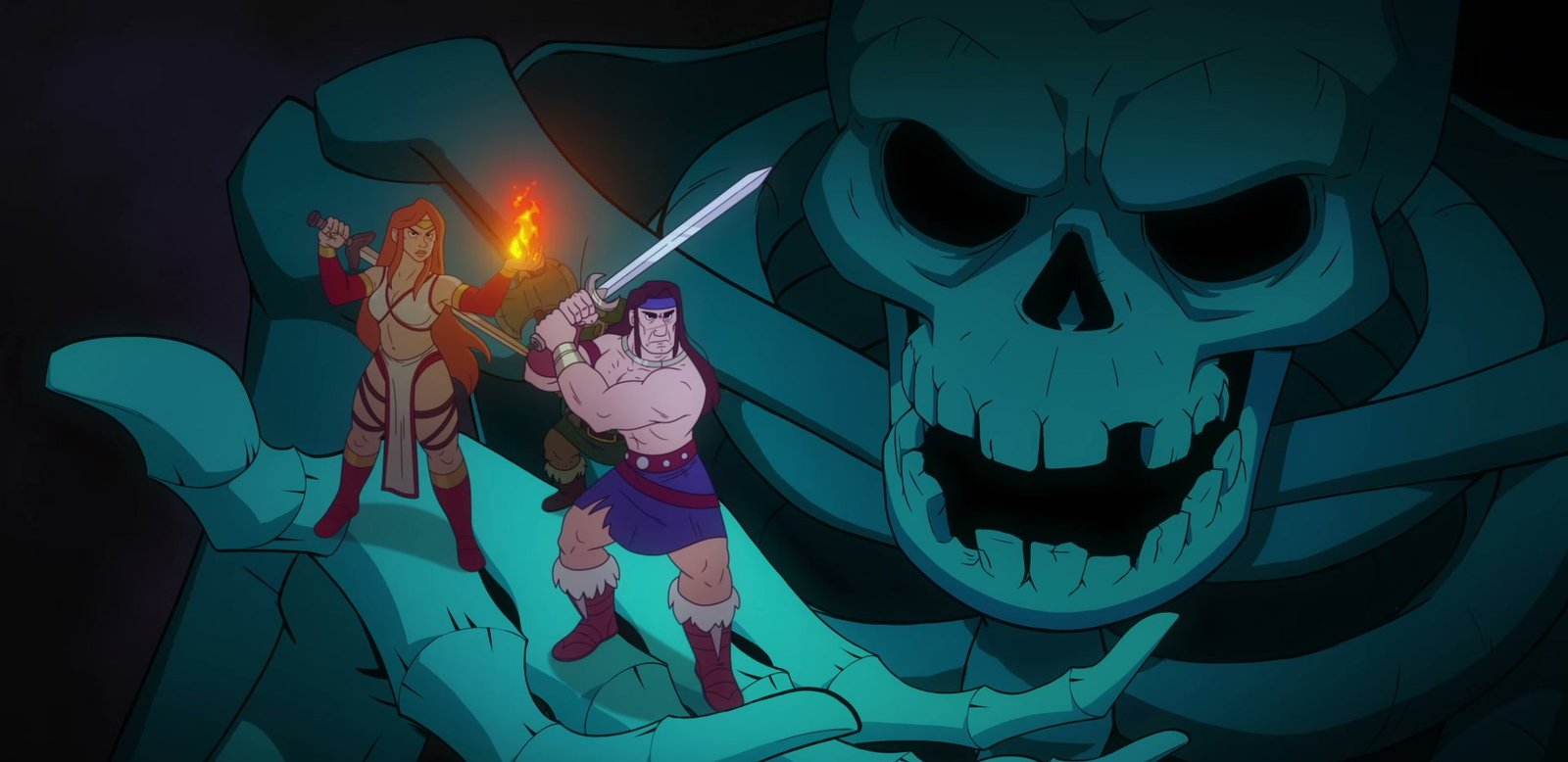
The premiere, “The Legend of the Emerald Blade,” spends its first act establishing that these three have done this before and are bored of it. The narrator explains that Death Adder used the Golden Axe to slay the gods and take Yuria, that our heroes killed him, and that he came back anyway, before adding the reason out loud: otherwise there would be no bad guy. Ax’s battle plan is to throw Gilius into the bonfire because the dwarf is impervious to fire, which Gilius accepts on the grounds that the sparks are distracting, while objecting that it still burns his clothes.
Then Ax says the thing the whole series is built on. Asked for a strategy, he answers that they will do what they do best, which is face a series of progressively harder enemies until they have a big final battle with Death Adder. That is not a joke about the plot. That is the 1989 arcade cabinet, described from the inside by a man who does not know he is in one, and the show delivers it flat, without a wink.
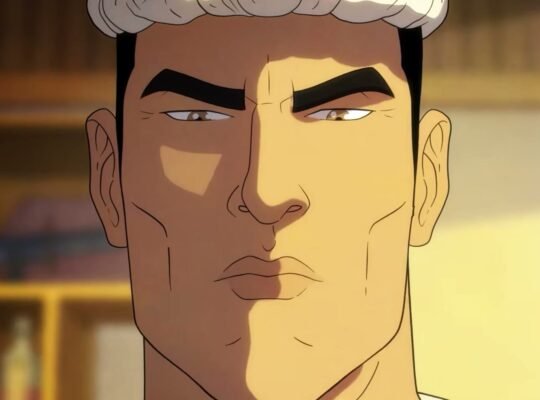
What makes the premiere work is that Gilius refuses to play it. He is tired of being called the tip of the spear, tired of being described as strong and reliable and deadly, and he says the line that sets up the season, which is that he is more than a weapon. So he walks, taking three days to chase a myth called the Emerald Blade, and Ax lets him go. Rhys plays him as a genuinely aggrieved middle-aged man rather than a gruff dwarf archetype, and the accent does a lot of quiet work, which is roughly what The TV Cave meant by calling him unrecognizable.
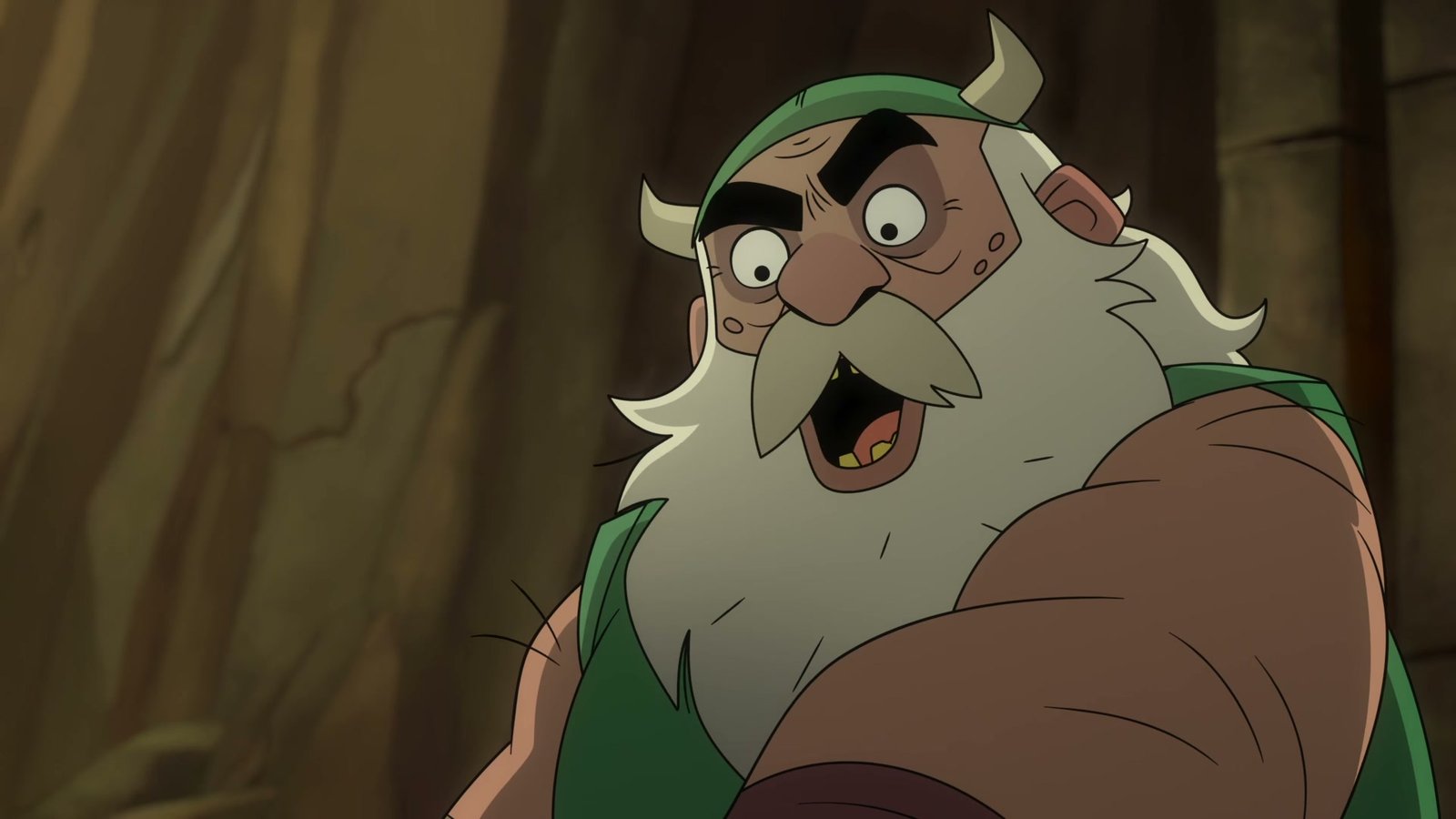
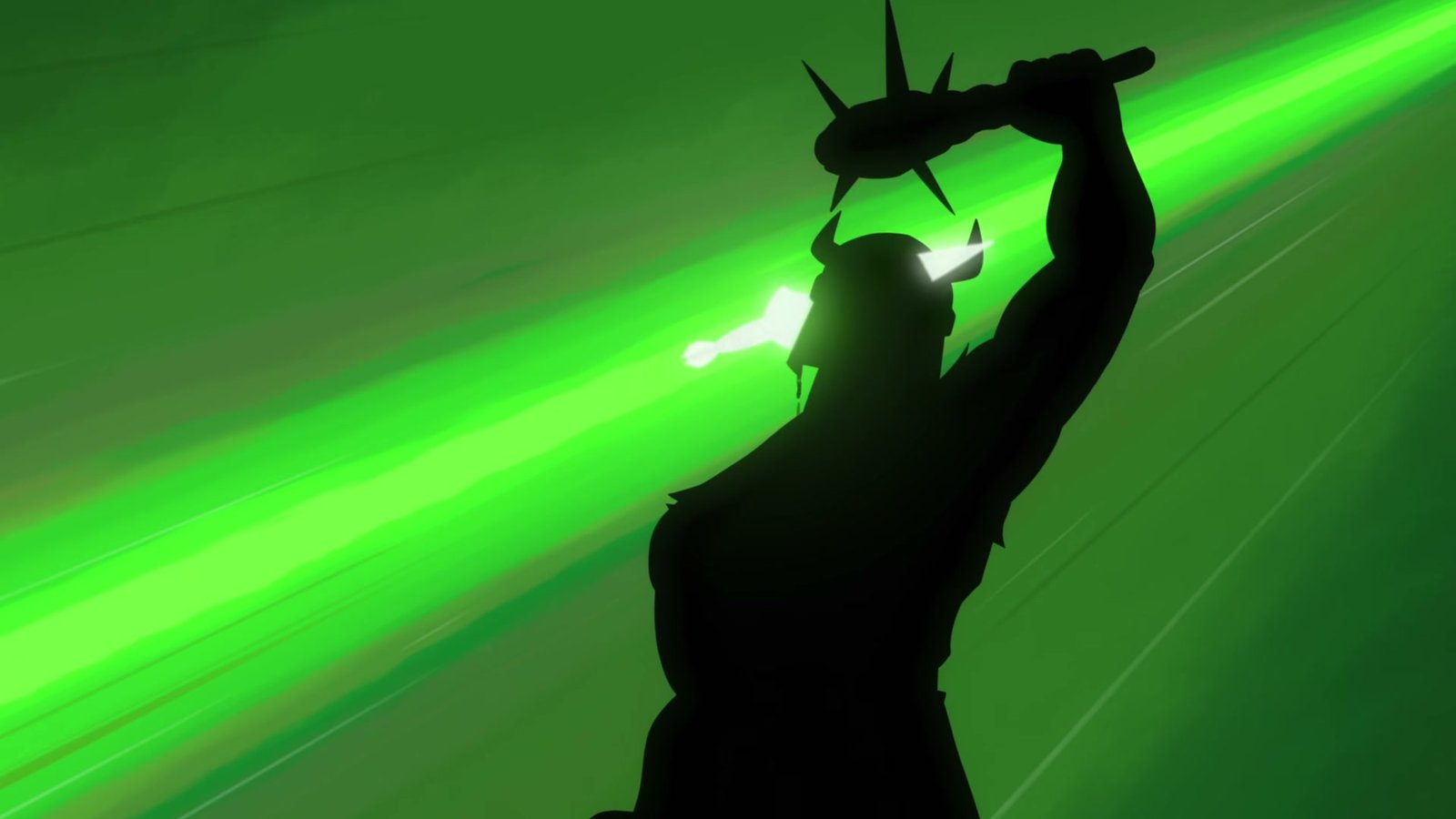
The dungeon that follows is the episode’s best sustained joke, because it is a real dungeon built out of real adventure-game furniture and everyone in it is exhausted. Two skeleton guards argue about whether lying on the floor to grab ankles is good corridor strategy or, as the larger one puts it, tiny skeleton thinking. There is a door that needs two people to open, and Gilius insists he got through it alone, which is true only in the sense that Hampton slid a boulder onto the second switch while he was not looking. Underneath it all sits Mabog, a thousand-year-old troll who cries in the middle of a fight because he is forced to kill everyone he meets, and tells Gilius the difference between them is that Gilius chooses to be alone.
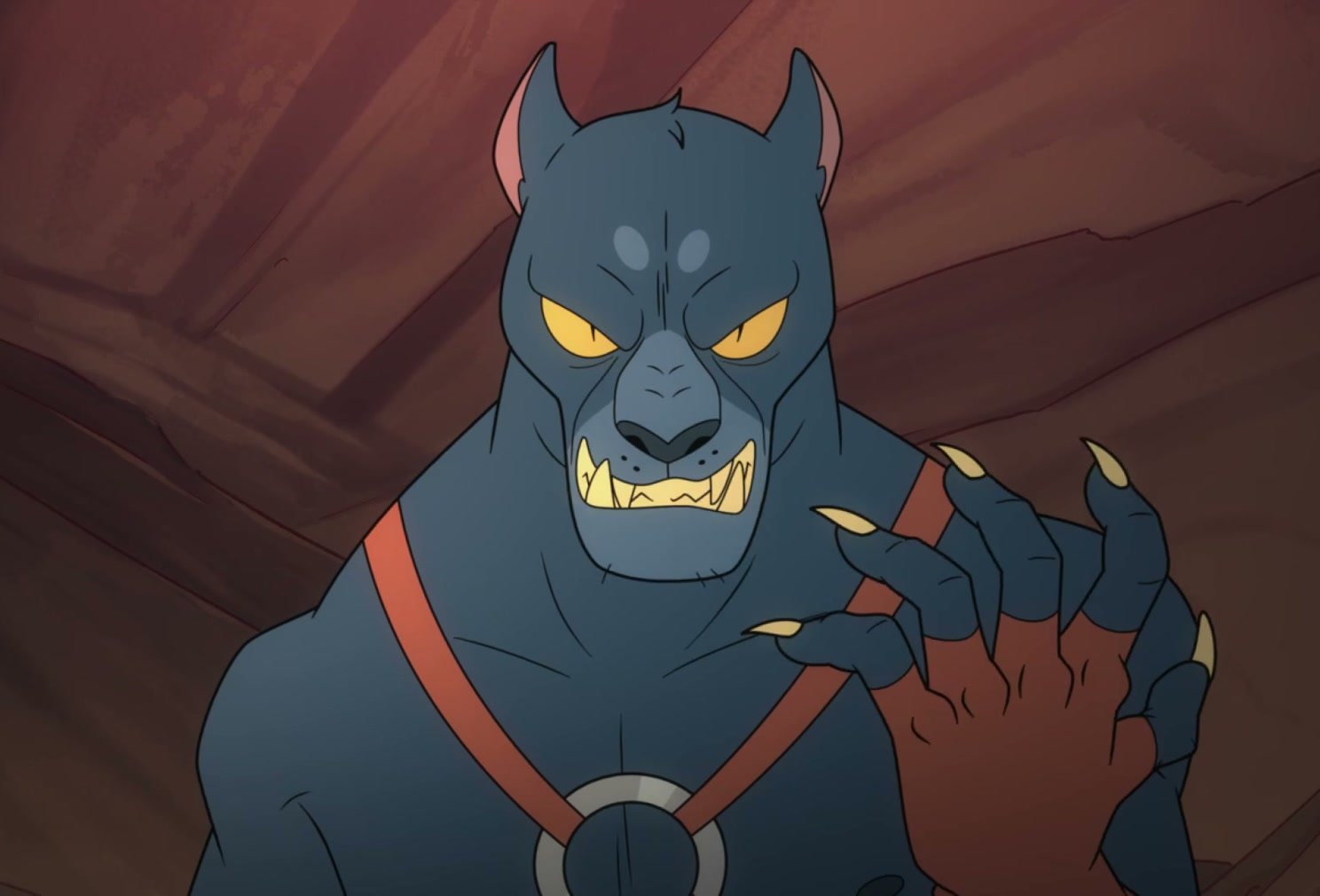
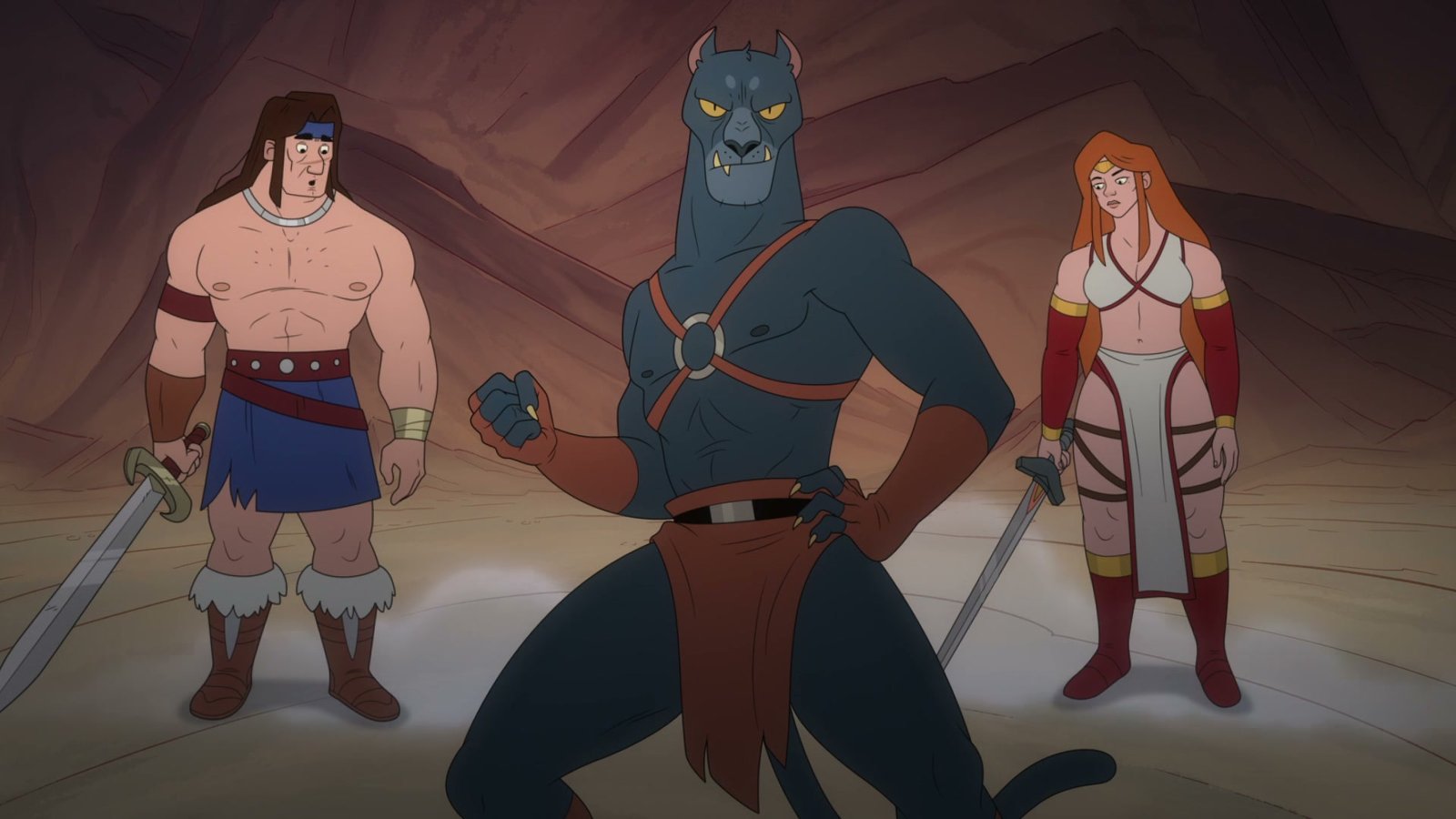
The blade itself is the punchline. Gilius wins it, discovers it is so dull it cannot cut butter, and only learns what it does when a village is attacked and the thing lights up in the dark. His conclusion is that it means they can stab enemies in the dark, and that Hampton might not be totally useless. Meanwhile Ax and Tyris have already replaced him, and they have replaced him with a panther man who has no combat skills at all but is charismatic and, as Tyris notes, a great dancer.
Episode two, “Rideable Beasts,” is where the world-building turns genuinely clever, and it does it by taking the game’s rules literally. Magic in Yuria is a finite resource, and you restock it by kicking a small imp in blue pyjamas who creeps around your campfire at night carrying a bag of potions. He has a name, Janzu, and Tyris explains the arrangement in the weary tone of somebody describing a tax. That is the arcade mechanic, the one where you stomp the little blue thief to steal his magic, promoted into the lore of the world and treated as completely normal.
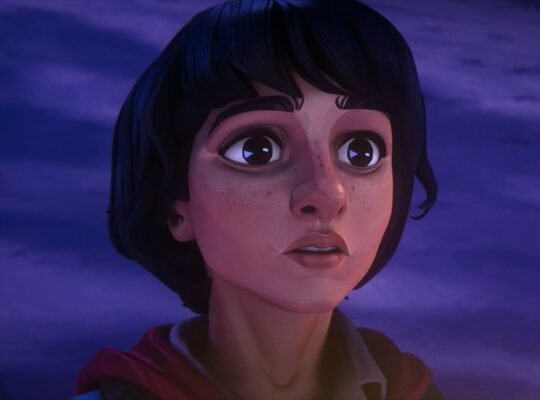
The same trick runs through the whole episode. Ax has earth magic, Tyris has fire, and Chronos, the replacement, has fog, which the others regard as an embarrassment until the fog turns out to be poisonous to skeletons and he admits he had not mentioned it. Rideable beasts are acquired by killing somebody who has one or buying one, and when Hampton tries to buy one the dealer refuses to deal in numbers at all, insisting the boy indicate a price using his hands. Tyris, separately, wears her dead mother’s battle bikini and notes that it covers too much.
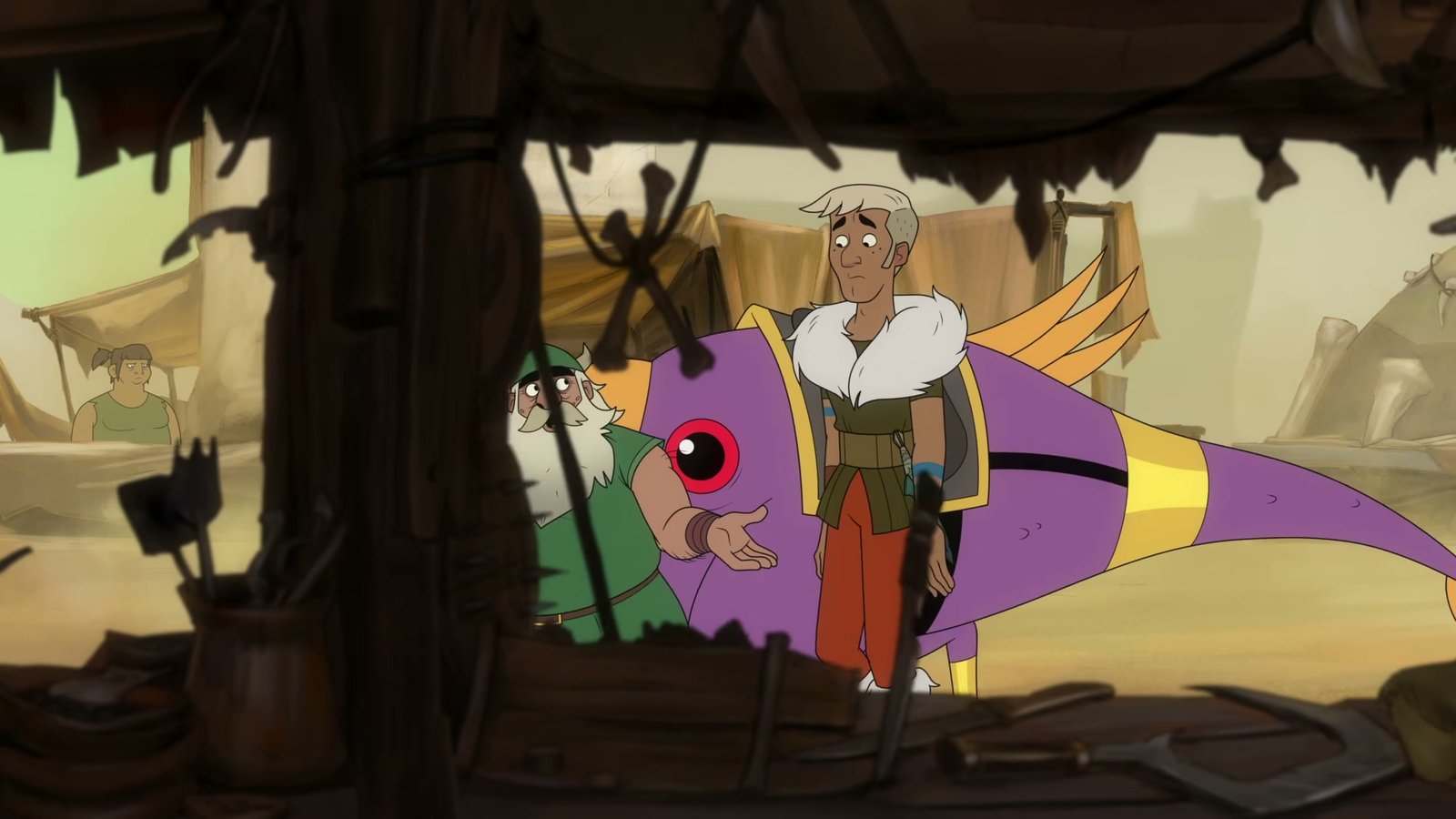
Underneath the gags the second episode is doing something structural, and it is the thing that makes this more than a spoof. Gilius and Hampton reach the desert village of Deshin and find a parade already underway, because Ax, Tyris and Chronos liberated it a week ago. Gilius is not behind Death Adder. He is behind his own former teammates, and when Hampton asks whether this quest is about saving Yuria or about a personal grudge, Gilius answers that it is the grudge, immediately and without embarrassment.
That is the shape of the whole season. The official episode list keeps the party split for eight of the ten instalments, sending Gilius and Hampton through a suspiciously friendly town, a giant eagle, Hampton’s hometown and a magical forest. Ax, Tyris and Chronos handle the actual campaign, and everybody only converges on Death Adder’s castle in episode nine. A show adapting a game about three warriors walking side by side has decided to keep them apart on purpose, and the joke is that the third player wandered off in a huff.
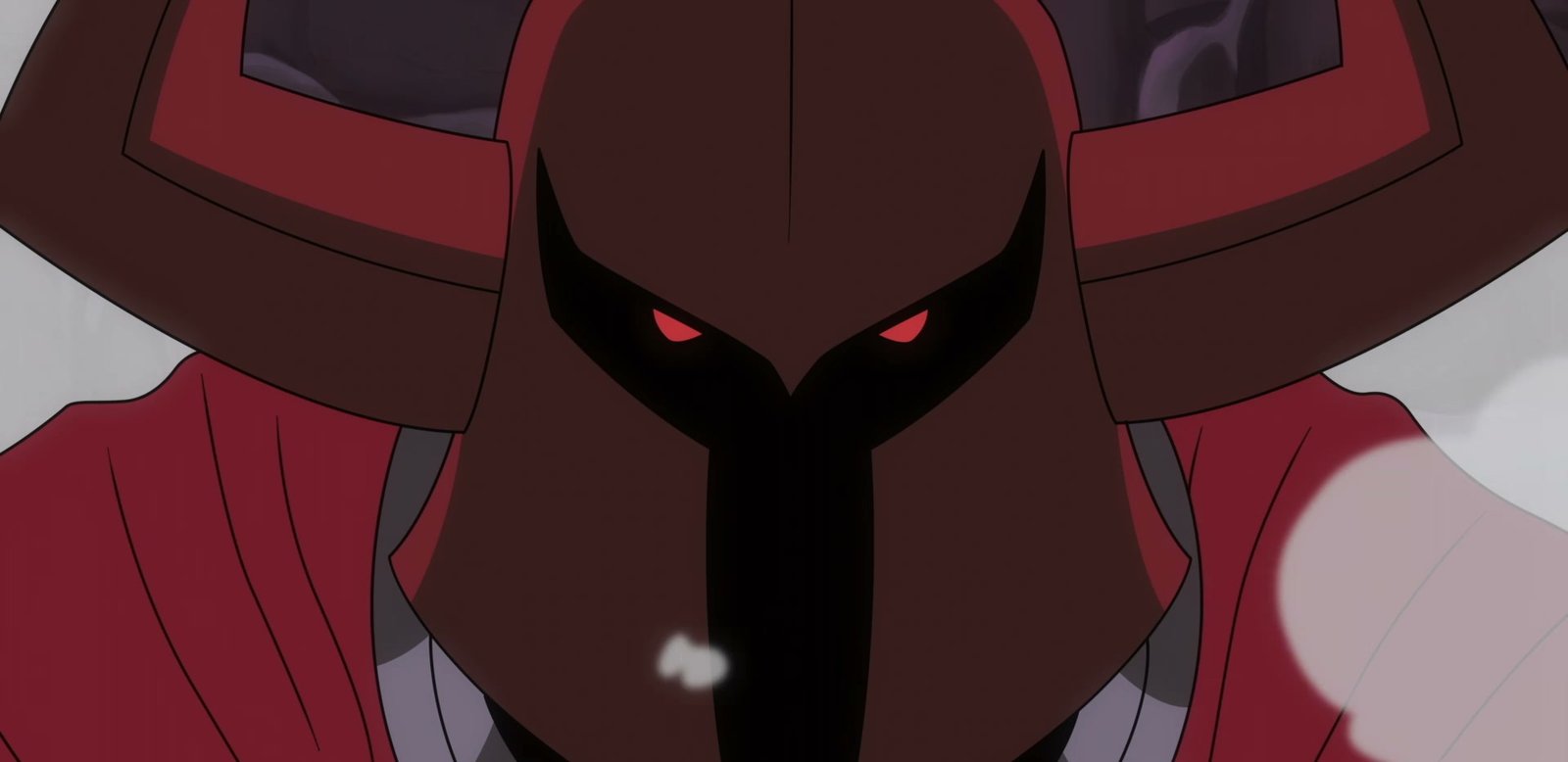
The two episodes we can measure properly are uneven in the way early comedy episodes usually are, with the premiere leaning harder on set-up than on laughs. Critics who saw the full run report the same curve and then a recovery. ScreenRant watched all ten and scored it nine out of ten, calling the meta commentary on the games’ thin lore the best thing in it. JoBlo landed on seven and said plainly that the series finds its footing halfway through, and that splitting the trio felt like a misstep before it started paying off. IGN put it more bluntly, saying the jokes are hit and miss but the hits land big.
The lineage is not hard to trace, and it is probably the best argument for giving this a go. McMahan made “Star Trek: Lower Decks,” which spent four seasons proving that affectionate expertise is funnier than mockery, and Chandler came off “American Dad” to make this. Between them they have built a Yuria where the rules of a 1989 beat-em-up are simply the laws of physics, and where the characters are irritated by those laws in the specific way colleagues get irritated with each other. The production is CBS Eye Animation, Sony Pictures Television and Original Film, and the animation is clean, flat and deliberately period, borrowing the arcade cabinet’s palette.
Whether the back half earns the split is the one thing we genuinely cannot tell you, because episodes three through ten are behind the Paramount+ paywall and we have only seen the two the studio put out free. What we can say is that the premise is sturdier than a SEGA cartoon has any right to be, and that the central relationship works. When a monster swallows Gilius and Hampton whole, Gilius is finally forced to say out loud that Hampton has potential and that his mount is his best friend. Then he adds “sort of, by default,” which is the most honest thing anyone says in either episode.
What Do You Think? Does treating the arcade rules as real physics have enough in it to carry ten episodes, or does that joke run out once you have met the magic imp? Was splitting the trio for eight episodes brave or just a way to double the runtime? And is Matthew Rhys the best piece of casting in a video game adaptation this year?
See you on the next binge!