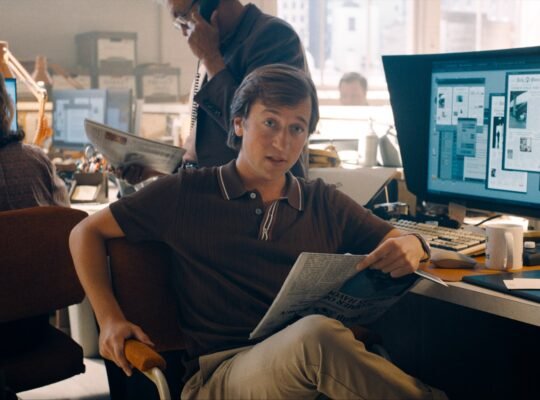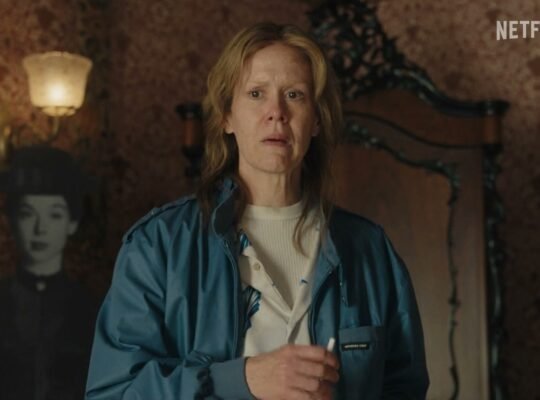
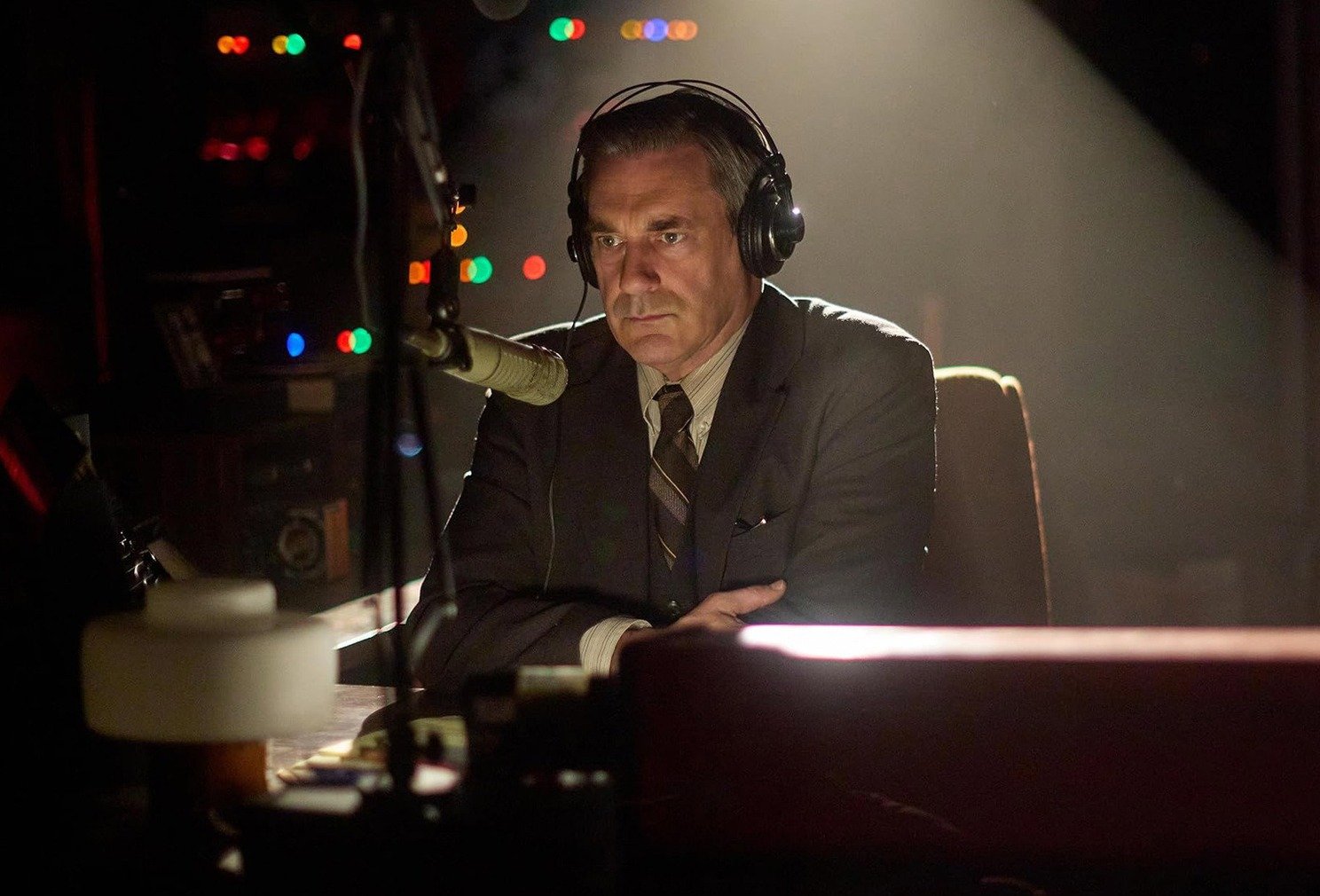
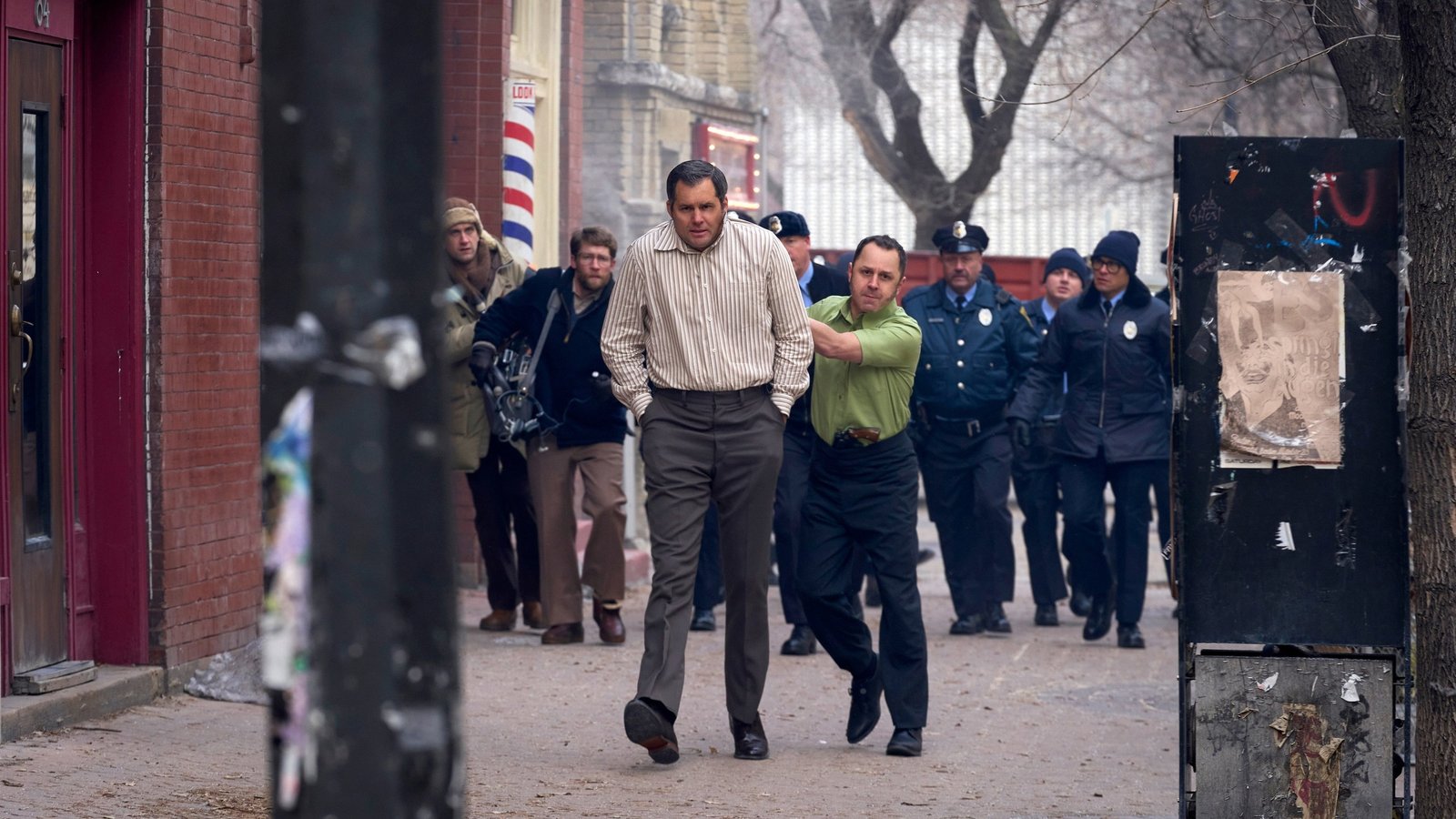
A man in a heavy winter coat walks another man down a snowy Indianapolis street with a sawed-off shotgun wired to the back of his neck, while a line of police cars creeps along behind them at walking pace, and a radio in every kitchen in town is waiting to hear what happens next. That is the image “American Hostage” is built around, and the MGM+ series, which premiered with two episodes on Sunday night, knows exactly how strange and how frightening it is. Jon Hamm plays Fred Heckman, the radio newsman the gunman insists on talking to, and the show is less interested in the hostage than in the microphone.
It is a true story, and a well-documented one. In February 1977 a man named Tony Kiritsis walked into the office of the Meridian Mortgage Company, took the executive Richard Hall hostage and held him for close to 63 hours, calling the news director of Indianapolis station WIBC again and again to put his grievance on the air. Shawn Ryan and Eileen Myers adapted it from the “American Hostage” podcast, with Adam Arkin directing the first four of eight episodes, and it arrives only months after Gus Van Sant told the same story on film. Warning beyond this point there are spoilers for “American Hostage” episodes one and two and for the real events of the 1977 Kiritsis case.
Jon Hamm plays Fred Heckman, the radio newsman the gunman insists on talking to, and the show is less interested in the hostage than in the microphone.”
The premiere wastes no time on setup. Kiritsis (Giovanni Ribisi) has already wired the gun to Dick Hall (Kristoffer Polaha) by the time we meet him, with the trigger rigged so that if Kiritsis falls, is shot or simply lets go, Hall dies too. His complaint is a failed land deal, seventeen acres he believes the mortgage company cheated him out of, and his demands come into focus over the two hours: immunity, a lawyer, and an apology he wants read aloud. He does not call the police with any of this. He calls Fred.
The best stretch of the first episode is the walk itself. Kiritsis marches Hall through the streets while squad cars trail them like an awkward parade, and the show plays it first as almost slapstick, with officers trying to look casual a few yards back, before a pastor steps in to plead with Kiritsis and the tone turns sad and then genuinely scary. Ribisi finds something close to showmanship in the man, a performer who has finally found his audience, and when a crowd gathers he complains loudly that it looks like the Macy’s parade. It is funny. It is also the whole problem the series is about, which is what happens when a desperate man learns that people are watching.
Back at the station, the argument is not really about ethics at all, and that is where the show is sharpest. The managers are worried about profanity on the air, about FCC fines, about losing sponsors, and then, in the same breath, about how many people are suddenly listening. Hamm plays Fred as the one man in the building who can see both sides of that at once, insisting that a hostage-taker on the phone is news, while slowly realizing that the moment he puts Kiritsis on the air, he stops reporting the story and starts steering it.
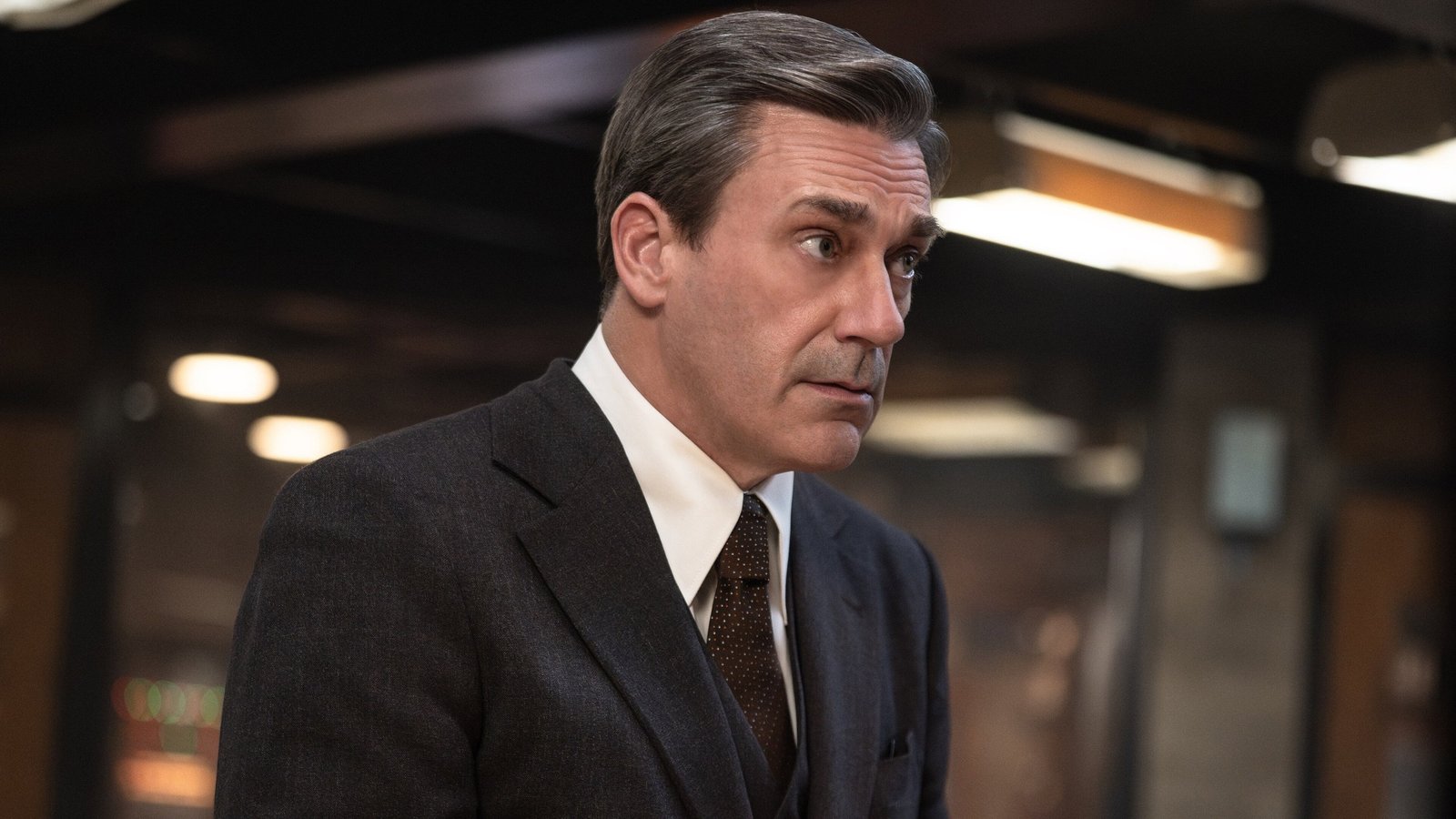
William Jackson Harper, as Fred’s colleague Ben Hairston, gets the line that frames the season, warning him that the moment they do something to save someone’s life, they are in the story. It is a good scene because neither man is wrong. Fred’s instinct is decent and his interview technique, patient and respectful and curious, plainly keeps Kiritsis talking, but the show never lets you forget that a calm voice on the radio is also a very good ratings strategy. Hamm lets a small smile slip after the first interview goes well, and it is a sharp piece of acting, the look of a man who has remembered he is good at his job.
The craft decision that carries the whole thing is the split screen. A story told largely over telephone lines and radio waves could easily have become two men talking in two rooms, and Arkin and his editors solve it by dividing the frame, so that Fred at the microphone, Kiritsis at the receiver, and the listeners in their kitchens and patrol cars all share the image at once. It turns a conversation into a broadcast. That is exactly right, because what the series is dramatizing is not a phone call but an audience. It also looks terrific in the period setting, all wood paneling, heavy headsets and winter light.
Where it wobbles, and critics have split on this, is tone. The show has a dark comic streak running through it, with a blustering police chief played by Mark McKinney and a cluster of bickering lawyers who feel lifted from a newsroom farce, and it does not always commit to it. Some reviews have praised it as a smart blend of true crime and comedy, while others found the direction too cautious to let the jokes land. Watching the first two episodes, both readings seem fair, and it may simply depend on whether you want the laughs to be louder or the dread to be heavier.
The comparison nobody can avoid is “Dead Man’s Wire”, the Gus Van Sant film that opened in January with Bill Skarsgård as Kiritsis and Colman Domingo as a radio host renamed Fred Temple. That film had a little under two hours to tell the whole story. It was a strong one, and very few people saw it. The series has eight episodes and the real names, which gives it room the film never had, to live inside the station, the police command post and Fred’s marriage to Barbara (Mireille Enos). Whether eight hours is the right length for 63 of them is the open question, and the premiere does not settle it.
That question matters more because the ending is public record. Hall walked away unhurt after Kiritsis staged a press conference and let police cut the wire, and Kiritsis was found not guilty by reason of insanity and spent more than a decade in a psychiatric hospital. A series that everyone can look up has to earn its suspense from character rather than outcome, and the first two episodes suggest the writers know that, since the tension they build is less about whether Hall survives than about what the broadcast is doing to everyone who hears it.
It also lands at a pointed moment. A story about a man who discovers that the fastest way to be heard is to make himself live content was always going to read differently in 2026 than in 1977, and the show seems aware of that without underlining it. Nobody in these episodes, thankfully, gives a speech about the media. They just keep checking the ratings, and that does the work on its own.
On the evidence of the premiere, “American Hostage” is a confident, handsomely made drama with two excellent lead performances and a slightly uncertain sense of how funny it is allowed to be. Hamm is probably doing his most controlled work since “Mad Men”, and Ribisi is unsettling in the best way. If the middle episodes keep the pressure on the station rather than drifting into backstory, this might turn out to be one of the stronger true-crime series of the year, and the new episodes arrive weekly on MGM+ through November 1st.
What Do You Think? Is Fred Heckman doing the right thing by putting Tony Kiritsis on the air, or is he feeding the fire? Does the show’s dark comedy help the story, or does it undercut the danger Dick Hall is in? And after “Dead Man’s Wire”, is there room for a second telling of the Kiritsis case, or does eight episodes stretch a three-day story too thin?
See you on the next binge!