“Futurama” ended its Hulu run on Monday with an episode called “Final Ending: The Last Conclusion”, and the title is the joke. Hulu is not ordering a fifteenth season. The regular series is over for now, and the finale is an entire half hour about Fry needing to know how a story ends. It is the show’s 180th episode and it does not give Fry, or the audience, the ending they want.
This is not a cancellation in the usual sense. Hulu has ordered three extra-long specials instead of another season. The first is a Christmas episode due in 2027, and it brings back Robot Santa. Creator Matt Groening is treating the finale as a pause rather than a goodbye. Warning beyond this point there are spoilers for the “Futurama” season 14 finale and for how it ends.
The regular series is over for now, and the finale is an entire half hour about Fry needing to know how a story ends.”
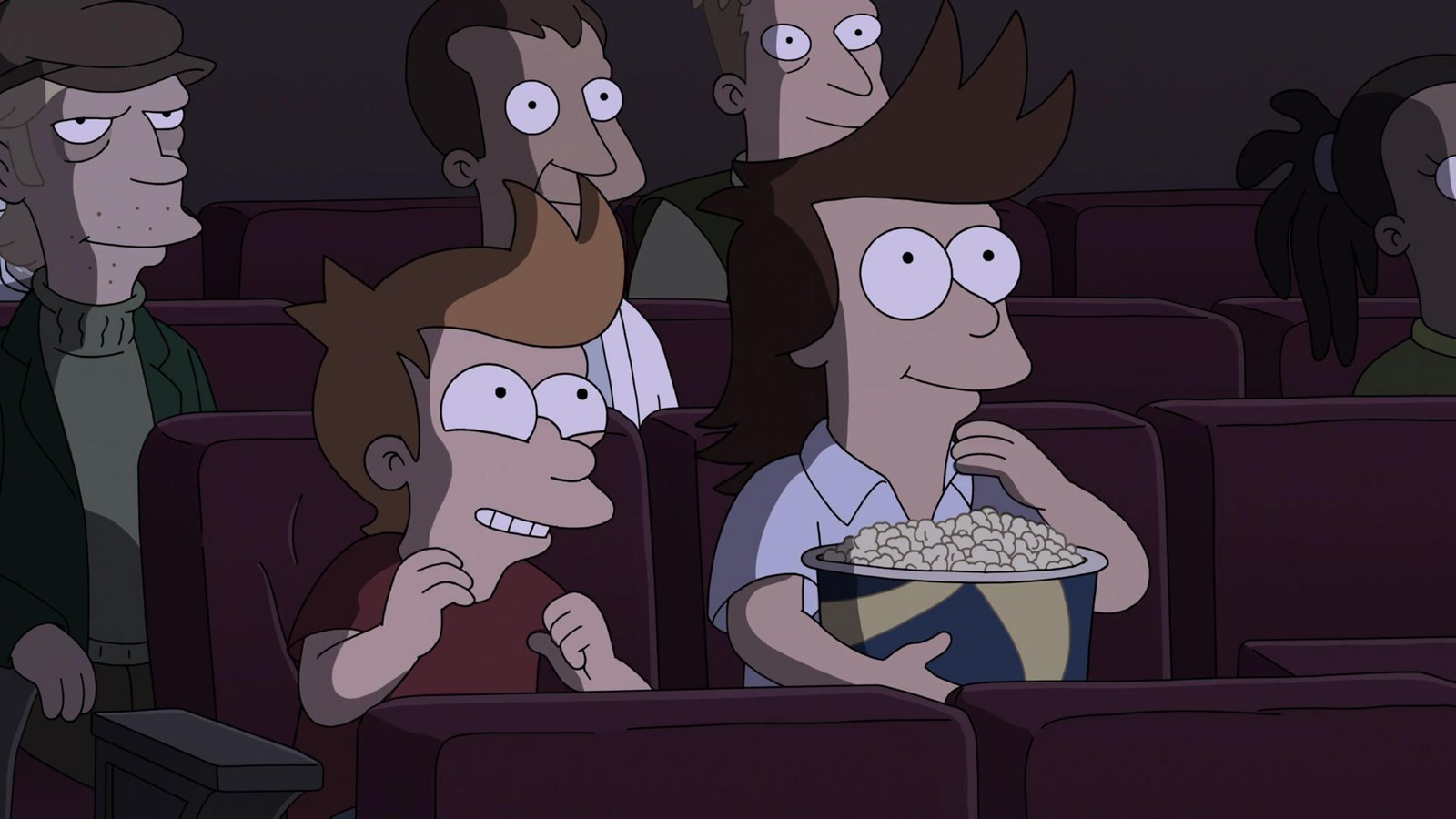
The episode opens in the twentieth century. Young Fry (Billy West) and his brother Yancy skip a museum trip and sneak into a PG-13 movie called “Deathbot 3000”. They get thrown out by police right before the ending. On screen the two heroes Steve and Cheryl are deciding whether to press a mysterious button that will either save the world or destroy it. Fry never finds out which. A thousand years later he is still thinking about it, and when he learns that a copy of the film sits in a cryogenics archive, he drags the Planet Express crew along to get it.
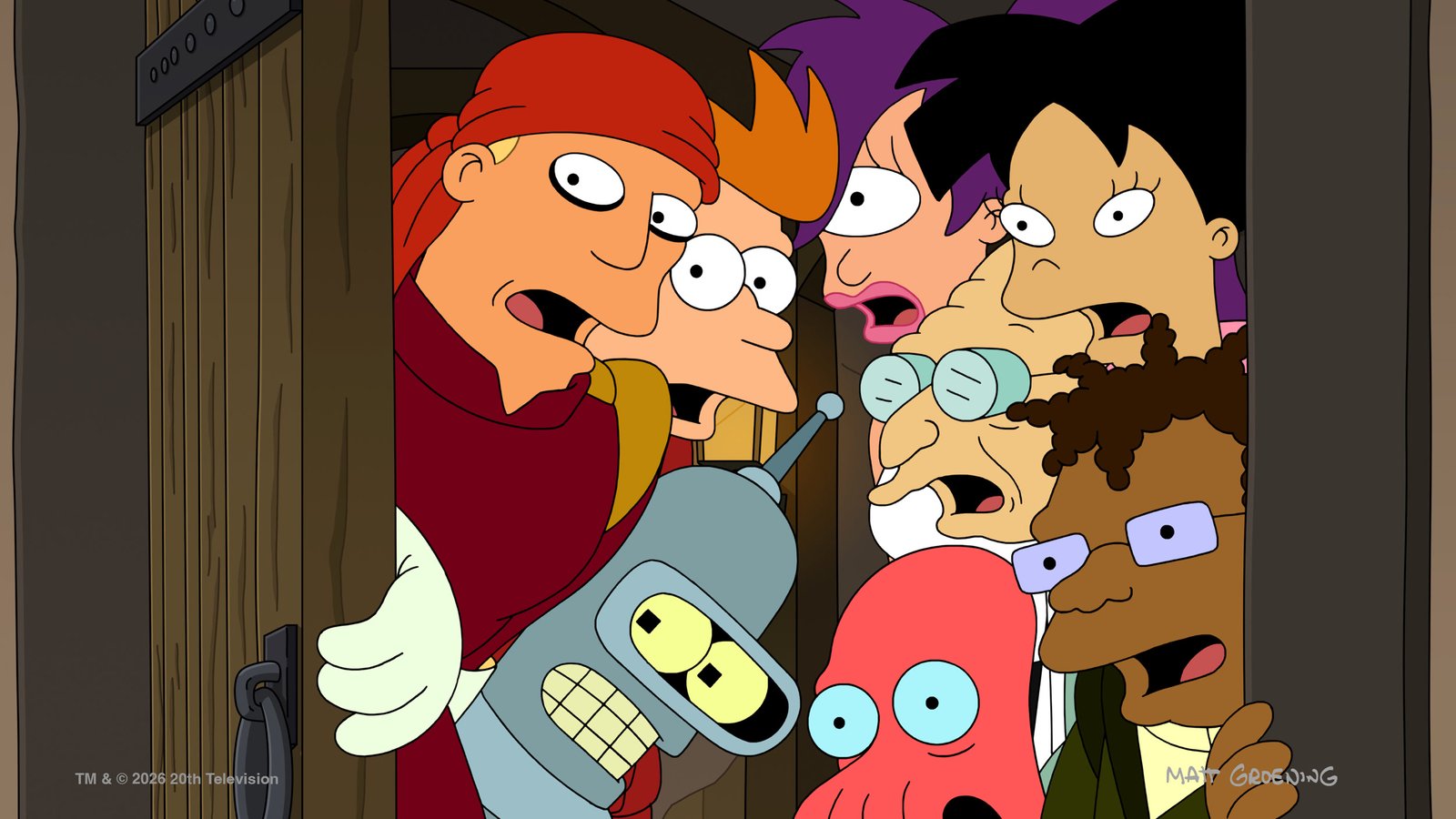
From there the episode splits into a string of cliffhangers that are each cut off at the worst moment. Zoidberg is babysitting a child and ends up attempting surgery near a runaway train. The Robot Mafia keeps trying to kill Bender (John DiMaggio), mostly with trains. Professor Farnsworth explains why people need endings by telling a story about cavemen hunting a mammoth in a tar pit, with the crew drawn as their own prehistoric ancestors. His conclusion is the episode’s thesis: “Your ancestors didn’t get any survival benefit from hearing how stories end, so they didn’t evolve the urge!”
The emotional thread runs through Yancy. The episode revisits his wedding and has Fry reflect on how that day at the movies shaped his brother’s life. This is the relationship the show has been mining since season three’s “The Luck of the Fryrish”, still one of its best episodes. That one revealed that Yancy named his son after the brother who vanished. Every time “Futurama” goes back to Yancy it is really going back to the family Fry lost, and this finale knows it.
The climax is a chase. Fry and Leela (Katey Sagal) pursue a train carrying the projector up the side of a skyscraper, and they finally see the ending of “Deathbot 3000”. The button stops time. Steve and Cheryl get to live out their lives together, frozen in one perfect moment, which is a deliberate echo of “Meanwhile”, the 2013 finale in which Fry and Leela did exactly the same thing. Leela’s reaction is the episode’s best line: “What a beautiful ending. Too bad we can’t stop time.” Fry is finally satisfied and admits, “I do love a happy ending.” Then the show undercuts it immediately, because this is “Futurama”.
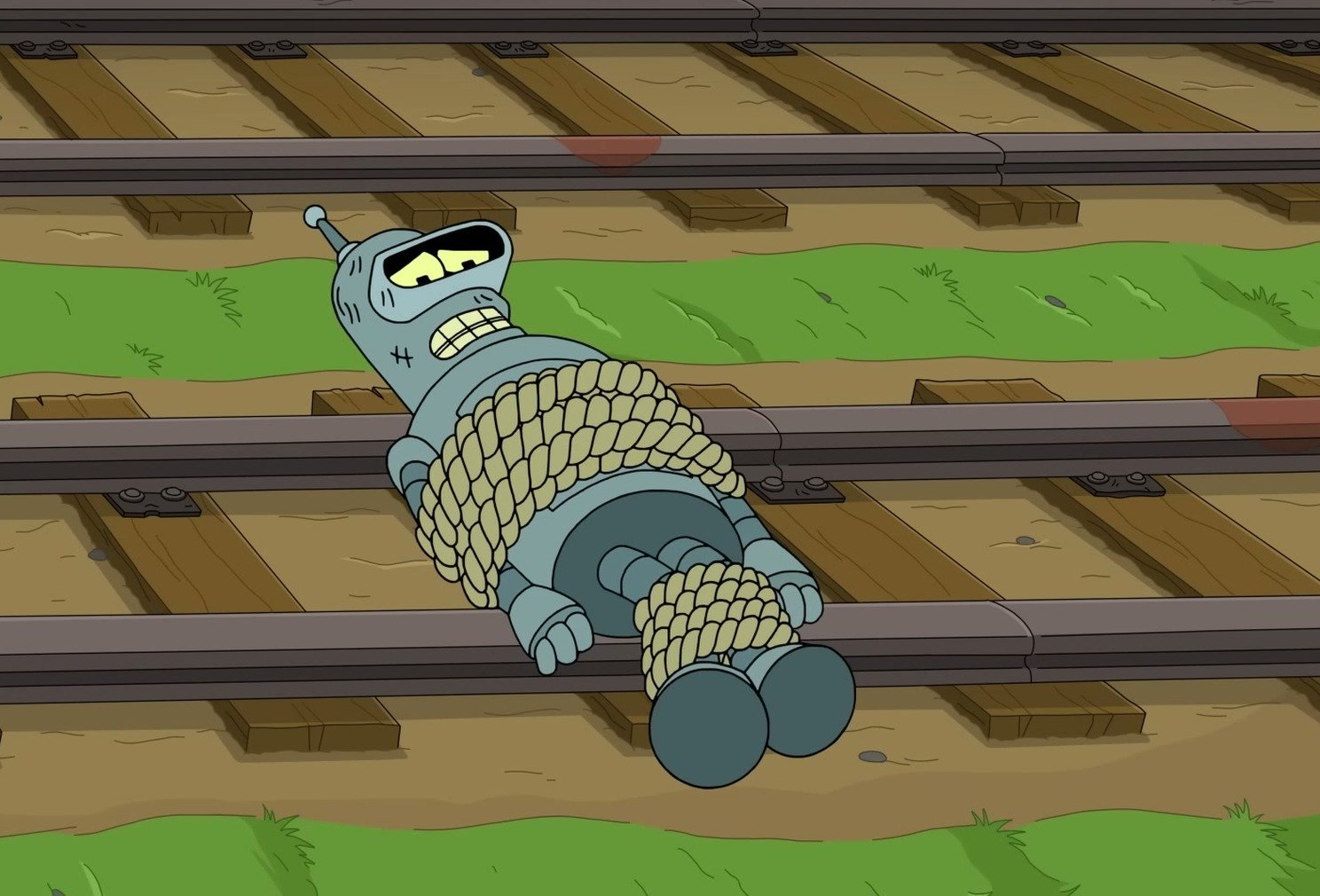
The last beat belongs to Bender. The Robot Mafia’s train finally catches him, and the episode closes on Leela shouting “He’s dead!” It is a cliffhanger on purpose, and Primetimer’s explainer asks the obvious question, whether Bender is actually dead, and the honest answer is that the show has left it open. It has three specials to answer it, and it has killed and revived Bender before.
Reviews were warm without being ecstatic. Bubbleblabber gave it a 7 out of 10. It praised the emotional story around Fry’s past and the choice to leave the crew “right where they belong” but noted that some of the absurd stretches, like the cavemen outsmarting a mammoth and then trapping themselves, hang together loosely. That is a fair read, since the episode is built out of fragments on purpose, and not every fragment lands.
The structure is also the most self-aware thing “Futurama” has ever done, which is saying something. This is a show that has ended four times. Fox canceled it in 2003, after five seasons. Four direct-to-DVD movies brought it back, and Comedy Central picked it up as a series until 2013. Hulu revived it again in 2023. Each of those endings was written as if it might be the last, and “Meanwhile”, the 2013 finale, is still one of the most beloved series finales in animation. This one is built on the idea that an ending is something fans want more than they need.
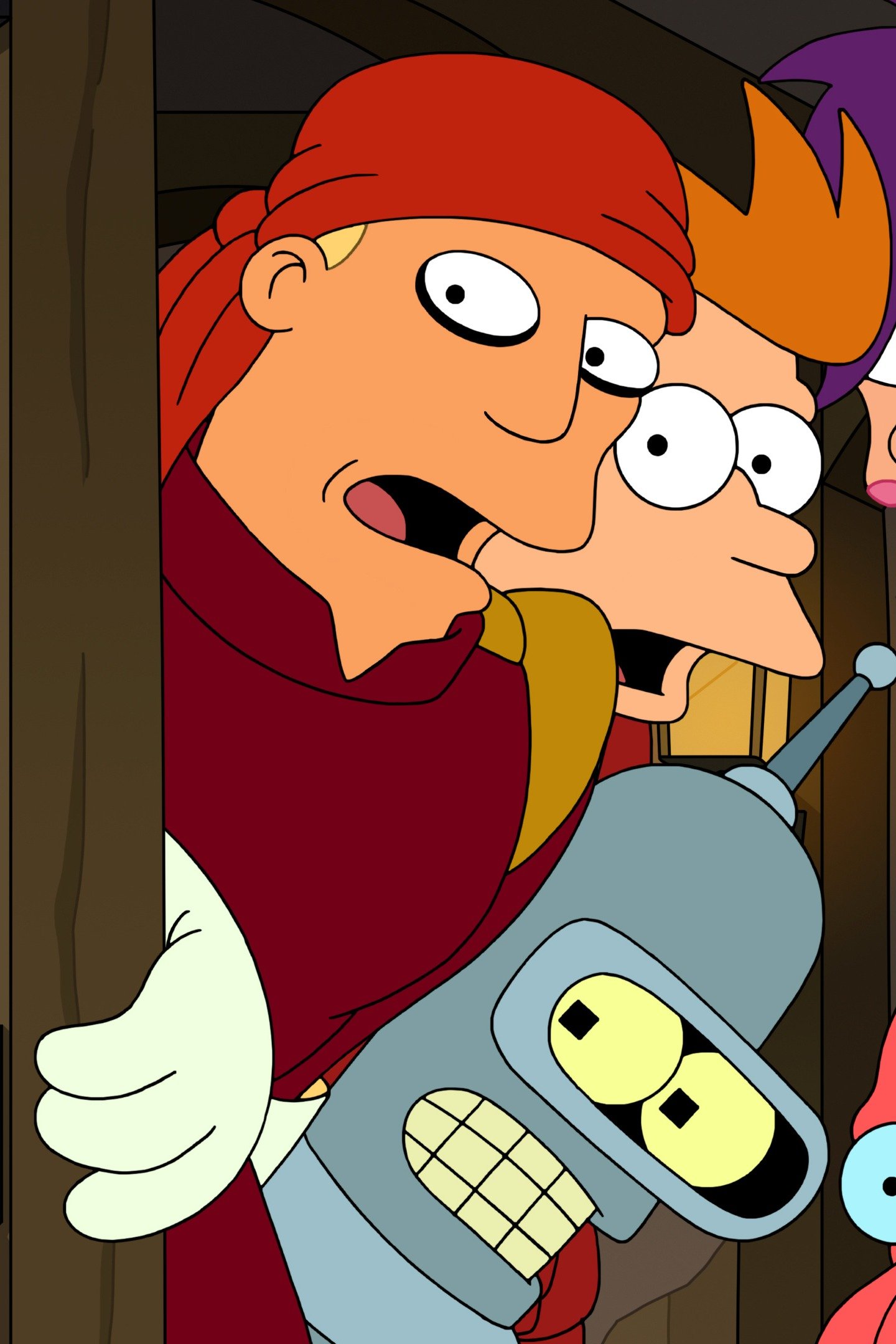
The Hulu years were a real run and not a victory lap. Hulu ordered 20 episodes in 2022 and added two more seasons in late 2023, which carried the show to this finale. The core cast came back for all of it. Billy West still voices the Professor and Zoidberg as well as Fry. Katey Sagal is still Leela and John DiMaggio is still Bender, though he nearly missed the revival over a pay dispute in 2022 before a deal was reached. David X. Cohen, who developed the show with Groening, stayed on to run it. That continuity is a large part of why the revival felt like the same show rather than a tribute act.
Groening’s statement leans all the way into that history. “They can put us in a coffin, they can nail the lid shut, but they can’t bury us. We will rise again,” he said. He also promised that the specials will answer “unanswered questions for true fans” and resolve story threads “hinted at from the very beginning.” That second phrase is a big promise from a man whose other show, “The Simpsons”, opened its 38th season the night before this finale and is already renewed through season 40. Groening knows better than anyone how differently two shows from the same creator can be treated. Fans will read it as a pointer to the oldest mysteries in the show, from the Nibblonians to Fry’s place in time.
The business logic is simple. Specials are cheaper to commit to than a full season. They work as events on a streaming service and they keep the brand alive without a long-term order. Hulu has done something similar with “Family Guy”, which now makes its Halloween and holiday episodes for the streamer. Robot Santa is a smart first choice. He has been a fan favorite since the character’s first appearance in season two, and a Christmas special is the easiest possible sell.
As a finale, “Final Ending: The Last Conclusion” works best as a statement of intent. It tells the audience the show knows exactly how many times it has been canceled, that it does not intend to stop, and that an open ending is the most honest ending it can offer. Fry gets his happy ending in the movie. The show refuses to give itself one. For a series whose best finale was about two people living forever inside a single frozen moment, that feels right.
What Do You Think? Is Bender really dead, or will the first special undo it within five minutes? Was an open-ended finale the right call, or did “Futurama” owe fans real closure this time? And which old mystery do you want the three specials to finally answer?
See you on the next binge!