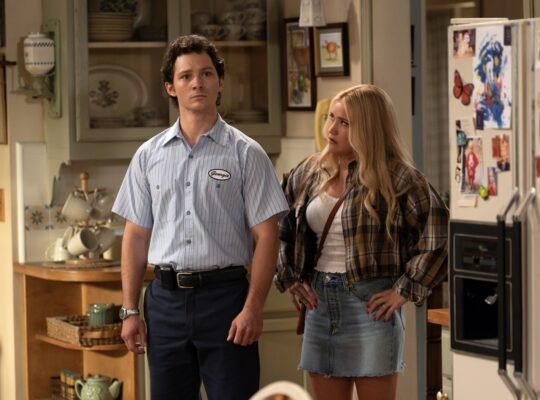
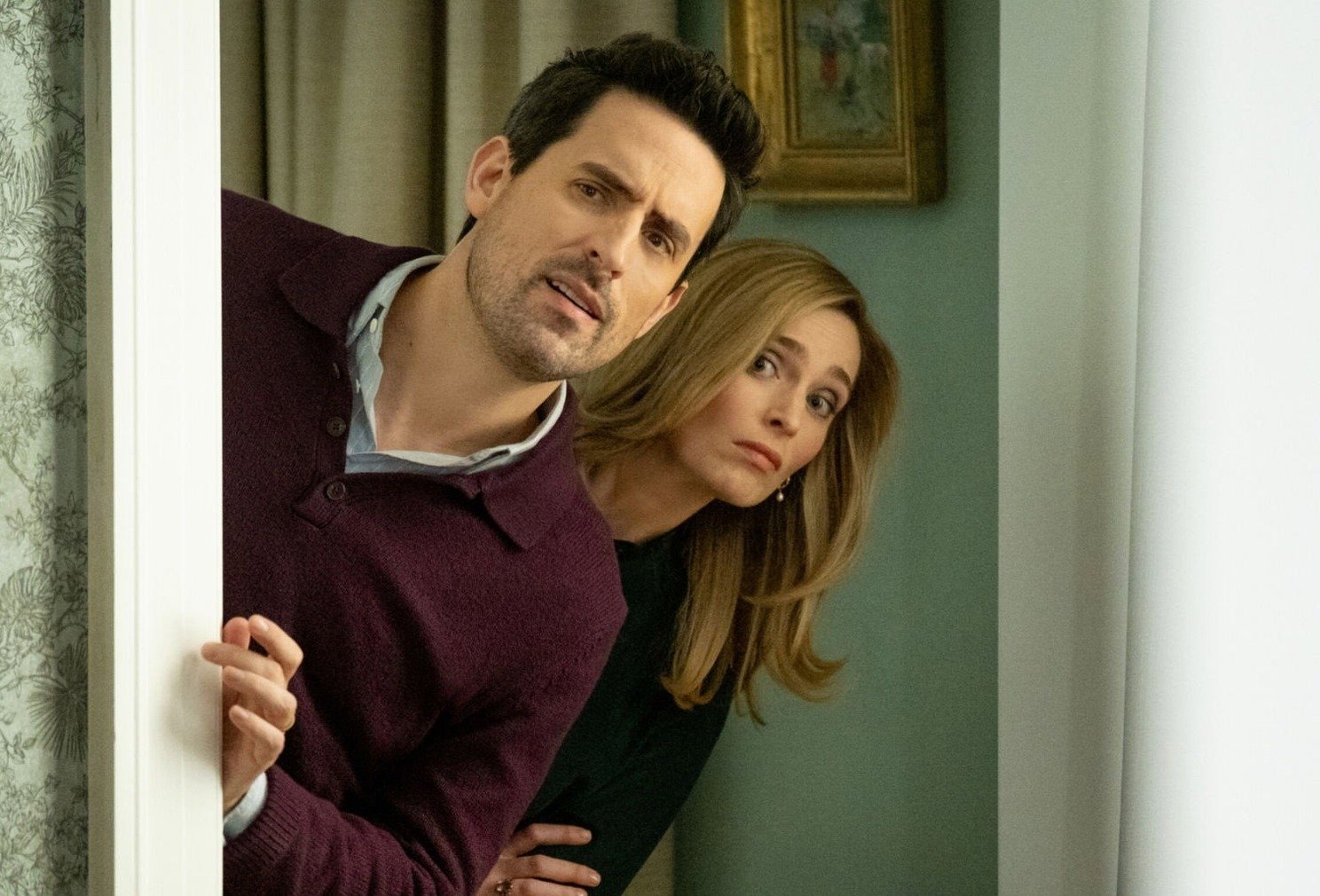
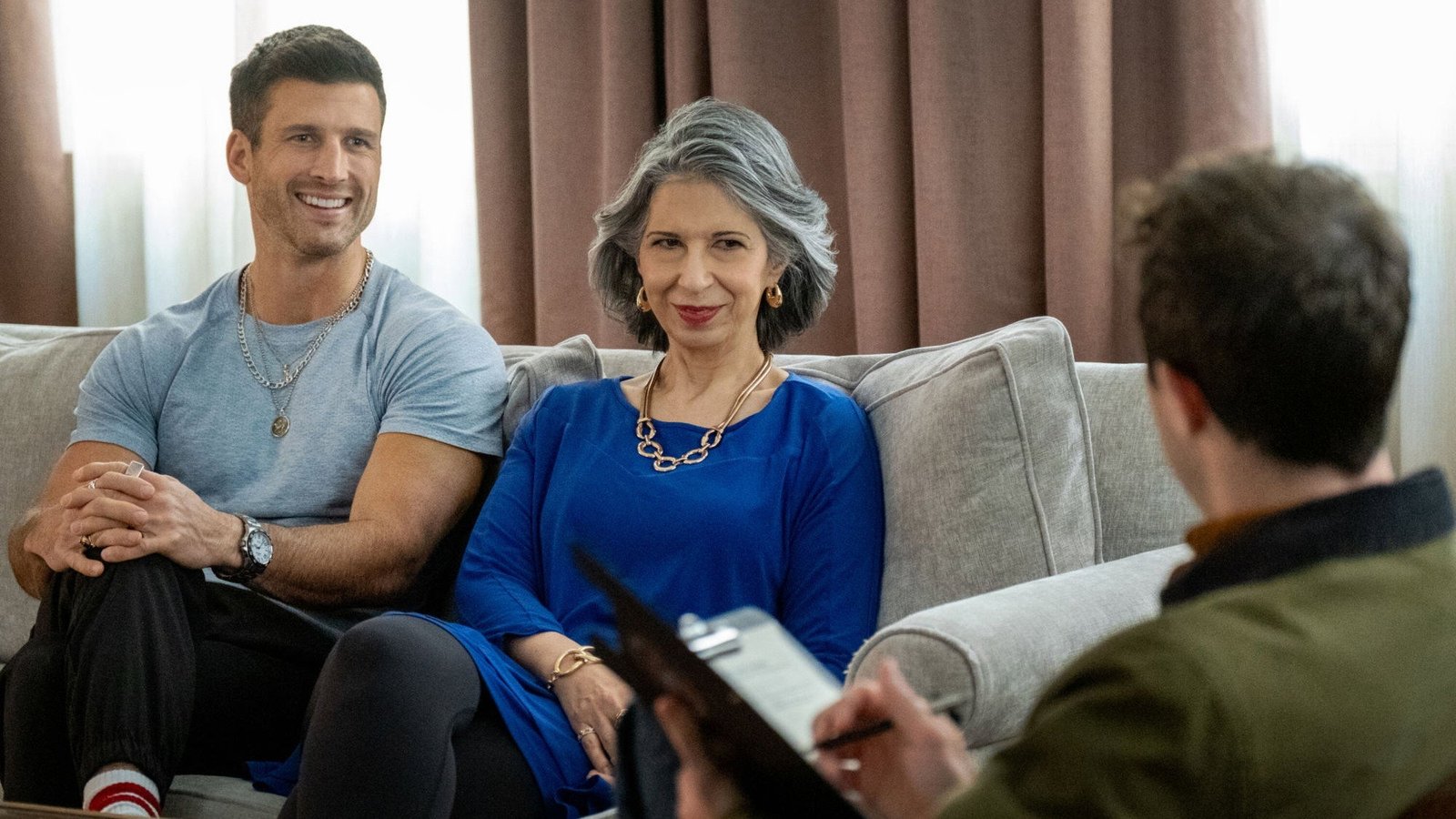
Max (Jaren Lewison) turns up at a house in Seattle on official business, and he has no idea who lives there. He is a Social Security investigator, and the file he is working belongs to Jesse (Parker Young), a vampire personal trainer who spray-tans because otherwise he would not show up in the mirrors at his gym. The house also happens to belong to the family of his girlfriend, Emma (Helen J. Shen), a veterinarian who is a good deal older than she looks. The two people who run that house are a five-hundred-year-old married couple who have mostly stopped speaking to each other, and the pilot of CBS’s “Eternally Yours” is really about them.
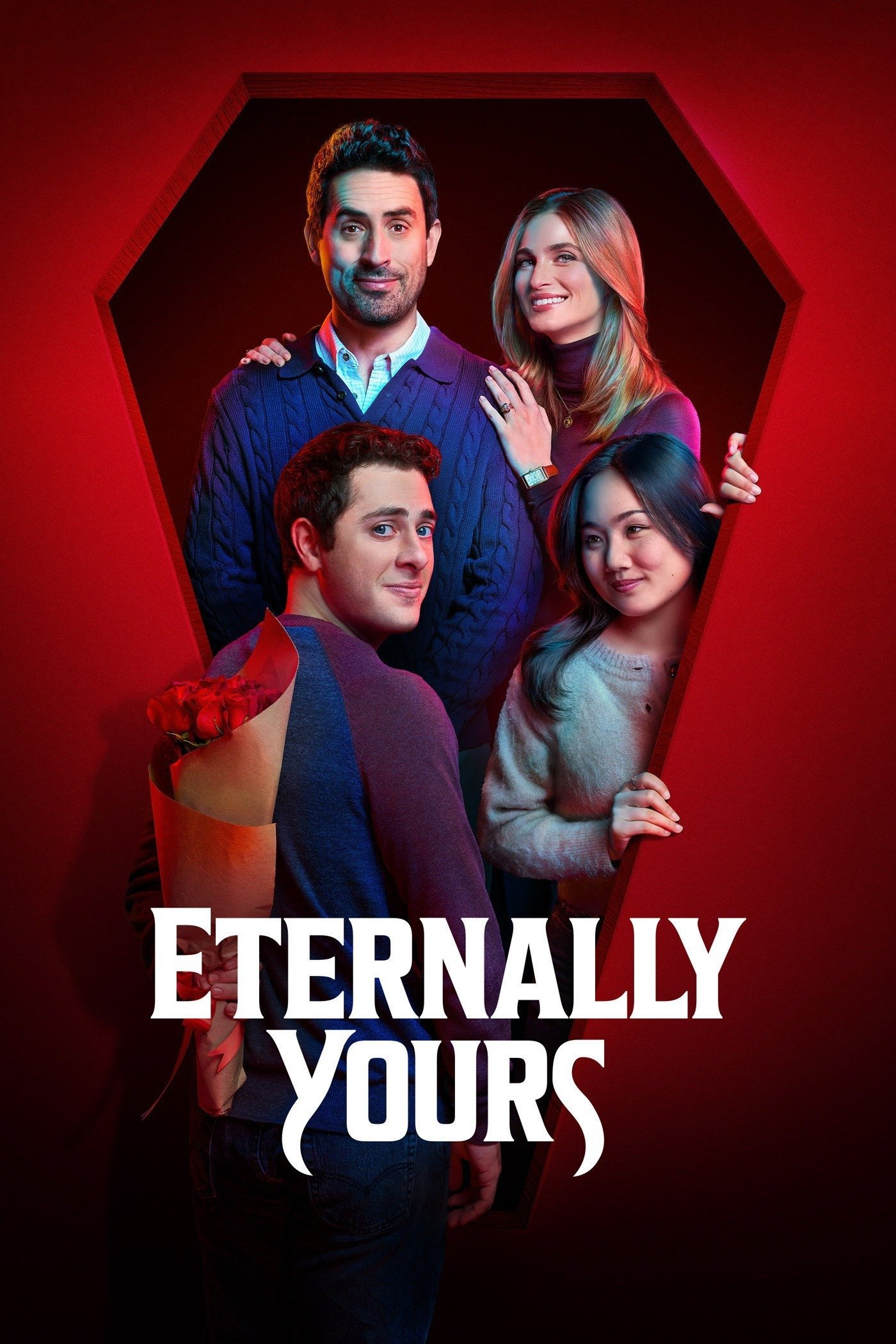
Charles (Ed Weeks) and Liz (Allegra Edwards) are that couple, a vampire marriage gone cold after roughly five centuries together. The show comes from Joe Port and Joe Wiseman, who also run CBS’s “Ghosts,” and they clearly prefer building a sitcom out of a condition everybody already understands rather than a mystery about it. The premiere aired Thursday, October 8th, at 8:30 p.m. Eastern, with Paramount+ picking the episode up the next day. Emma is the daughter Charles and Liz adopted into the household, saved from diphtheria by being made a vampire, and the rest of that household fills out fast. Jesse’s human wife, Phyllis (Rose Abdoo), gets her memory wiped on a schedule, so she never quite notices her husband does not age. Jesse’s half-vampire twin sons, Henry (Shylo Molina) and Mort (Tristan Michael Brown), split the family’s powers unevenly, one with the full set and the other stuck reading the family dog’s mind instead. This review is written from the broadcast and from the critics who saw the pilot ahead of time, not from an advance screener of our own. Warning beyond this point there are spoilers for “Eternally Yours” season one, episode one.
The two people who run that house are a five-hundred-year-old married couple who have mostly stopped speaking to each other, and the pilot of CBS’s “Eternally Yours” is really about them.”
Max’s benefit-fraud file on Jesse is what actually drags him into the family’s business, but it does not get him to the truth right away. In one recap of the broadcast, Liz sees him as an opportunity first. Perhaps, she decides, this nice young man can help her and Charles work through their marriage problems. Charles has a darker idea. The same recap has him talking Liz into simply killing their unwanted visitor, on the logic that hunting together again might be exactly the thing their marriage needs, a romantic gesture that only makes sense to two people who have been married since roughly the 1500s. Before they can act on it, Emma interrupts them, and Max finds out exactly what family he has been dating into.
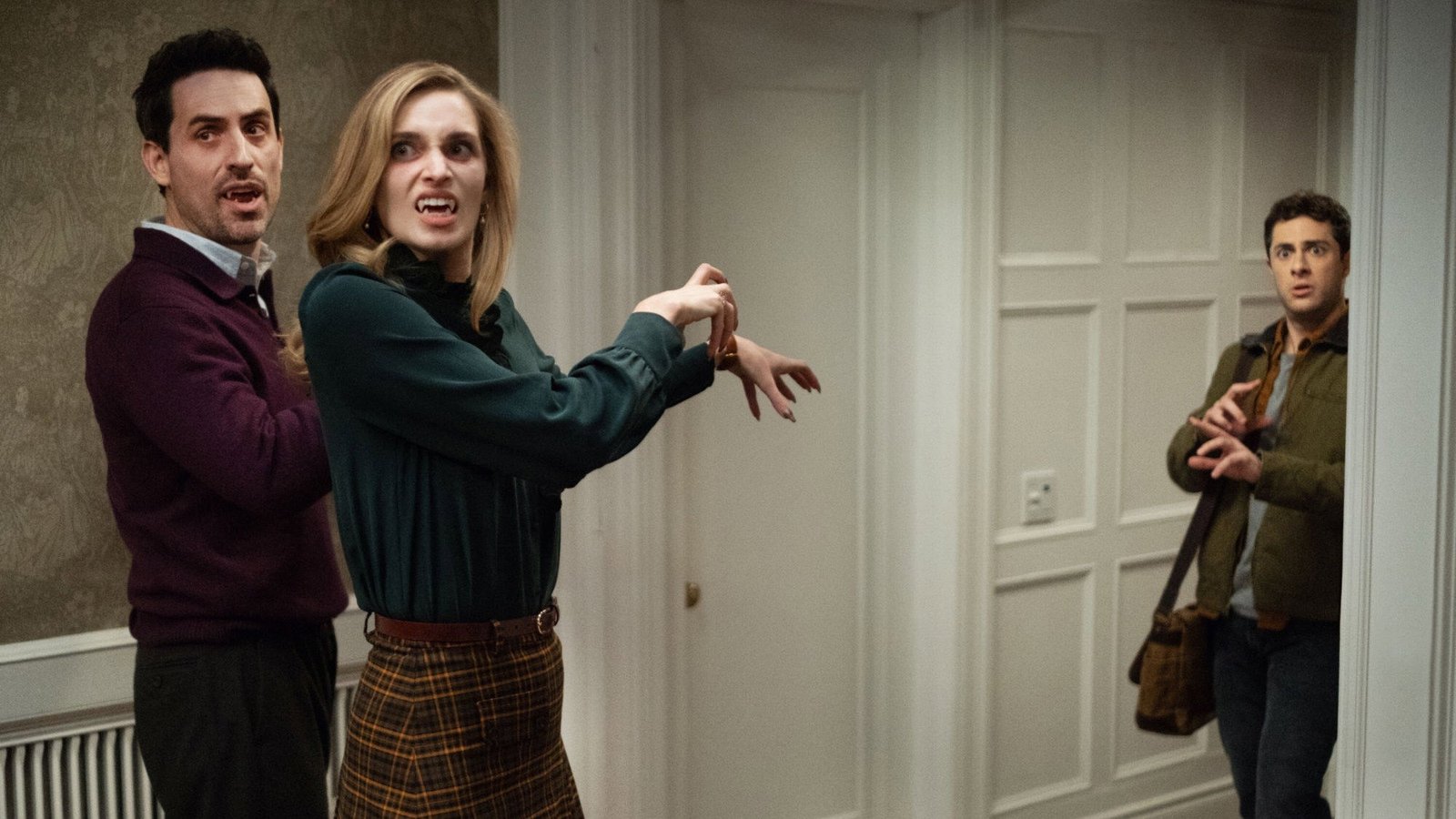
Max, understandably, wants out. In the same recap’s telling, Charles is in no hurry to talk him back in, since he does not love the idea of his daughter dating a human in the first place, and it is Liz who goes after him. Her reason is personal rather than diplomatic. She sees her own early romance with Charles in what Emma and Max have, down to a coven leader who once forbade the relationship outright and could not stop it. Max comes back and stands up to Charles directly, and Charles, after five hundred years of practice losing exactly this argument, gives in.
The rest of the household is built out of running gags. Jesse’s spray tan comes up in several reviews, and not always kindly: The Hollywood Reporter called it “a needless tidbit that raises far more questions than the show is interested in answering.” Phyllis’s recurring memory wipes do roughly the same work “Ghosts” gets out of its specters, turning something that should be horrifying into a scheduling inconvenience that nobody in the house treats as urgent. Henry and Mort split the premise’s dumbest and best joke between them: twin half-vampire brothers, one with every power the family has, the other able only to hear what the family dog is thinking. It is a bit that either earns a season of mileage or runs out of gas by Halloween, and on one episode alone, it is honestly too early to say which.
None of that is the actual engine, though. The engine is Charles and Liz, married for roughly five hundred years and bound to each other by vampire law rather than by any remaining choice in the matter. The show’s Council of Elders forbids divorce outright, and the penalty for trying is considerably worse than paperwork. Watching two people who cannot leave each other try to remember why they got together in the first place is the show’s real pitch, underneath the vampire mechanics. It is a clever engine for a sitcom, precisely because it cannot resolve itself the normal way a sitcom marriage resolves itself. Collider and Screen Rant both singled out the chemistry between the two leads, and Variety, for one, thinks the show around the marriage still needs time to catch up to it.
The twist that closes the half hour comes out of the house’s own chaos rather than out of Charles and Liz directly. Mort is practicing his vampire powers, and he accidentally hits Max in the head with a miniature bust of Charles. Max dies. Charles’s fix for a dead boyfriend turns out to be the same tool he had floated as a weapon earlier in the episode, just pointed in the other direction: he turns Max into a vampire. It solves the human-boyfriend problem by removing the human part of it. The A.V. Club’s review felt that closing twist plays “more like the stinger to a season finale,” and wondered why Max is let in on the family secret so early. It is a fair complaint. A comedy that spends its biggest swing in week one has to find a second one fast.
The reviews that followed were genuinely split, which is the honest way to describe them rather than calling the premiere a hit or a miss outright. Metacritic’s early tally sat at 58, “mixed or average,” built from five critic reviews running from warm to actively hostile. Collider’s Samantha Coley landed closer to the warm end. She wrote that “Weeks and Edwards have great chemistry; rooting for them to remember why they fell in love in the first place is just as much fun as it is to watch them bicker.” The A.V. Club scored it a 75 on Metacritic’s scale, and the Los Angeles Times gave it a 70, with Robert Lloyd calling it “the likable, clever ‘Eternally Yours.'” Screen Rant, outside Metacritic’s tally, called “the palpable chemistry between the main cast” the best part of the first episode and praised a “delightfully camp vibe,” though it also noted a vaguely political edge to the friction between Charles and Emma that the sitcom “clearly doesn’t plan on diving deep enough” into to make it count.
The Hollywood Reporter’s Daniel Fienberg took the opposite position, and he did not soften it. He called the pilot “basically laugh-free” and “a filmed plot summary,” and landed on a verdict that is almost generous in how little it gives the show credit for: “It doesn’t suck, but the only things to recommend Eternally Yours are hypotheticals.” Variety’s Alison Herman came down somewhere in the middle. She found “Charles’ nihilism in the face of eternal, often miserable life” to be “an amusing trait,” while writing that “the show needs more time to carve out its own identity.” That is probably the fairest single sentence written about a premiere this busy, one trying to be a marriage comedy, a family sitcom, a fraud investigation and a twist ending, all inside half an hour.
The cast and producers of “Eternally Yours” share New York Comic Con’s Main Stage with “Ghosts” on Friday, October 9th, at 1:45 p.m., so anything new about where the season goes from here will come out of that room.
What Do You Think? Does turning Max into a vampire solve the show’s human-boyfriend problem or just trade it for a bigger one? Can Charles and Liz’s marriage carry a whole season if the Council of Elders never lets them actually leave each other? And did the premiere move through its best ideas too fast, or is that exactly the pace a freshman network sitcom needs?
See you on the next binge!