
Suzanne Collins does not publish often, and when she does, she is usually trying to tell you something uncomfortable about the world you are busy ignoring. “The Hunger Games: Sunrise on the Reaping” arrived on shelves today, March 18, 2025, and it drags us back to Panem for the story a lot of longtime fans have quietly wanted for years: the origin of Haymitch Abernathy. Set roughly twenty-four years before Katniss Everdeen ever volunteered, it centers on the 50th Hunger Games, and it is exactly as brutal, pointed, and politically furious as you would expect from the woman who built this dystopia in the first place.
Let us establish the stakes for anyone whose Panem knowledge is a little rusty. Haymitch is the drunk, sardonic mentor of the original trilogy, the man who guides Katniss and Peeta through the arena while nursing wounds nobody bothered to look at. In the movies, Woody Harrelson played that broken, brilliant survivor. What we never got, until now, was the how: how a sharp, defiant kid from District 12 became that hollowed-out shell. “Sunrise on the Reaping” is the answer, and Collins does not soften it. Warning: beyond this point there are spoilers for Sunrise on the Reaping and the outcome of Haymitch’s Games.
What we never got, until now, was the how: how a sharp, defiant kid from District 12 became that hollowed-out shell.”
The setting is the key. The 50th Games are a Quarter Quell, one of the special anniversary editions the Capitol uses to twist the knife, and this particular Quell doubled the number of tributes, twice the children, twice the slaughter. That is the meat grinder a young Haymitch was thrown into. Collins has always used the Quells to escalate the horror and to expose the machinery of oppression, and returning to the one that scarred her most tragic character is a deliberate, loaded choice.
Here is what makes the book land harder than a simple prequel victory lap: we already know Haymitch wins. That is not the tension. The tension is the cost. We know he survives the arena and we know he spends the rest of his life a haunted man, so the story becomes less about whether he makes it out and more about what the Capitol takes from him on the way. Collins uses that inevitability like a slow tightening vice. Every small act of rebellion, every flicker of hope, carries the weight of our knowledge that it will not save the people he loves. It is a devastating way to structure a book, and it works.

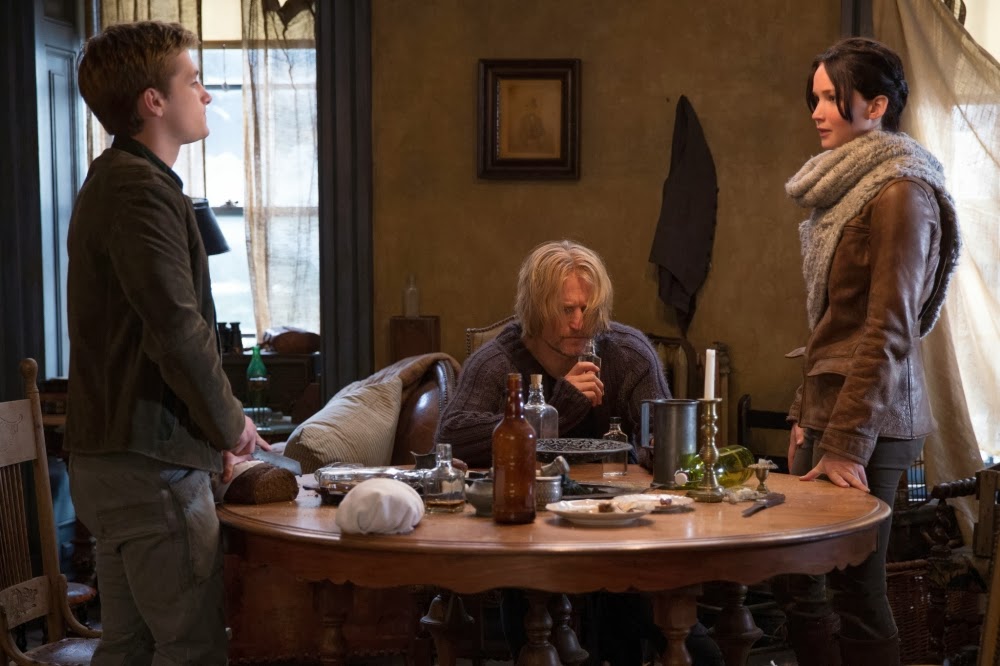
The novel also leans hard into the themes Collins has been hammering since the beginning, sharpened for this moment: propaganda, the manufacturing of consent, and how authoritarian systems rewrite their own atrocities into spectacle. This is a Games told through the eyes of someone who sees the strings being pulled and is powerless to cut them. Collins is not subtle about the parallels to our own media landscape, and she does not need to be. The best dystopian fiction is a mirror held at an angle, and “Sunrise on the Reaping” holds it steady.
Collins has never written a Hunger Games book purely to cash in, and this is no exception. She reportedly returns to Panem only when she has something specific to say, and the choice to tell Haymitch’s story now, in this climate, reads as intentional. A story about a young person watching the powerful weaponize truth and grief for control is not an accident. It is a thesis with a body count.
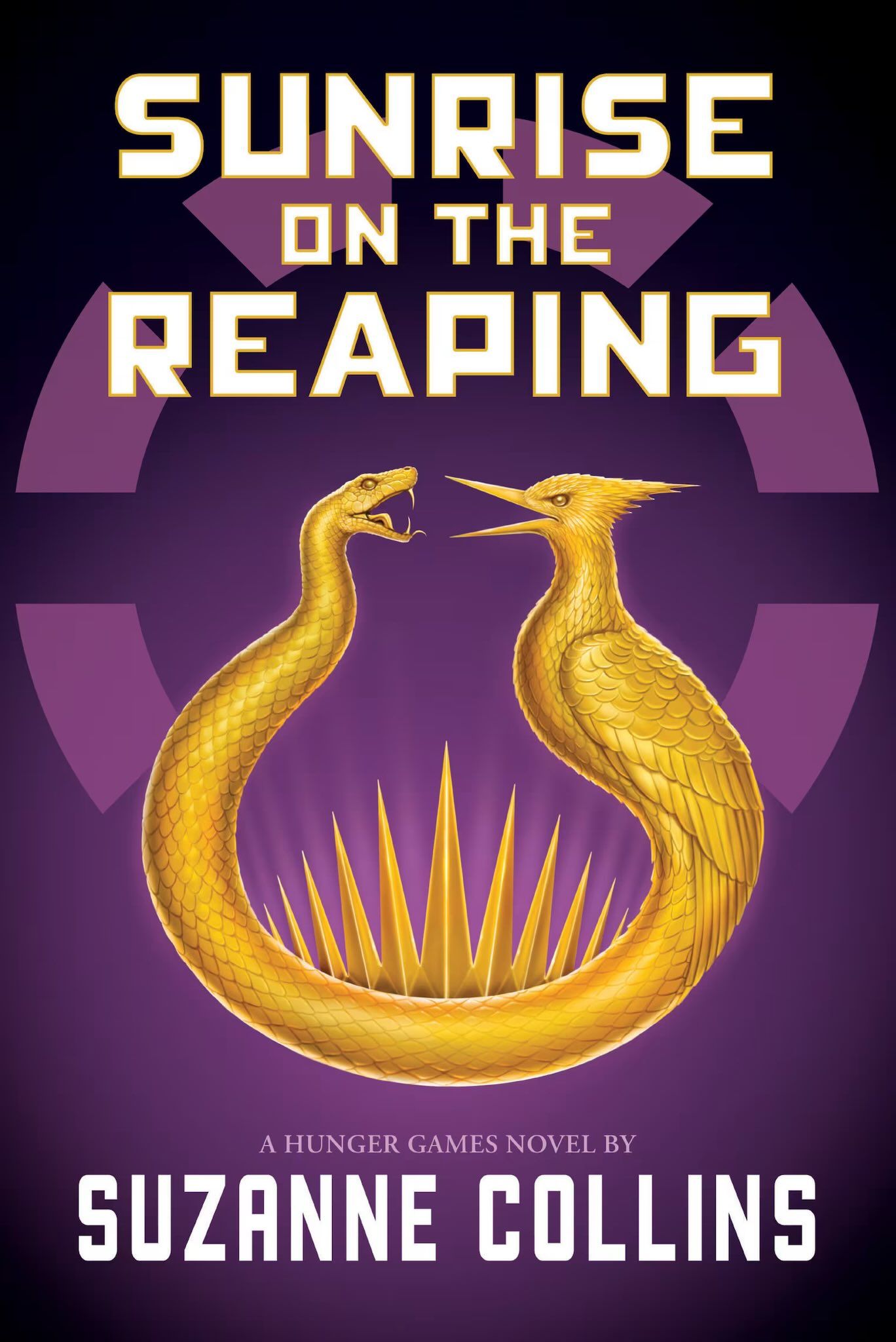
Naturally, this is not just a book. Lionsgate greenlit a feature film adaptation, with Francis Lawrence, who steered most of the original franchise, set to return to the director’s chair, and it is aimed at theaters in 2026. That means the harrowing story on the page is headed for the screen, and casting a young Haymitch to carry it will be one of the most scrutinized decisions this franchise has faced since it first found Katniss. Fans will have opinions. Fans always have opinions. This time, they are earned.
For those of us tracking the Hunger Games as one continuous, expanding chronicle, the original trilogy, the Snow prequel, and now this, “Sunrise on the Reaping” is a crucial missing piece, the origin of the man who quietly shaped Katniss’s survival. It deepens a character we thought we understood and, in classic Collins fashion, uses a story about the past to say something urgent about the present. Panem was never really about Panem. It was always about us. This book, arriving exactly when it did, makes sure we do not forget it.
What Do You Think? Does knowing Haymitch survives make his origin story more powerful or does it drain the suspense from his Games? Is Suzanne Collins right to keep using Panem as a mirror for real-world propaganda and media manipulation, or has the franchise made its point? And with a film adaptation on the way, who could possibly capture the young, defiant version of a character Woody Harrelson made so memorable?
See you on the next binge!