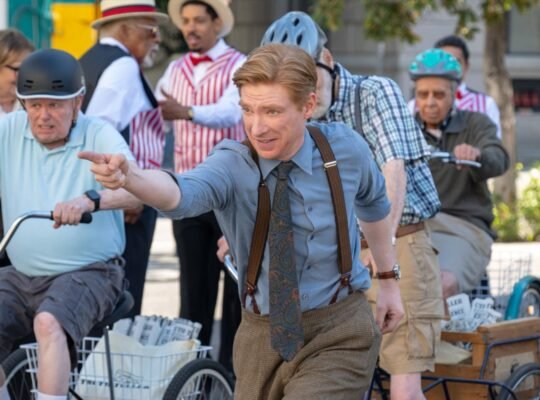
A shopkeeper in a small Colorado town sells three ten-year-old boys a set of electric bicycles for two hundred dollars, tells them cheerfully that these particular models carry a 92 percent chance of exploding, and then hands over a waiver so that none of what happens next is legally his problem. The boys sign it, because they are ten, and because the alternative is standing on the sidewalk watching Eric Cartman (Trey Parker) ride past their houses on the $2,000 machine his mother bought him. That one sale is the engine of “South American Biker Gangs,” and the episode spends the rest of its running time letting it turn over.
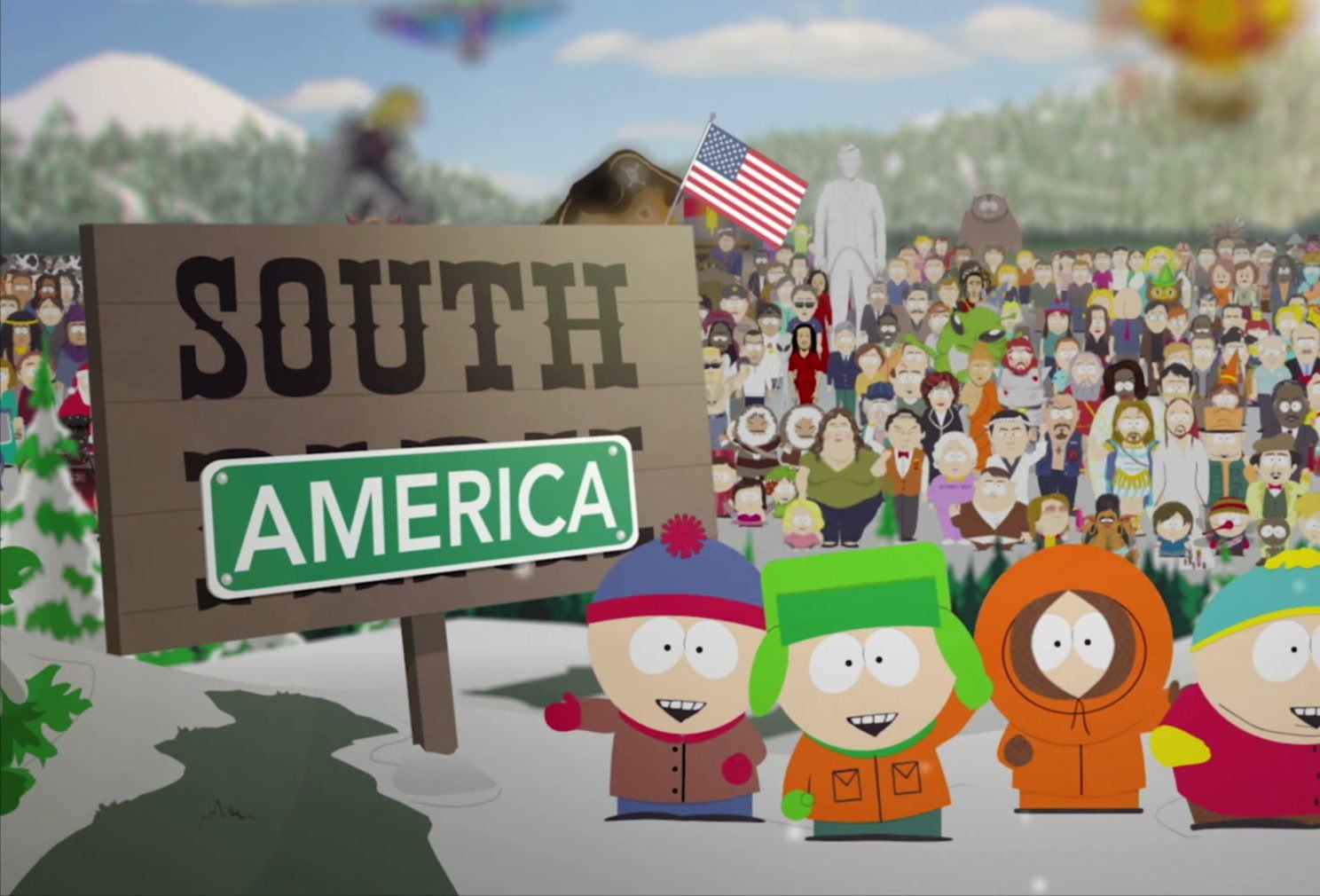
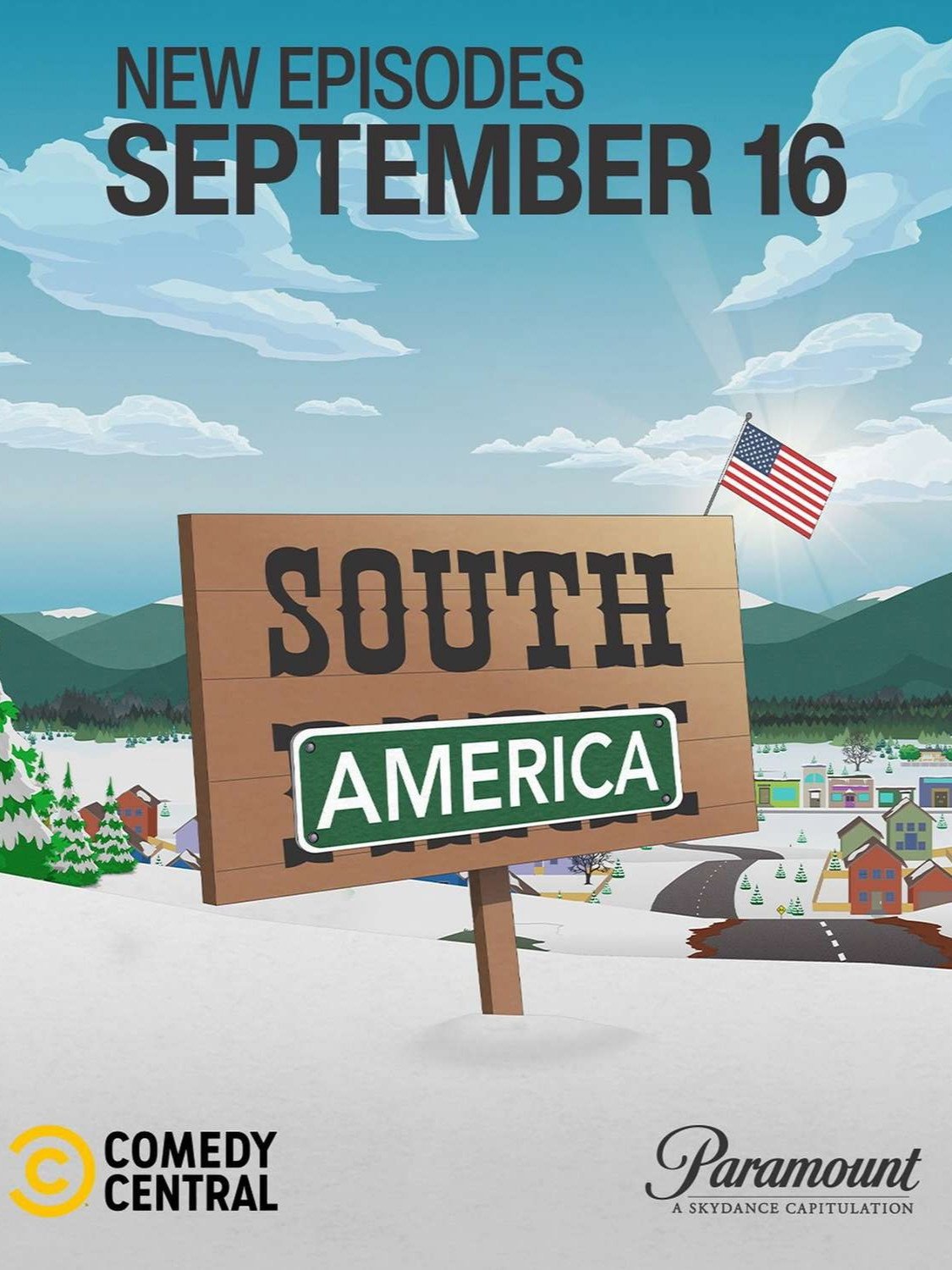
The premiere aired Wednesday night on Comedy Central under a title card that no longer reads “South Park,” because Trey Parker and Matt Stone have renamed the series “South America,” a joke pointed directly at the current administration’s habit of renaming geography. They announced it without cracking a smile, saying they were “inspired by the bravery and patriotism of Apple and Google,” and the new opening titles commit to the bit with a re-recorded theme, fresh vocals from Les Claypool, and a green AMERICA plate bolted straight over the word PARK on the old wooden town sign. Warning beyond this point there are spoilers for “South Park” season twenty-nine episode one, including which of the boys dies, what the fathers of the town do to a local shopkeeper, and how the whole thing gets resolved.
tells them cheerfully that these particular models carry a 92 percent chance of exploding, and then hands over a waiver so that none of what happens next is legally his problem.”
Cartman gets there first, and he gets there by faking his own bullying. He corners his mother in the bathroom, collapses into sobs on the floor, tells her the other boys have taken to calling him Chubby-Wubby, and asks for a bicycle so that he can exercise in front of them until it stops. What he actually wants is the Voltracer, a $2,000 Class 3 e-bike sitting in the middle of Keller’s Bike Shop, and he leaves with it. Inside a day he is tearing along sidewalks in a hoodie and a scarf, clipping traffic, terrorizing pedestrians, and finally riding straight through the front window of a Denny’s. This show has given Cartman a new toy many times before, but it has rarely escalated one this quickly.
Stan Marsh, Kyle Broflovski (Matt Stone) and Kenny McCormick all get the same answer at home, which is that the bikes cost too much and are not safe. The three of them end up on a bench working out how far behind they now are. Butters Stotch pulls up on a secondhand one he bought from Tolkien Black for four hundred dollars and never mentioned to his parents. It is Butters who points them toward the cheap Chinese shop on the edge of town. Randy Marsh, meanwhile, has already decided where he stands, and he arrives home in full cycling gear to announce that an e-bike is essentially a slave, because it does all the work for somebody else.
Randy takes it to the other fathers, and this is where the episode locates its real subject. He vents to Stephen Stotch and Richard Tweak over smoothies, and decides the law needs changing. Then he does what every adult in this town now does when confronted with a problem, which is ask Google how to fix it. The answer Google gives him is to bribe the police, so he turns up at the station with cash and cigars for Detective Harris. The detective takes the meeting, declines the money, and explains that nobody in government can be made to care about any of this. What he is personally holding out for, he says, is the release of “Grand Theft Auto VI” in November, and that single line does more political work than anything else in the half hour.
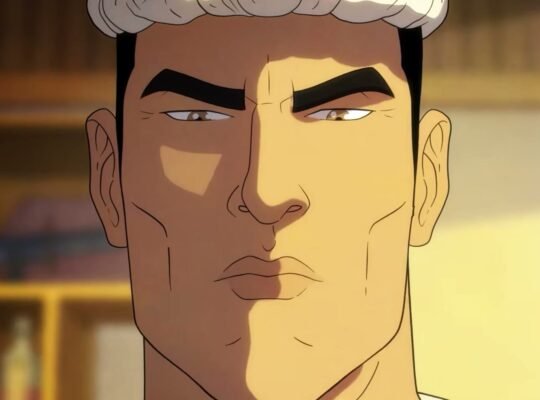
Rebuffed, Randy forms a club, recruits Roger Donovan off his own doorstep, and leads a column of middle-aged men on road bikes down to City E-Bike, where they corner the owner, Mr. Kim. He assumes he is being confronted about an explosion, starts reciting the waiver, and gets confused when nobody follows. The fathers then establish, out loud, that no bike has actually blown up yet, and having established it they demolish the store and beat him half to death anyway. An ambulance takes him away, and the last thing he manages before losing consciousness is to tell the police that a biker gang did this to him. That sends the detective back to his search bar to ask how law enforcement responds to gang violence in South America.
What keeps the episode from curdling into a lecture is the cutaway that follows, which is just the three boys in the woods riding their terrible bikes off homemade ramps. Stan watches Kenny laughing inside his parka and decides that his father would understand all of this if he could see it, and that maybe the adults can be reasoned with after all. It is a small, sincere beat in a half hour that otherwise has very little patience for anyone, and the show plants it precisely so that it can be stepped on. A masked child turns up at the smoothie shop shortly afterward to negotiate on behalf of the e-bike riders, arguing that the chaos is the work of one loud minority and that everybody else just wants to ride.
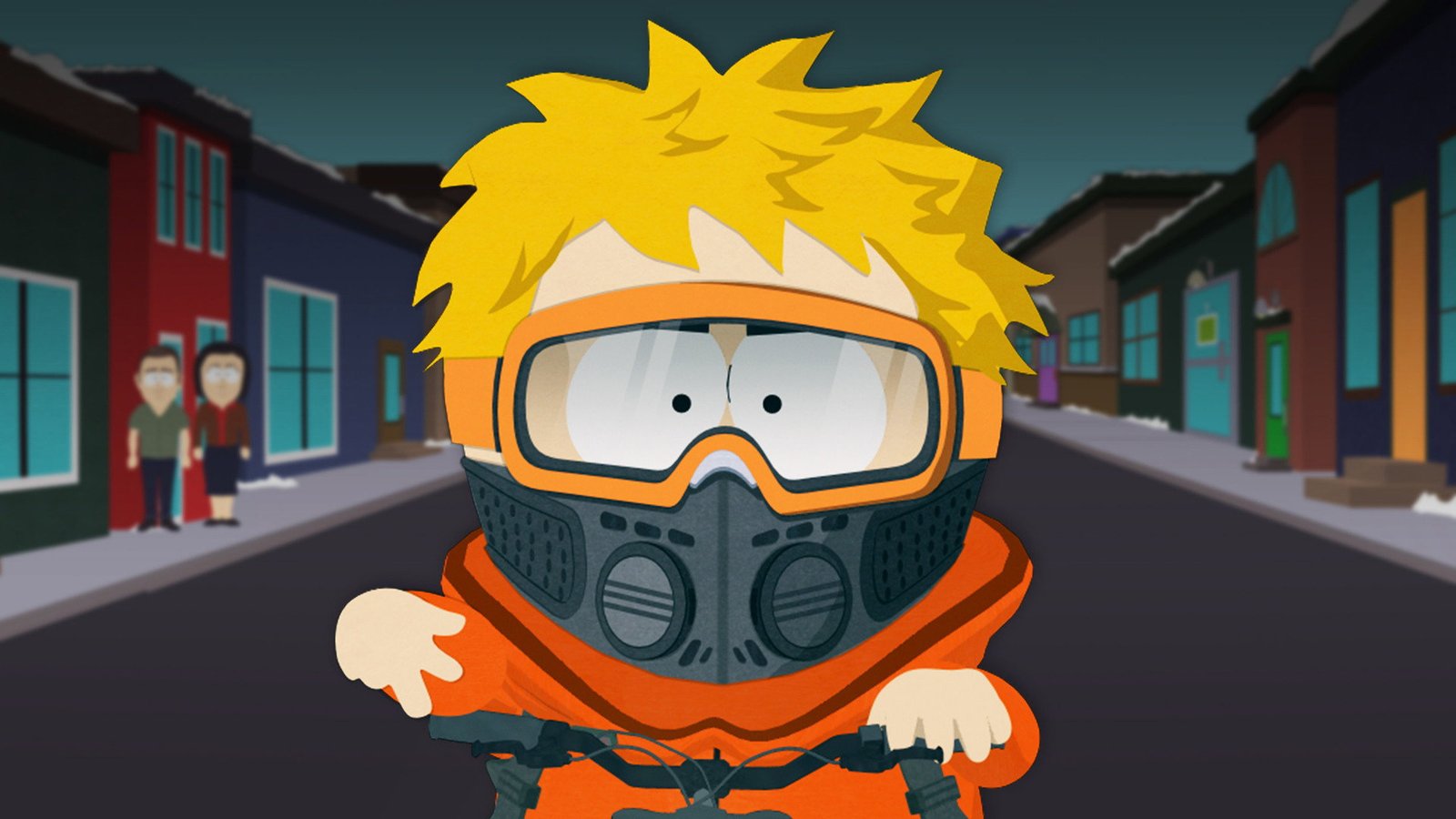
Randy agrees to talk it over. The masked kid walks back out to Stan and Kyle, pulls the covering down, and it is Kenny, telling them that he thinks a deal is possible. The three of them split up to ride home, and a few seconds later Kenny’s e-bike detonates underneath him and kills him, with Stan and Kyle turning around in time to see it. The episode never tells you which explanation to take, and it does not need to, because both are available and both are damning. Either the 92 percent finally came due on the cheapest bike in town, or the men he had just finished negotiating with are the answer, and the show seems content to let you sit with either one.
The scene that follows is the best acting the episode asks for. Stan sits at the dinner table and admits to both parents that the boys had bikes and that Kenny’s is the one that exploded. Randy, confronted with the fact that the dead child is his son’s friend and that he was in a room with him an hour earlier, goes quiet. The remorse lasts a beat and a half. Then he straightens up and tells Stan that this is precisely the danger he has been warning the town about all along, and a campaign that had been going nowhere suddenly has a body behind it.
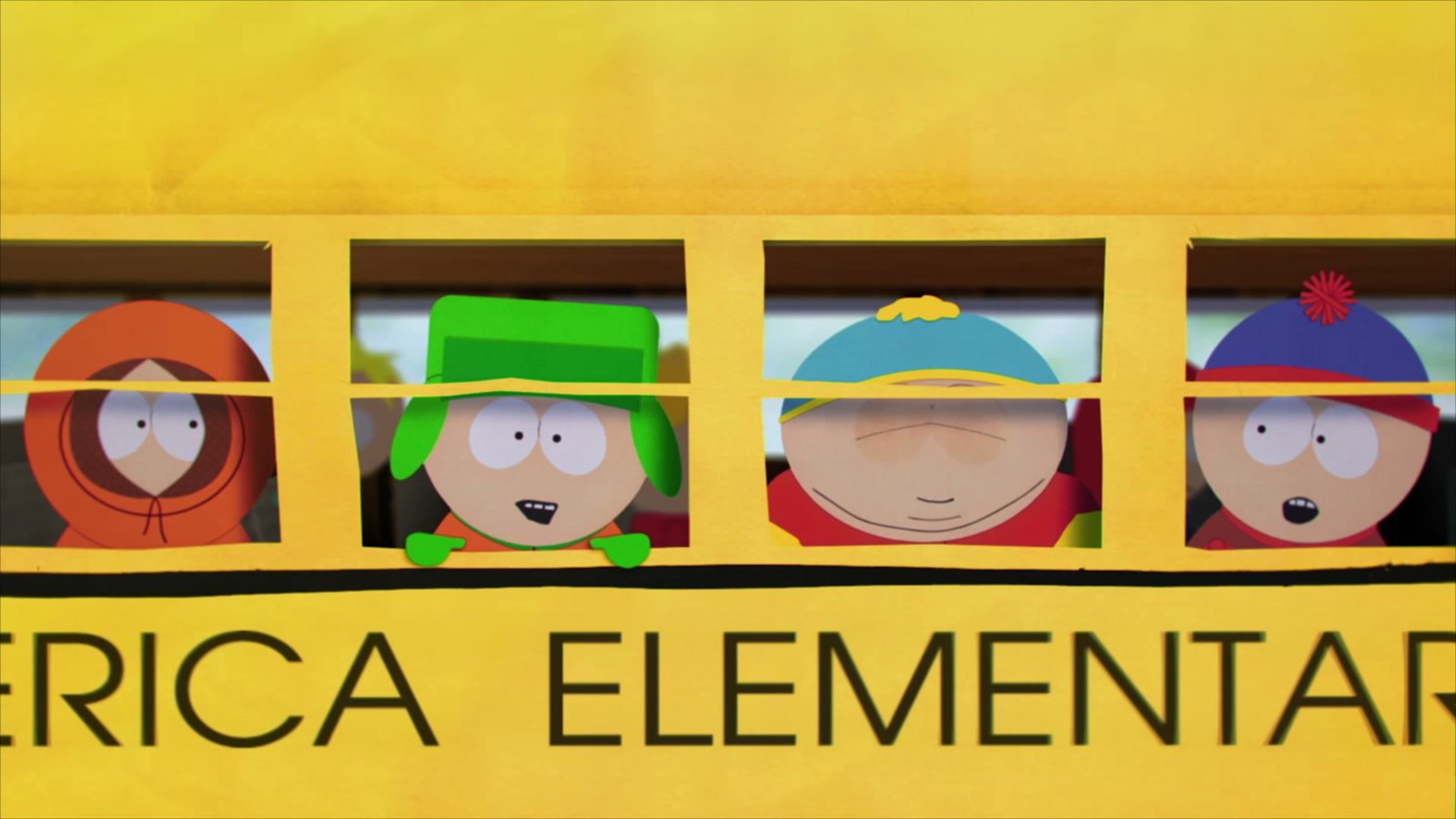
From there the town gets everything it wanted. There is a funeral, the ban passes, and the police go door to door confiscating every e-bike in South America, including Cartman’s, which he tries to physically wrestle back until his mother holds him off. The fathers move on to selling “South America Strong” shirts, which is the most precise joke in the episode, because it takes about nine seconds for a dead ten-year-old to become merchandise. The last image is the boys at the bus stop, Cartman still crying, this time over a bicycle rather than a friend, while the rest of the children file into South America Elementary.
The corporate joke sitting underneath all of this is worth naming, because Parker and Stone are not renaming their show from a safe distance. “South Park” airs on Comedy Central, which sits inside the same company that has spent the past year being publicly negotiated over, and the series went into this season having just taken its sixth Emmy. A show in that position could reasonably have opened quietly. Instead it changed its own title card, re-cut its opening titles, and got Claypool back into a booth to sing the new name. Then it built its premiere around adults who decide that the correct response to a rumor is to beat a shopkeeper in his own store.
What makes it land is the restraint in the plotting rather than the volume of the satire. Nobody in the episode is right. The kids are genuinely reckless, the bikes are genuinely dangerous, Mr. Kim genuinely sold a product he knew could kill somebody, and the fathers are still the villains, because they were wrong about the facts and violent anyway and got the outcome regardless. That is a harder shape to write than a straightforward takedown, and it is the shape the show used to hit routinely. On this evidence, season twenty-nine is probably worth keeping up with weekly rather than saving for a binge.
What Do You Think? Do you read Kenny’s explosion as the cheap battery finally going off, or as Randy’s club taking care of it? Was renaming the show for the whole season a sharper move than a one-off cold open would have been? And does the ending let the fathers off too easily by giving them exactly what they were after?
See you on the next binge!