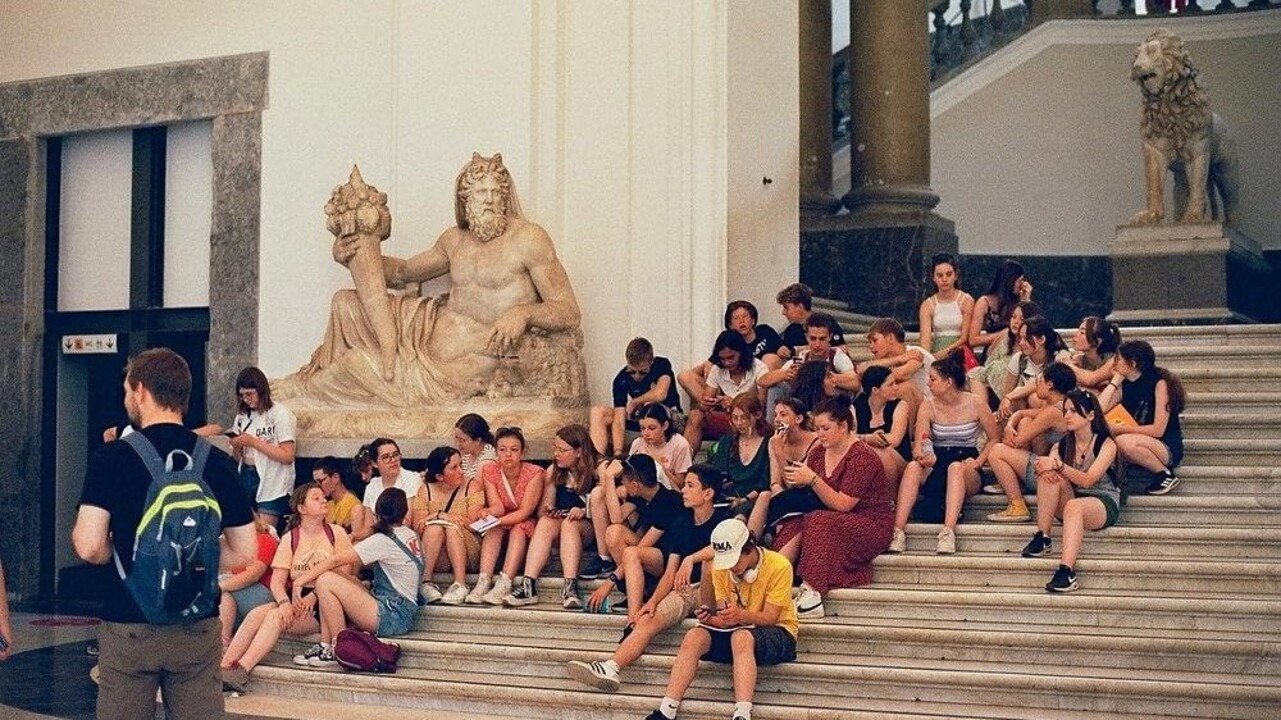
A teacher stands in the half-light of a Pompeii colonnade with a guidebook open in her hand, telling a group of French teenagers that she wants them to really let themselves be moved by what they are looking at. Behind her voice the trailer cuts to the Farnese Hercules, to a train crossing a viaduct, and to Vesuvius sitting over the Bay of Naples like it has all the time in the world. That is how the first US trailer for “La Gradiva” opens, and it is a good choice, because the whole film is about the distance between what adults want young people to feel and what they actually feel. 1-2 Special released it on Tuesday, ahead of the film’s American premiere at the New York Film Festival on September 27th and a limited release on December 18th.
“La Gradiva” is the first feature from Marine Atlan, who has spent most of her career behind the camera as a cinematographer, and it won the top prize at Cannes Critics’ Week in May, the sidebar that has launched more than a few directors who went on to bigger things. It follows a class of French high schoolers, all about to graduate, on a trip to Naples and Pompeii. At its center are three of them, the impulsive Toni (Colas Quignard), the charismatic James (Mitia Capellier-Audat) and the artistic Suzanne (Suzanne Gerin), while their teacher, Madame Mercier (Antonia Buresi), tries and mostly fails to keep their attention on the ruins. Warning beyond this point there are spoilers for “La Gradiva” and for what the trailer shows of the class trip.
That is how the first US trailer for “La Gradiva” opens, and it is a good choice, because the whole film is about the distance between what adults want young people to feel and what they actually feel.”
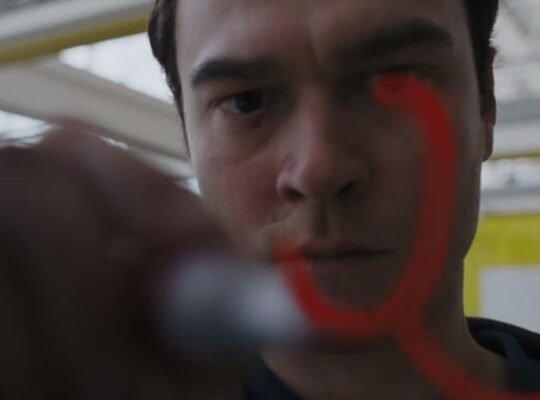
The trailer runs just under two minutes, and the most revealing line in it belongs to the teacher again. Over a montage of the students laughing, fighting and pairing off, she explains the volcano to them in the language of a feeling: in Pompeii, the pressure rises, more and more, until suddenly, boom. It is a lesson about geology, and it is plainly also a lesson about seventeen-year-olds. The editors know it, too, because the next shots are a boy alone in a dark room, a girl staring at nothing on a bus and a hand pressed against a cracked pink wall.
The title needs a word of explanation, since it is doing more work than it lets on. “Gradiva” is a 1903 novella by the German writer Wilhelm Jensen, about an archaeologist who falls for a woman carved into a Roman relief and then believes he sees her walking through the streets of Pompeii. Freud, of all people, wrote a famous essay about it, reading the whole thing as a dream, and he kept a cast of the relief on the wall of his own study. Atlan has said that Freud is how she found the book in the first place. “When I went to Pompeii, I felt the poetic potency of this place, which maintains a very concrete relation with death,” she told the Critics’ Week, which is about as clear a statement of intent as a debut director gives.
What you notice first, watching it as craft, is how little the trailer tries to sell a plot. There is no voiceover explaining the stakes and no single dramatic turn held back for the final beat. There is only a run of moments that feel observed rather than staged, the kind of thing that happens in the back of a tour bus when the teacher is not looking. Atlan has described her approach as documentary, and she shot the film herself alongside Pierre Mazoyer. That may explain why so many of the frames look caught rather than composed, although it is hard to be sure how much of it is a style and how much is simply two minutes chosen well.
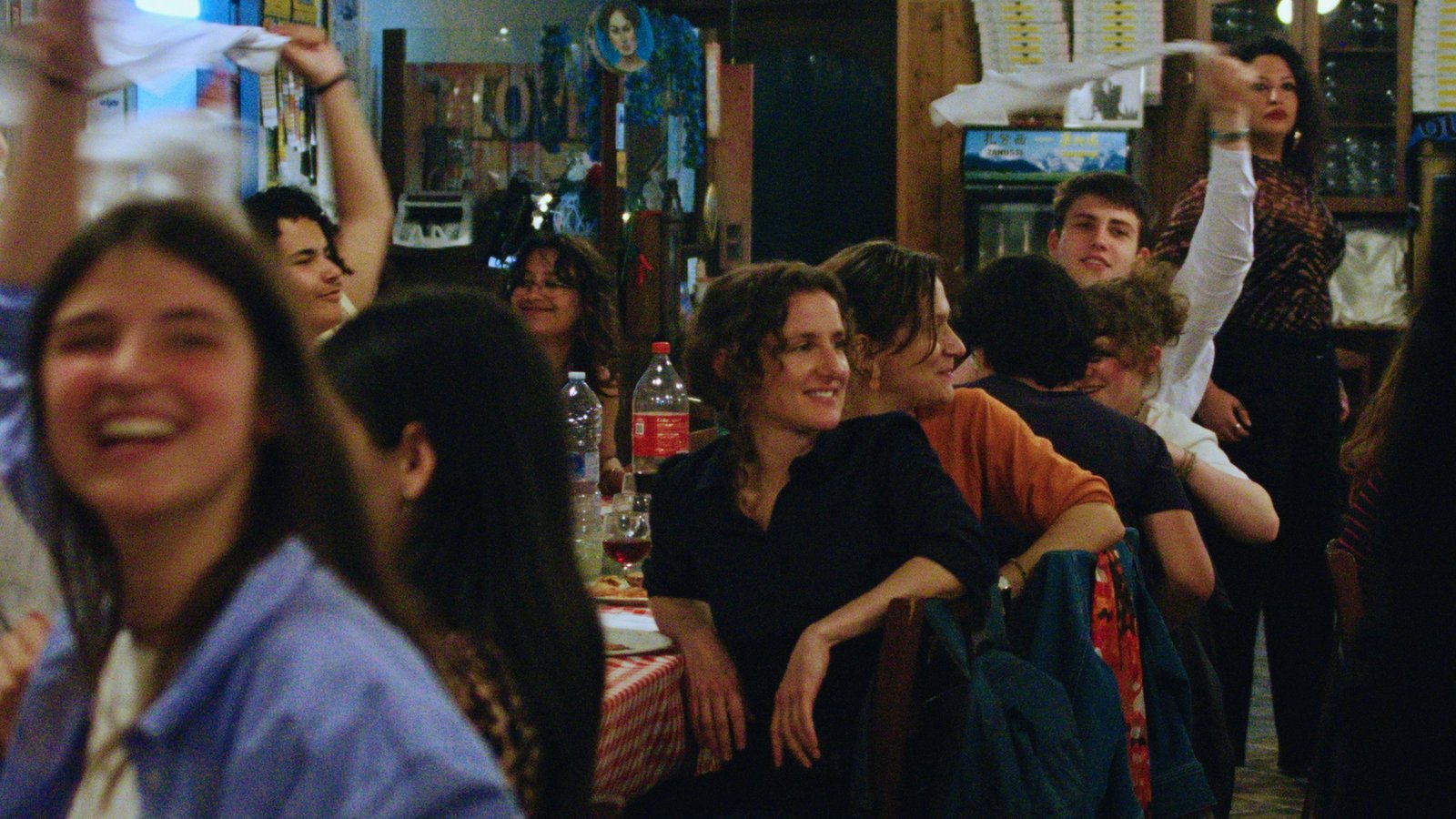
This is not quite her first time directing, either. Her medium-length film “Daniel” took a special mention in the Generation Kplus section of the Berlinale in 2019, so the jump to features comes after years of working out how she wants young people to look on screen. It shows. The camera in this trailer sits at the height of the kids, not the adults, and it rarely tells you where to look.
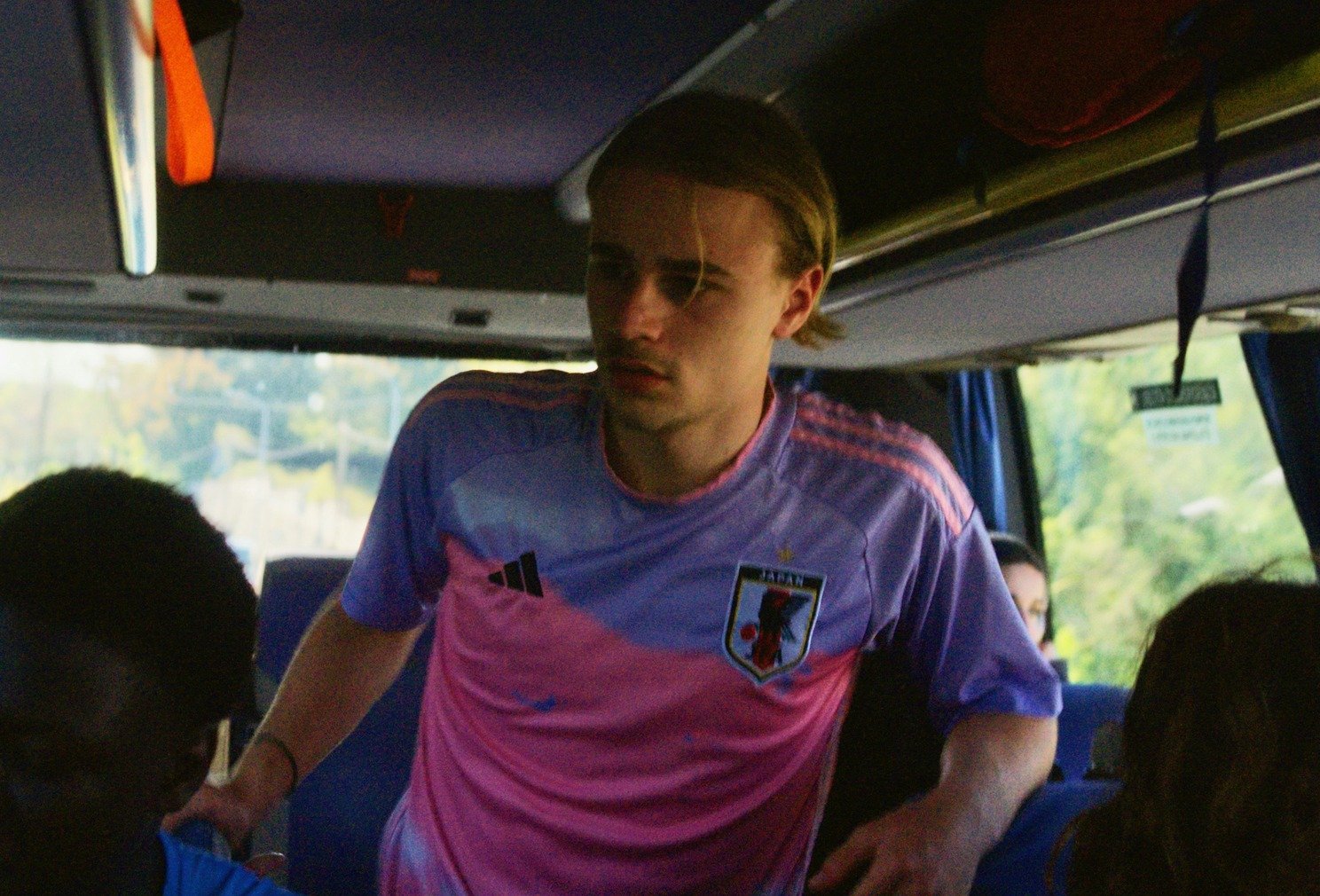
The casting is the other half of that realism. Atlan has talked about directing twenty young actors to capture the dynamics of a group, and about preparing them from the script stage through casting and into long rehearsals, and in the trailer you can see what that bought her. The teenagers talk over one another, tease one another and fall silent at the wrong moments, and none of them looks like an actor playing younger. Quignard in particular carries a restless sadness in close-up that is difficult to fake. He is worth watching for when the film arrives, since the critics who saw it in Cannes singled him out.
The pull quotes on the trailer are unusually strong, even allowing for the fact that every trailer picks its best reviews. Justin Chang at The New Yorker calls it “exceptional” and “undoubtedly one of the year’s great discoveries”, and Jordan Mintzer at The Hollywood Reporter says it “announces the arrival of a formidable talent”. Zachary Lee at RogerEbert.com calls it one of the best films of the year, while Chase Hutchinson at TheWrap goes furthest, with “one for the ages” and “a new coming-of-age classic”. Rotten Tomatoes currently lists twenty reviews and every one of them is positive, which is a small sample, but it is not a small consensus.
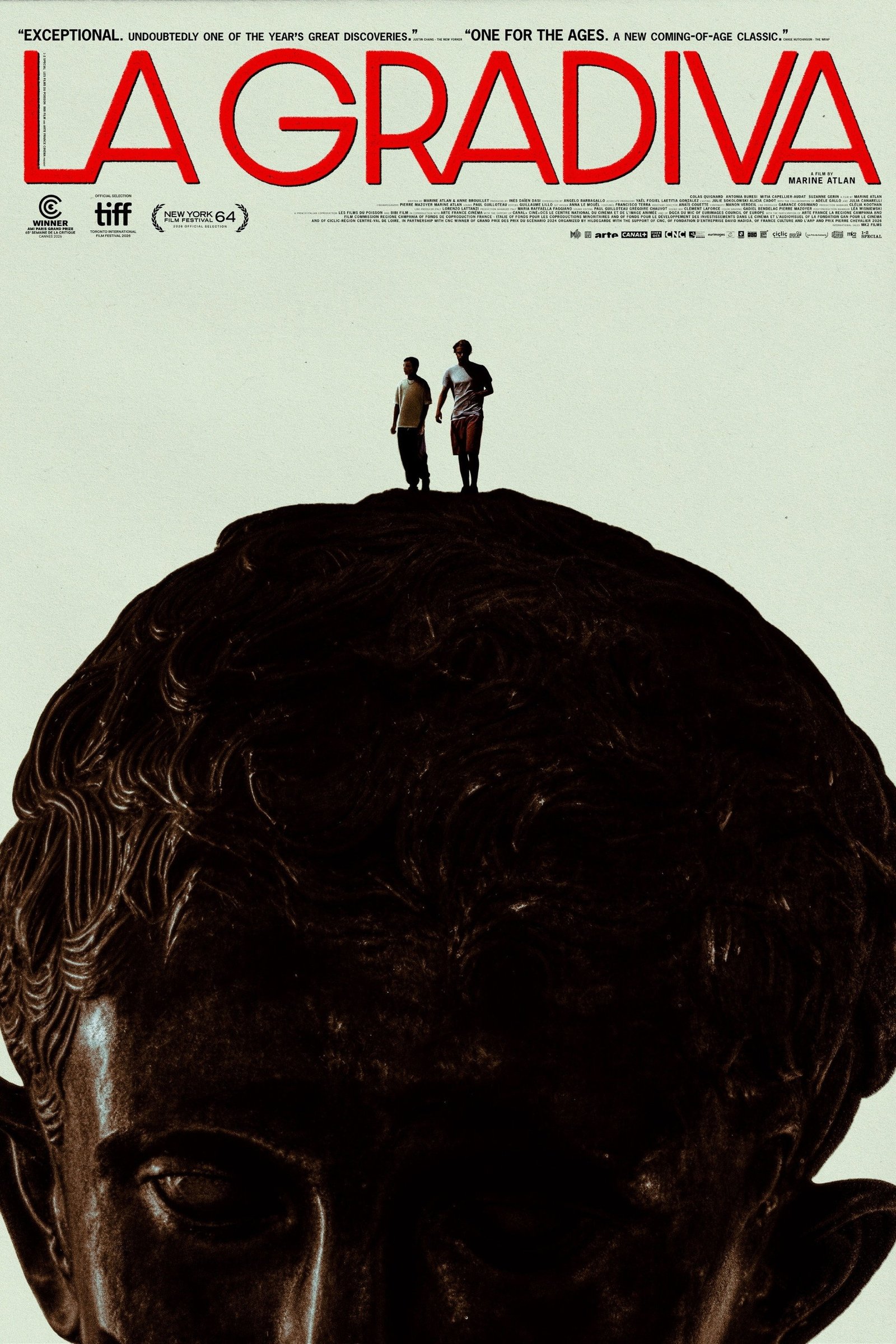
There is a risk hiding inside all that praise, and the running time is where it lives. “La Gradiva” runs two hours and twenty-five minutes, which is a long sit for a coming-of-age film about a school trip. A film built from observed moments rather than plot can feel either immersive or shapeless at that length, depending on the viewer and, honestly, depending on the evening. The trailer gives no hint of which it will be, and it would be unfair to expect it to, but anyone going in should know it is closer to a long vacation than a quick one.
It also says something about how films like this reach American audiences now. The festival route is doing all the lifting here, from Cannes in May through Toronto and New York this fall, and the film opens in France on October 21st, two months before its limited run in the US. 1-2 Special is a small, specialist distributor, and its bet appears to be that the reviews and the Critics’ Week prize will carry the film into the awards conversation. That is plausible for a debut with this kind of reception, although a French-language film about teenagers is never an easy sell in December.
The last image before the title card is the one that stays with you. A dramatized eruption rises behind the ruined streets, a figure lies on the stone in the middle of the road, and the picture reads as history, as a nightmare and as a metaphor all at once. Whether the film can hold all three of those readings for two and a half hours is the open question, and it is the right one to be asking about a debut. On the evidence of this trailer, Atlan has at least earned the chance to try.
What Do You Think? Does a school trip to Pompeii work as the setting for a coming-of-age story, or is the volcano metaphor a little too neat? Is a two-hour-and-twenty-five-minute running time a problem for a film built on moments rather than plot? And will a Critics’ Week winner with reviews like these get the American audience it seems to deserve?
See you on the next binge!