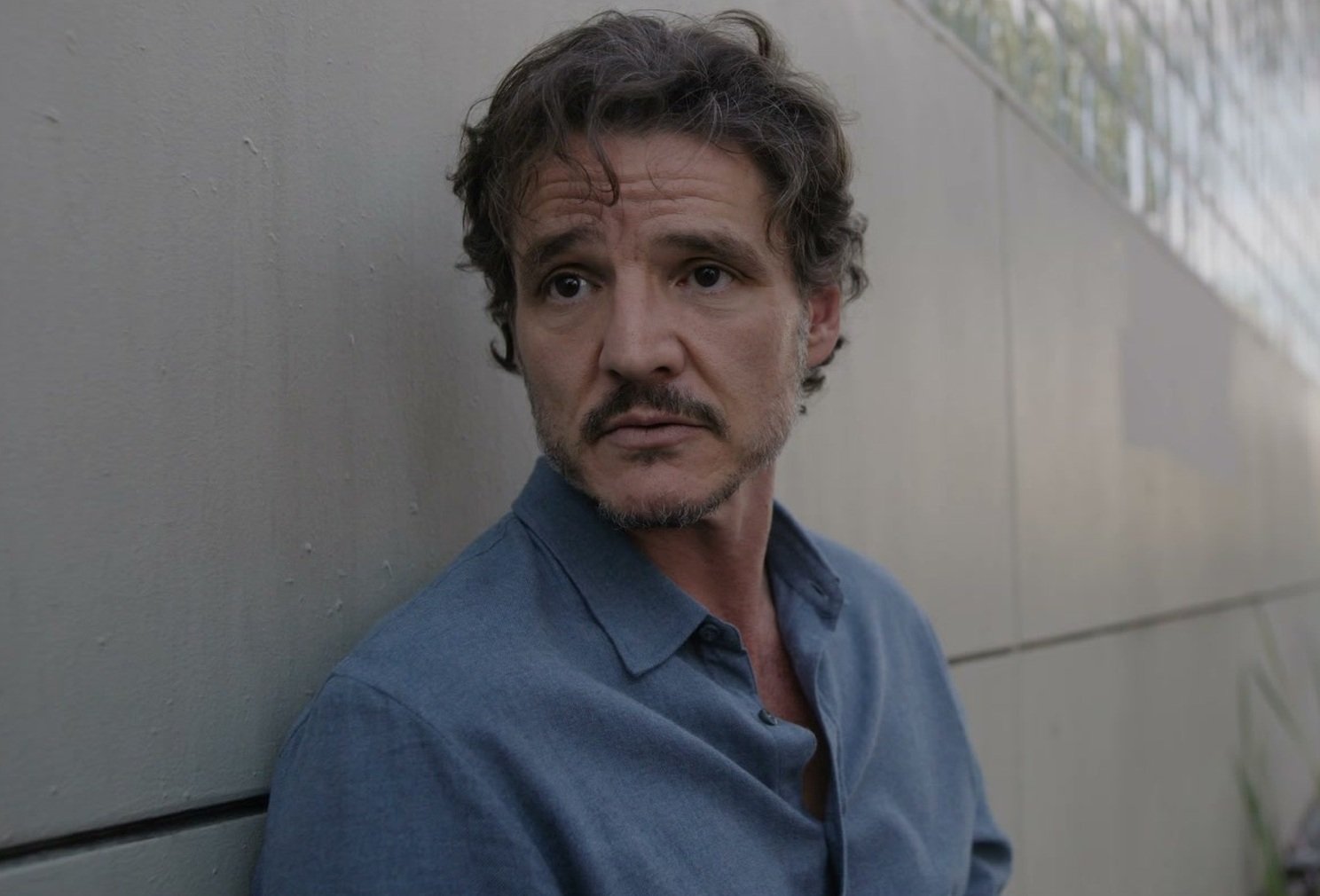
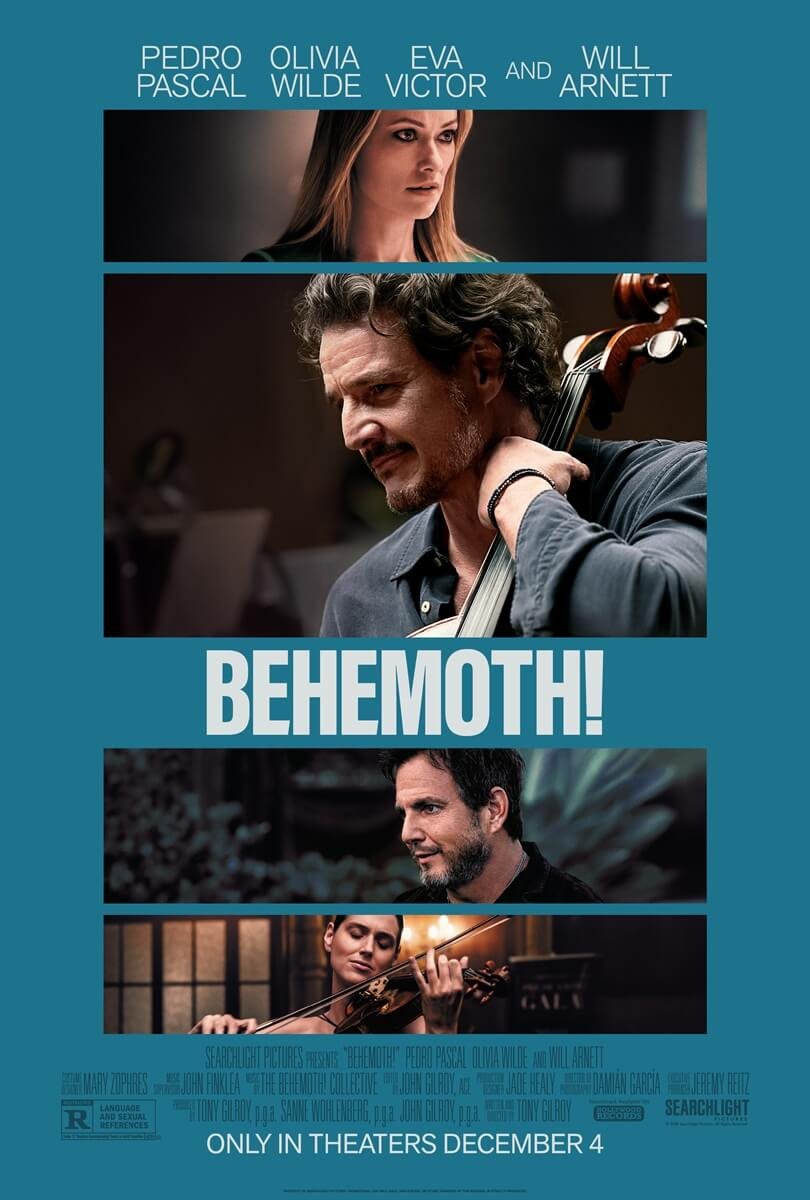
The first voice in the new “Behemoth!” trailer asks “What’s this supposed to be?”, and the answer, “It’s just an NDA”, is about as close to a plot as the opening minute gets. That small piece of bureaucracy, on a scoring stage full of musicians, suggests a film that likes to treat a scoring session as if it were classified. Searchlight Pictures posted the full trailer on Wednesday, October 28th, and it runs two minutes and four seconds, long enough to assemble a portrait of a Los Angeles cellist out of recording stages, family dinners and a beach at dusk. Tony Gilroy, the creator of “Andor”, wrote and directed the film, his first as a director in 14 years, since “The Bourne Legacy” in 2012. Pedro Pascal leads a cast that also includes Olivia Wilde, Eva Victor and Will Arnett, and the film opens in U.S. theaters on December 4th.
Searchlight’s official synopsis keeps the story vague. It says only that “A gifted cellist, Alex Serian (Pedro Pascal), returns home to Los Angeles after 20 years on the road.” Music, the synopsis goes on, “begins to carry Alex on an adventure that will change him forever.” The New York Film Festival’s description, issued when it named the film its Centerpiece selection, adds a former child prodigy from a storied musical family. He left an orchestra in Chicago and came home to record Hollywood film scores and settle unfinished family business, with flashbacks to his adult life. That is more or less everything the marketing is willing to say, and the trailer seems to trust faces and music to do the rest. Warning beyond this point there are spoilers for everything shown in the “Behemoth!” trailer.
That is more or less everything the marketing is willing to say, and the trailer seems to trust faces and music to do the rest.”
An earlier teaser, posted on Tuesday, July 14th, ran 100 seconds and closed on a “Coming Soon” card instead of a date. The new trailer reuses only a handful of its shots. A man practices the cello in shorts beside a tall window, and a violinist smiles across a gala dinner. A man in a black henley opens a front door, a man in a dark suit trails his hand along a harp, and the windows of a modernist house glow at night. Alex also gestures at a curly-haired woman carrying an orange cello case in a lane between white buildings. The teaser’s title treatment, in which glimpses of scenes play inside the cut-out letters of the word BEHEMOTH, is gone, along with a late speech about “a mystic level of irony” and a credit line pointing back to “Michael Clayton.” What replaces them is conversation, a great deal of it, plus a release date, an R rating for language and sexual references, and a run of review cards.
Walked through in order, the trailer starts with the Searchlight logo and then drops onto a wood-paneled scoring stage. A camera drifts past microphone booms, music stands and seated players. A ripple of chatter moves through the room, “Isn’t that automatic?” and “It’s a booster” and “Who needs a pen?” When somebody asks, in saltier language, what “Behemoth” is, the camera reaches Alex, in a gray sweater with reading glasses pushed down his nose and a sheet of paper in his hand, as a voice says “Why would you ask me that?” and then “Well, what is it?” The reply arrives, “It’s a code name. Security.” Then comes “Just sign the damn thing so we can get to work”, over a bearded man in glasses and a dark blazer who turns to the room and sweeps an arm across it, as though welcoming everyone to something. A card reading “A GROUNDBREAKING SYMPHONIC JOURNEY”, in gold type on black, follows. The picture then breaks into details, a cello glimpsed in its open case, a hand smoothing the lid of a black instrument case and Alex playing with his eyes down. He looks up with a raised hand, and a conductor in headphones lifts his baton arm. A pair of cards, “FROM WRITER/DIRECTOR” and “TONY GILROY”, closes the stretch.
From there, the film leaves the stage. Alex drives, in sunglasses in daylight and later through a graffiti-covered tunnel, while a voice says “Alex?” and asks “What are you doing here?” The answer, “I’m, uh, moving back. I’m here to work”, plays across a close-up of him at the wheel and a studio floor where he talks with a blonde woman and two older men. After a wide, high-angle look at a cello section, a man in a black henley opens a front door to the words “Mon frère” and then “Look at you, right on time.” A shot glass is filled from a bottle beside a takeout carton, and the picture moves to a dinner table. There a laptop plays a video of a child cellist. Voices ask “Is this really him?” and say “That was amazing!” Alex, in front of a lit Christmas tree with a glass of red wine, is grinning. Over a wide shot of the family laughing at the table, someone calls “Alex!” and someone else asks “You’re six?” The scene then jumps to a chandeliered banquet hall hung with banners reading “Pre-Season Gala 2010” and “Dallas Philharmonic.” A woman in a black halter dress smiles over her violin as a voice says “You’re really good.” Alex, in a dinner jacket and bow tie, plays cello in a string group as another voice adds “As advertised.”
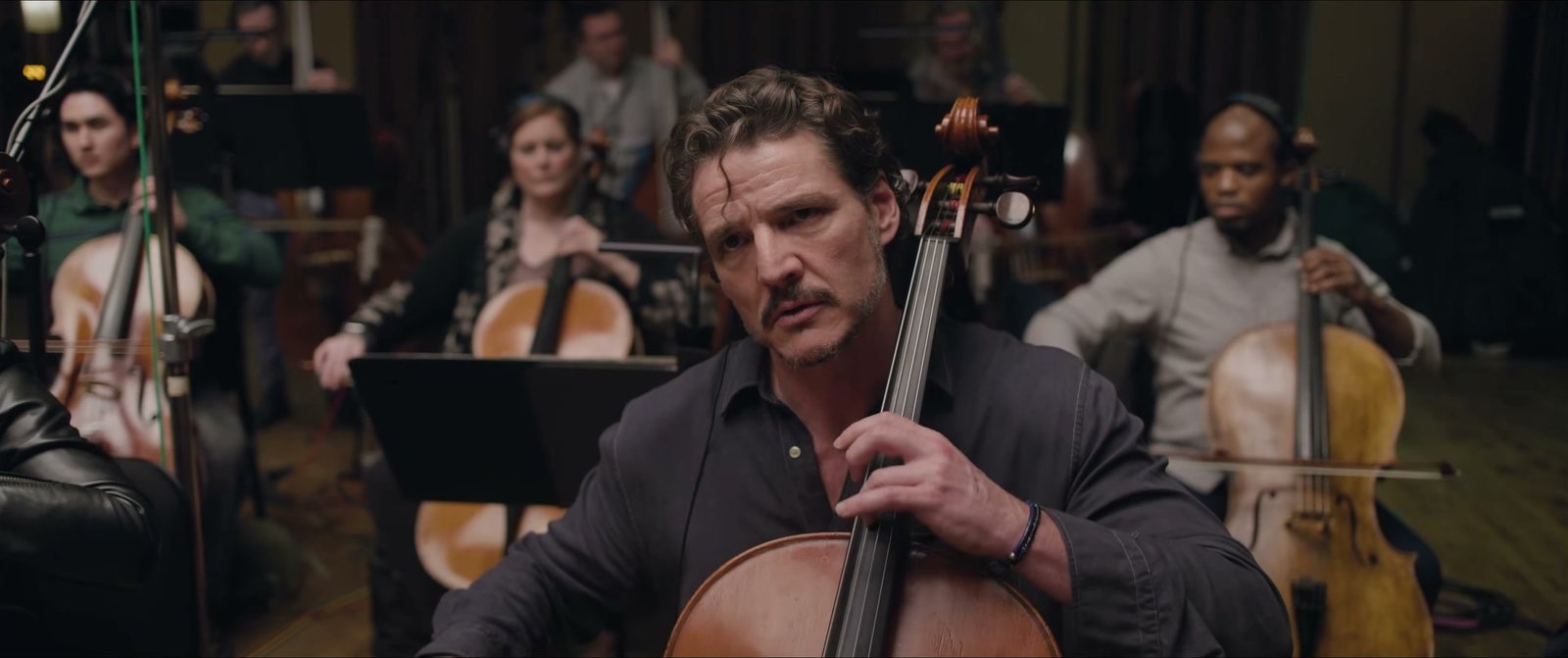
A voice asks “Still single?” over a party on a stone terrace, where a woman in a black lace dress holds a glass of white wine. A kiss in near darkness follows. Then the answer is “Mostly”, over Alex in a black suit and tie above a hazy city. The picture moves to a night apartment high over the lights, where a woman in a white robe is curled in a chair and a shirtless man in a towel stands behind her. Alex is next propped on a bed in headphones, sheet music around him. A voice says “You’re afraid of what you feel.” A blonde woman in a leopard-print coat stands in a doorway as the reply, “I’ll have to think about that”, begins, and it carries over to Alex in an olive sweater at a door numbered 2. Back among the musicians, a large hand drum fills the foreground of a session, a bow crosses a cello’s strings, and Alex plays in a cello section while looking toward the camera. The trailer then settles into a conversation on a sunny sidewalk. He sits on a bench against a long beige wall with a phone and an earbud cable in his hands, while a curly-haired woman in a plaid shirt stands reading against the wall and later sits in a white plastic chair. “What are you listening to?” a voice asks, and Alex answers “It’s this girl.” Then, in close-up, he says she drops tracks “every now and then”, and “it goes up for a week, then they try to pull them down so it gets mysterious.” It is “sort of a game.”
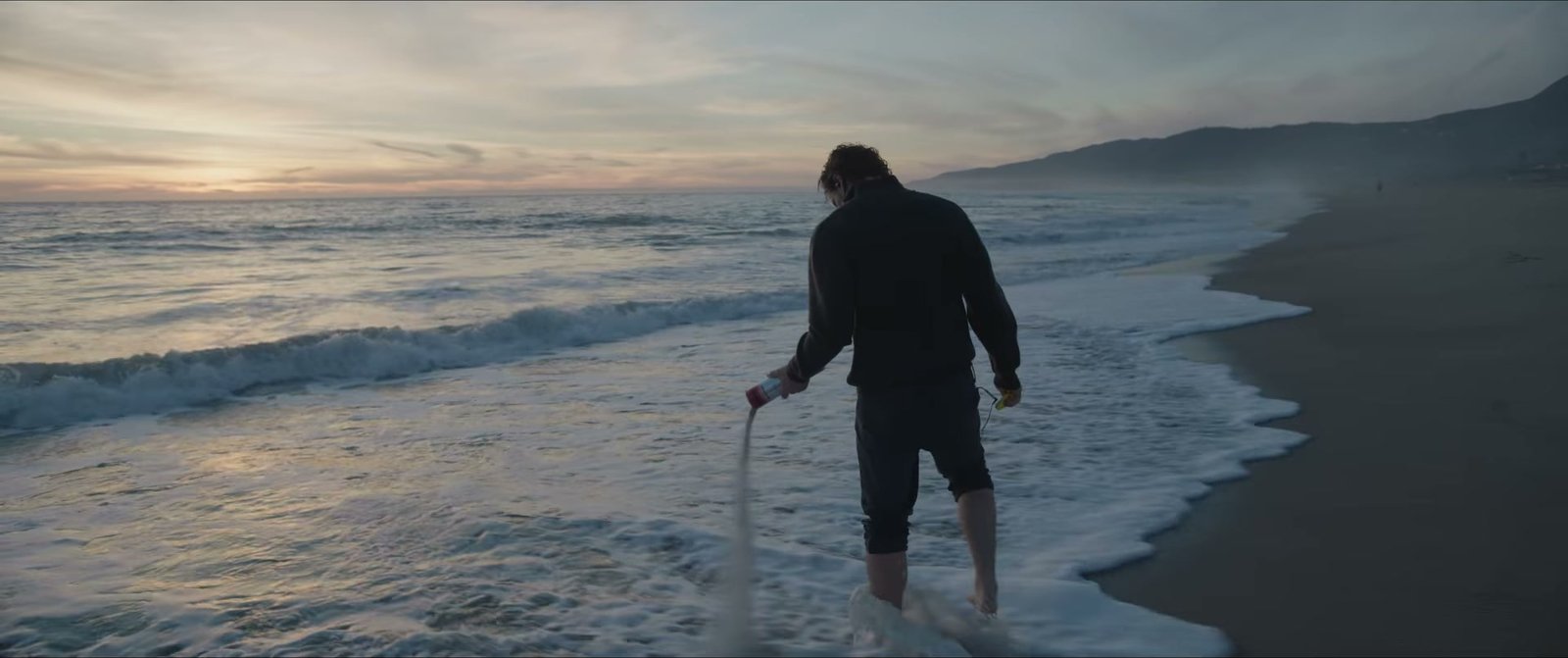
A sung lyric, “Your God is sleeping”, then runs under a montage of a bow on strings, a girl in a black dress at a Steinway, a woman at a harp, Alex at a grand piano and a conductor seen from behind. Alex walks a wet night street past a line of people. On a beach at dusk he tips a small container so that a pale stream runs toward the surf. He pushes a cart of plastic bins down a storage-unit hallway while a voice begins a lecture, “You were blessed at birth.” The lecture ends, “You’re still trying”, across an older man in oversized glasses who looks straight into the lens from a dim room, a reel-to-reel tape machine behind him and a city in the window, and the cut to a symphony orchestra filling a concert hall. Alex, in a tuxedo and bow tie with a cello at his shoulder, turns toward someone off to the side with his mouth open mid-sentence. Framed photographs lie scattered on a table. In a bedroom, Alex stands holding a framed photo while an older woman in a pink robe sits in an armchair by a window with a hand at her chest. The exchange runs “It’s me, Mom.” “It’s Alex.” “So you say.” A close-up then catches Alex looking off to the left. A packed club follows, with hands raised toward a bright stage and Alex in a green jacket gazing up. A young woman in a bucket hat stands at a keyboard under purple light. In a graffiti-covered backstage corridor, Alex grapples with a man in a hat as a voice asks “What are you doing here?”
The pace quickens from there. A locker room and a blizzard in which Alex clutches a cello case on his back give way to a modernist house lit from within and Alex looking out of a car window at night as a voice says “We should tell the hard story.” A car buried in snow gives way to a woman in an emerald dress. She stands screaming in the street as a voice calls “Alex!” A kitchen full of white-coated chefs closes around a man in a tuxedo, and a man in a white shirt runs along an ivy-covered stone wall. A voice asks “What’s happened to you?” before a woman in a blue patterned cardigan holds up a hand at a diamond-paned window. Two men lean over an instrument in pieces on a luthier’s bench while someone says “People love dysfunction.” Alex talks with a long-haired man in black beside a red car. Later, Alex sits in a car in the rain and holds up a hand against a blinding white light. The trailer turns to its review cards. “Strikingly Original” is credited on screen to TheWrap, “A Triumphant Odyssey” to InSession and “Brilliant” to Variety, and between them come Alex gesturing at the curly-haired woman with the orange cello case and Alex shouting. A woman in an emerald dress crosses an empty theater before three more cards, “Thrilling…”, “Operatic…” and “and alive”, spell out one line from /Film, whose logo sits on the last. Between those, an aerial shows a runner on a path between cypress trees, and a man in a dark suit trails a hand along a harp. The last scene, fittingly, is a lesson. Alex, in a maroon sweater, sits facing a curly-haired cellist in a home studio lined with foam panels. A voice says “You’re the conductor.” and “Make a choice.” while the shot still holds on both of them. As the picture closes in on Alex, gesturing as he talks, he adds “It comes alive” and, after a beat, “when you make a decision.” The title card follows, then a billing card for Pascal, Wilde, Victor and Arnett and a “Written and Directed by” card for Gilroy. The end card reads “ONLY IN THEATERS” and “DECEMBER 4.”
Gilroy has said where the film started. The Associated Press says “something started percolating” while he was overseeing the scoring of “Rogue One: A Star Wars Story” at the Gary Martin Soundstage on the Sony Pictures lot. “I just sat there going: There has to be a movie here”, Gilroy told the AP. The AP adds that many scenes in “Behemoth!” were shot on that stage. It also says Gilroy brought in nine composers, dubbed the Behemoth! Collective, and he told the AP the plan was “everybody’s going to get exactly the same amount of money.” Searchlight’s page credits the music to that collective. Film Music Reporter says the scores were recorded at the Sony stage, the Newman Scoring Stage at Fox and EastWest Studios.
What the trailer withholds is as telling as what it shows. Nothing in it explains why Alex has spent 20 years on the road, or what the code name means beyond a security precaution. The review cards that arrive before the title do the persuading that a plot summary might otherwise have done. They are also a reminder that this is a festival film going into theaters, one that already had its Centerpiece premiere in New York. Whether the finished film earns those cards is another question. A trailer that cuts between a family dinner, a snowstorm and a luthier’s bench might be hiding a tone that never settles. For a director coming back after 14 years, though, the picture it paints is a clear one, a man who would rather watch people make music than watch armies march.
What Do You Think? Does a film about the people who record movie scores sound like the right way for Tony Gilroy to come back after 14 years? Is “Behemoth” a clever code name for a secret project, or the trailer’s best joke? And would you rather the next look reveal more of the story, or keep trusting the music to carry it?
See you on the next binge!