There is one shot in Netflix’s new teaser that tells you exactly what kind of show this is going to be, and it lasts about a second. A black axe handle stands upright in the middle of frame, and two hands are wrapped around it. The upper hand comes out of a crisp white cuff, clean as a Sunday collar. The lower hand comes out of a floral sleeve flecked with blood, and the fingers are laced over the other set like they are steadying them. Nobody is fighting for the axe. They are holding it together.
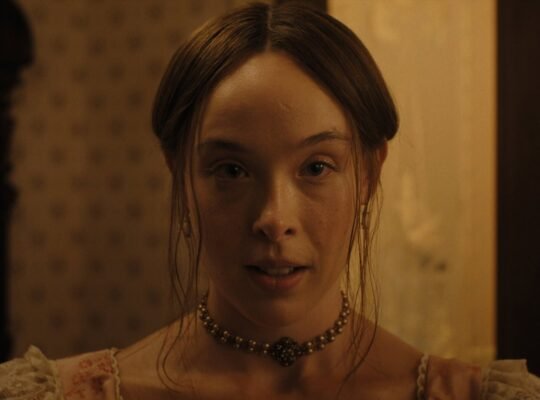
That is the pitch for “Monster: The Lizzie Borden Story,” which lands on Netflix on September 17 with all eight episodes at once. Ryan Murphy and Ian Brennan’s anthology has already done Jeffrey Dahmer, the Menendez brothers and Ed Gein, and the fourth run hands the lead to Ella Beatty as the most famous woman ever to be accused of picking up a hatchet. She is the first female lead the series has had, which after three seasons of men is less a casting choice than a thesis statement. The teaser ran 70 seconds when it dropped on Tuesday, and it spends a remarkable amount of that time refusing to show you a murder.
Nobody is fighting for the axe. They are holding it together.”
Here is what actually happens, in order. It opens on a red stage curtain, heavy and theatrical, with the show’s title sitting quietly in the corner. The curtain gives way to a dark, empty stage, and then to the same stage lit warm and gold, ornate as a Victorian opera house, with a single small chest sitting alone on the boards. No people. No house. Just a set waiting for someone to walk onto it. Then three hard red cards punch through in sequence, one word at a time: THE. ANTHOLOGY. RETURNS. It is a flex, and it earns it, but it also quietly tells you the register. This is being staged for you.
Then comes the object itself, and it is the smartest thirty frames in the whole thing. The hatchet is not in someone’s hand. It is mounted in a museum display case, laid flat on deep red velvet, lit in cold blue-green, with small engraved placards fixed above and below it like a specimen label. Before we have met Lizzie, the show has already put the weapon behind glass and turned it into an exhibit. That is a real thing that happened, by the way, and it happened for over a century. The 1892 killings in Fall River, Massachusetts became a rhyme children skipped to, and the woman at the centre of them was acquitted and then spent the rest of her life as a tourist attraction. Starting the teaser with the artefact rather than the crime is a choice with a point of view baked into it.
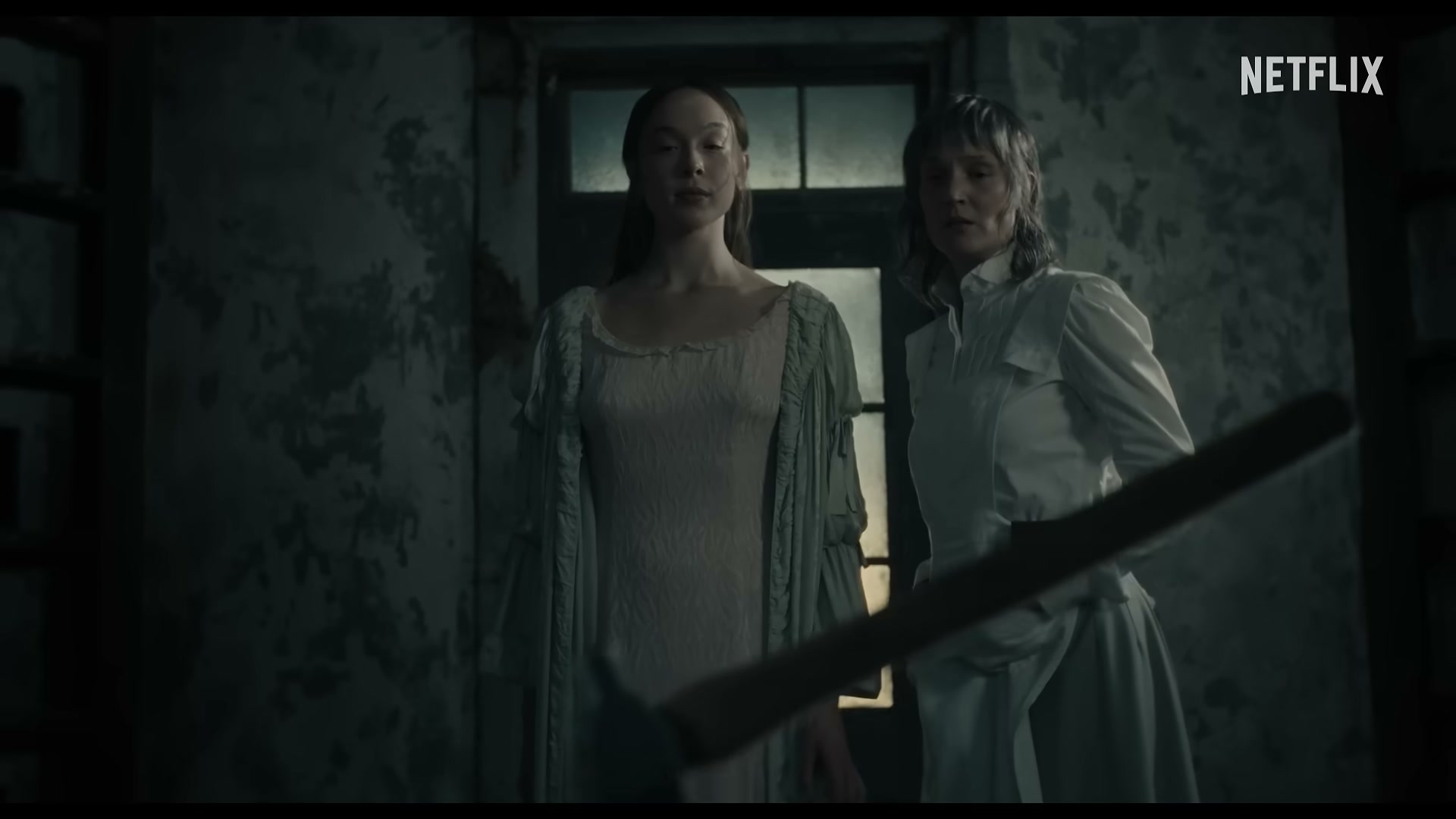
From there it finally lets some scenes in. Two women in white nightgowns stand in a dim upstairs room while a shape swings through the foreground, an axe caught mid-arc in silhouette, and something pale drifts through the air around them that reads like feathers from a split pillow. A woman in a peach day dress stands over a bed, arms down, doing something we are not allowed to see. Another red card lands to remind you whose show this is, naming Dahmer and “Monster: The Ed Gein Story” outright, which is Netflix being entirely unembarrassed about the brand it has built here.
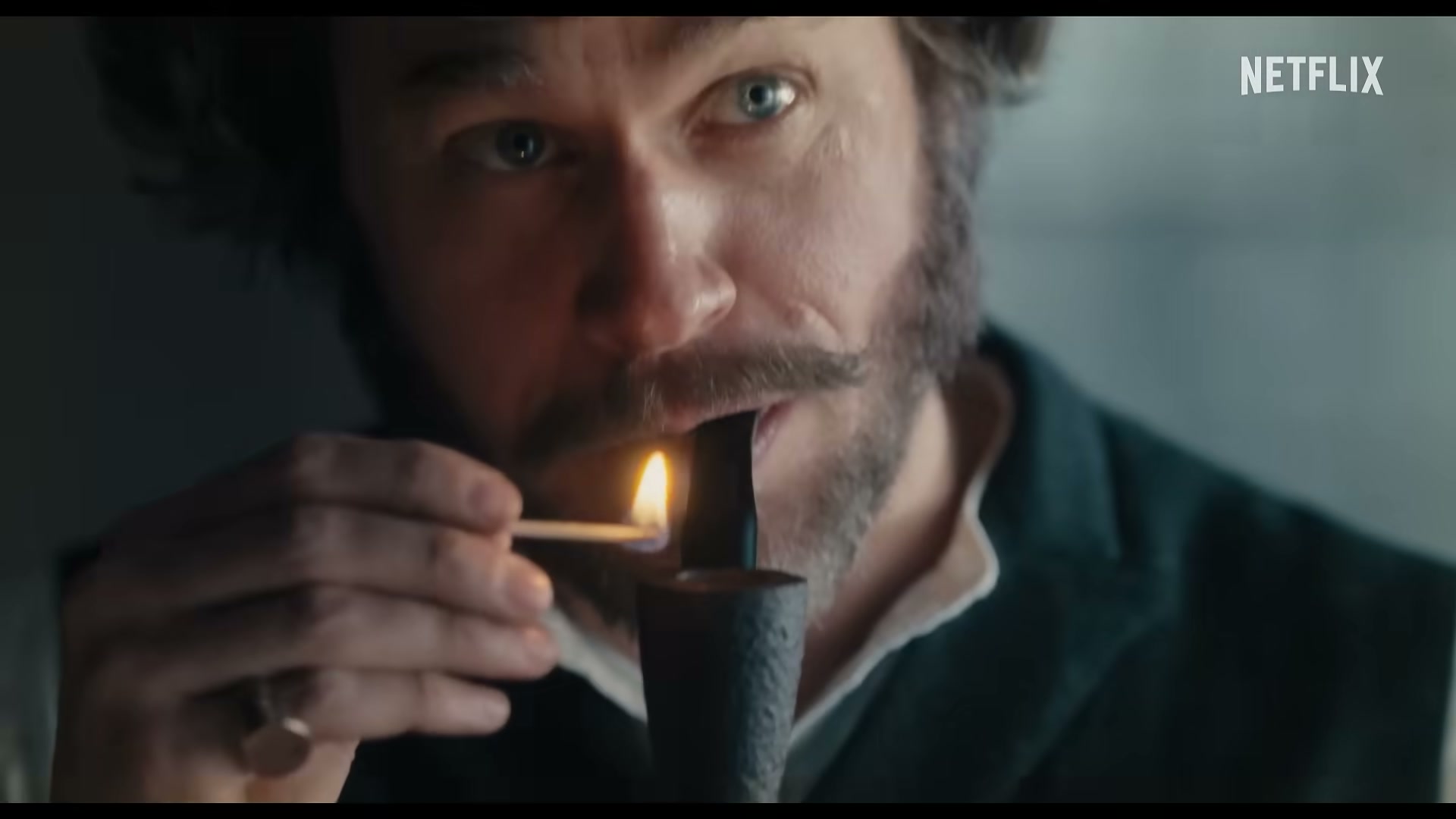
The back half is where the season’s real subject shows up, and it is not violence. It is bodies and money. A woman reclines on a chaise beside a lit fireplace in a white chemise, one leg bare and raised, while a second woman kneels at her feet holding a candle to them. It is shot like a seduction and blocked like a job, which is the exact tension the logline promises: a repressed daughter of a wealthy New England family and her rebellious maid, trapped in a house built on humiliation and cruelty, escaping into a fantasy of sex, power and revenge. Then the only proper look at a man the whole teaser gives you, dark coat and white collar, striking a match and lighting a pipe while he stares straight down the lens. It is the most domestic image in the thing and somehow the most ominous, because you already know what is coming for whoever that is.
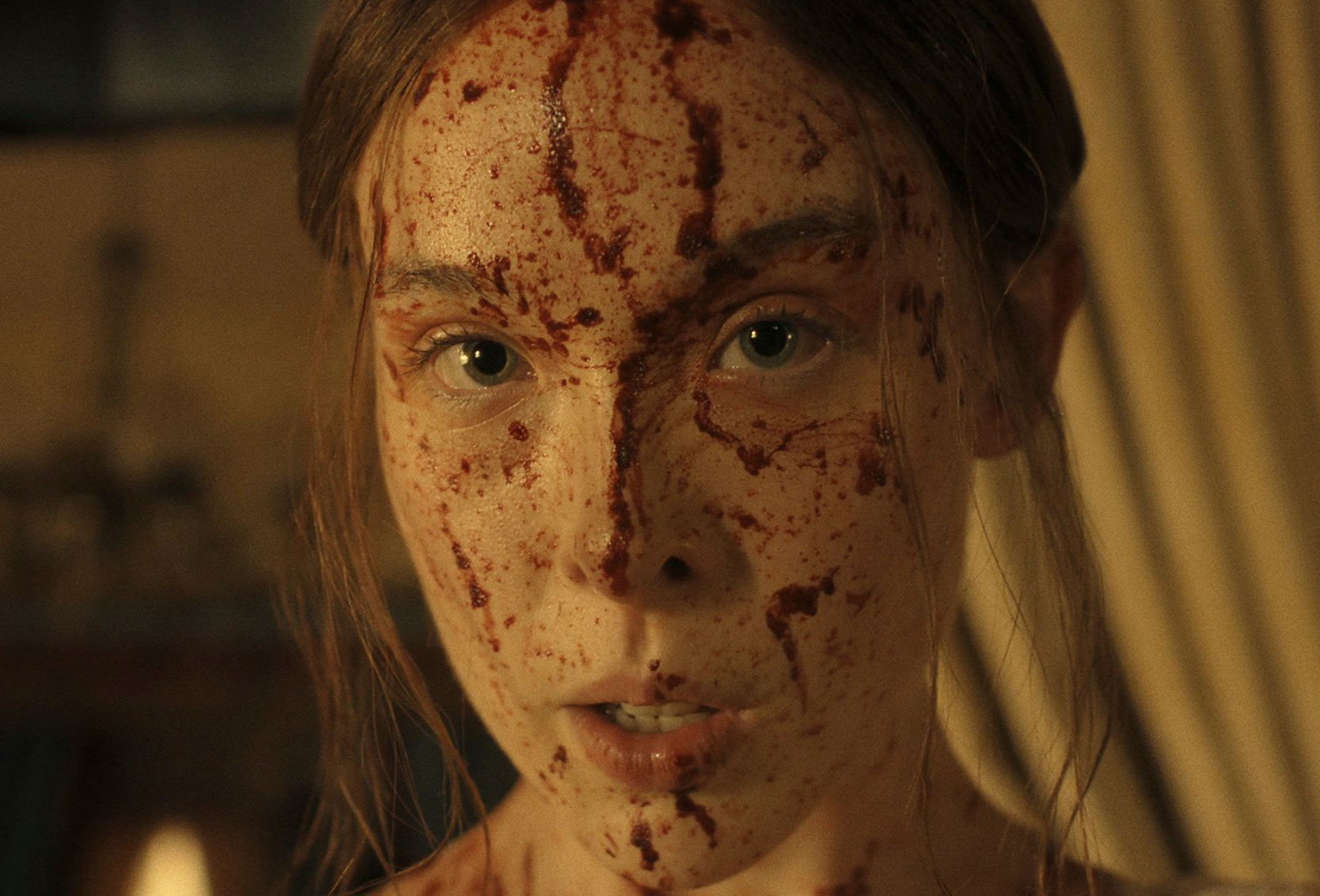
Then a wide, startling image of a vast columbarium, wall after wall of burial niches climbing out of frame, with a single figure in a mustard dress standing small at the bottom of it and pigeons scattered across the floor. Then a corset, laced tight, hands hauling the cords in. If you wanted the season summarised in two shots, it is the crypt and the corset. And then the axe, held by two people. Then a blood-soaked white bodice in extreme close-up, so tight you cannot tell whose it is. Then Ella Beatty, face and chest spattered dark red, looking directly down the lens without an ounce of apology in it. The title card arrives over her silhouette in flat red, and the last thing on screen is the date. There is no dialogue to quote, because there is essentially none to quote: the whole thing is carried by music and typography, which is a confident way to sell a show and also a convenient way to avoid committing to a single frame of plot.
The cast list is where it gets genuinely interesting. Charlie Hunnam plays Andrew Borden, Lizzie’s father, having played Ed Gein in the last season, which means the anthology’s most recent monster is now the man being murdered. Rebecca Hall is stepmother Abby Borden, Vicky Krieps is the maid Bridget Sullivan, Billie Lourd is sister Emma, and Jessica Barden plays the actress Nance O’Neill, a real figure from Lizzie’s later life whose presence in the credits says a lot about how much of this is going to be about desire. Sarah Paulson is in the cast too, and this is where the season stops being a single case at all. Murphy has said the season “talks not just about Lizzie, but other infamous women who were branded as monsters,” naming Countess Elizabeth Bathory and Aileen Wuornos, with reporting pointing to Paulson in the Wuornos role. Max Winkler directs five episodes, Sarah Adina Smith takes two.
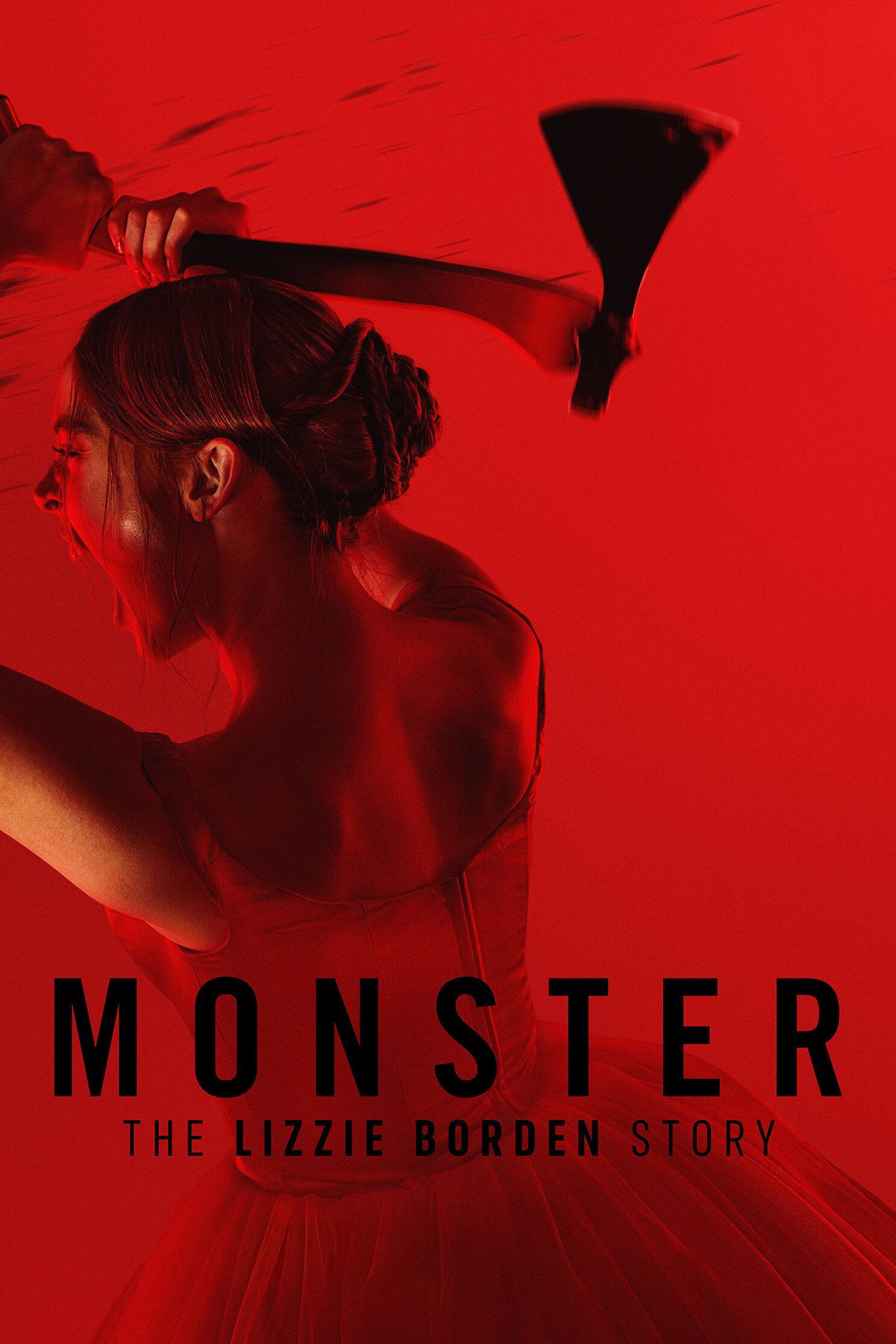
Which reframes the stage. If the season is jumping across centuries to put a Hungarian countess and a Florida drifter in the same frame as a Massachusetts Sunday school teacher, then the curtain, the empty set and the hatchet in its glass case are not just mood. They are the structure. Murphy’s own summary of the idea is “profiling famous women who have been labeled as one thing, and we ask the question: really, do you think so?” That is a very different show from the one the axe on the poster is selling, and the teaser is clearly built to let you assume the simpler version.
So let us actually chew on the Wuornos thing, because nobody at Netflix can possibly have missed the collision. Aileen Wuornos already has a film called “Monster.” It came out in 2003, Patty Jenkins directed it, and Charlize Theron won the Academy Award for playing her in it. Dropping Wuornos into a Netflix anthology carrying that exact title is either a spectacular oversight or the most deliberate thing in the whole season, and Murphy does not do oversights about branding. Our guess is that it is the argument in miniature: the word monster gets attached to a woman, sticks for decades, becomes the title of the thing people remember her by, and the show wants to hold that up and ask who did the attaching. If Paulson is playing her, that is also Murphy handing his most-decorated collaborator the season’s heaviest lift, and she has form for exactly this kind of role.
How they physically fit into a Fall River drawing room is the puzzle, and the teaser hands over a likely answer. You do not open on a curtain and an empty stage unless the show intends to use it. Our read is that the theatre is a framing device rather than set dressing, letting the season step out of 1892 whenever it wants to and put another woman under the lights, with Bathory arriving as the aristocratic extreme of the same idea, a noblewoman whose alleged crimes got folded into vampire fiction until the actual accusations stopped mattering. Where it could come apart is the arithmetic of it. Borden died in 1927 and her case has been a parlour game ever since. Wuornos was executed in Florida in 2002, which is recent enough that real people are still living with what she did, and the Dahmer season already taught this show a hard lesson about exactly that. Flattening three centuries of very different women into one fantasia is a genuinely tempting shape for a Ryan Murphy season. It is also the fastest way to say nothing precise about any of them.
Whether that lands is the whole question, and this anthology has a track record on both sides of it. The Dahmer season was a phenomenon and a scandal at once, and the criticism that stuck was about real victims’ families finding out from Twitter. Borden is 134 years dead and her case has been a parlour game for most of that time, which gives the show far more room to play than Gein or the Menendez brothers ever did. The risk is different here. Turn a woman who was probably a killer into a liberation fantasy and you are making an argument, not a docudrama, and the trailer’s erotic register suggests they know it. What we cannot tell yet from 70 seconds of curtains and corsetry is whether the show has a case to make or just a look. On this evidence it has an outstanding look.
What Do You Think? Is putting the hatchet in a museum case before we meet Lizzie a sign this season actually has something to say about how we turned her into a nursery rhyme, or just a stylish way to stall? Does naming the season “Monster” while casting Aileen Wuornos, who already had an Oscar-winning film by that name, read as a deliberate argument or as Netflix stepping on its own point? And if Bathory and Wuornos really are sharing this season, does folding three women from three centuries into one fantasia strengthen the case or let the show dodge the specifics of all three?
See you on the next binge!