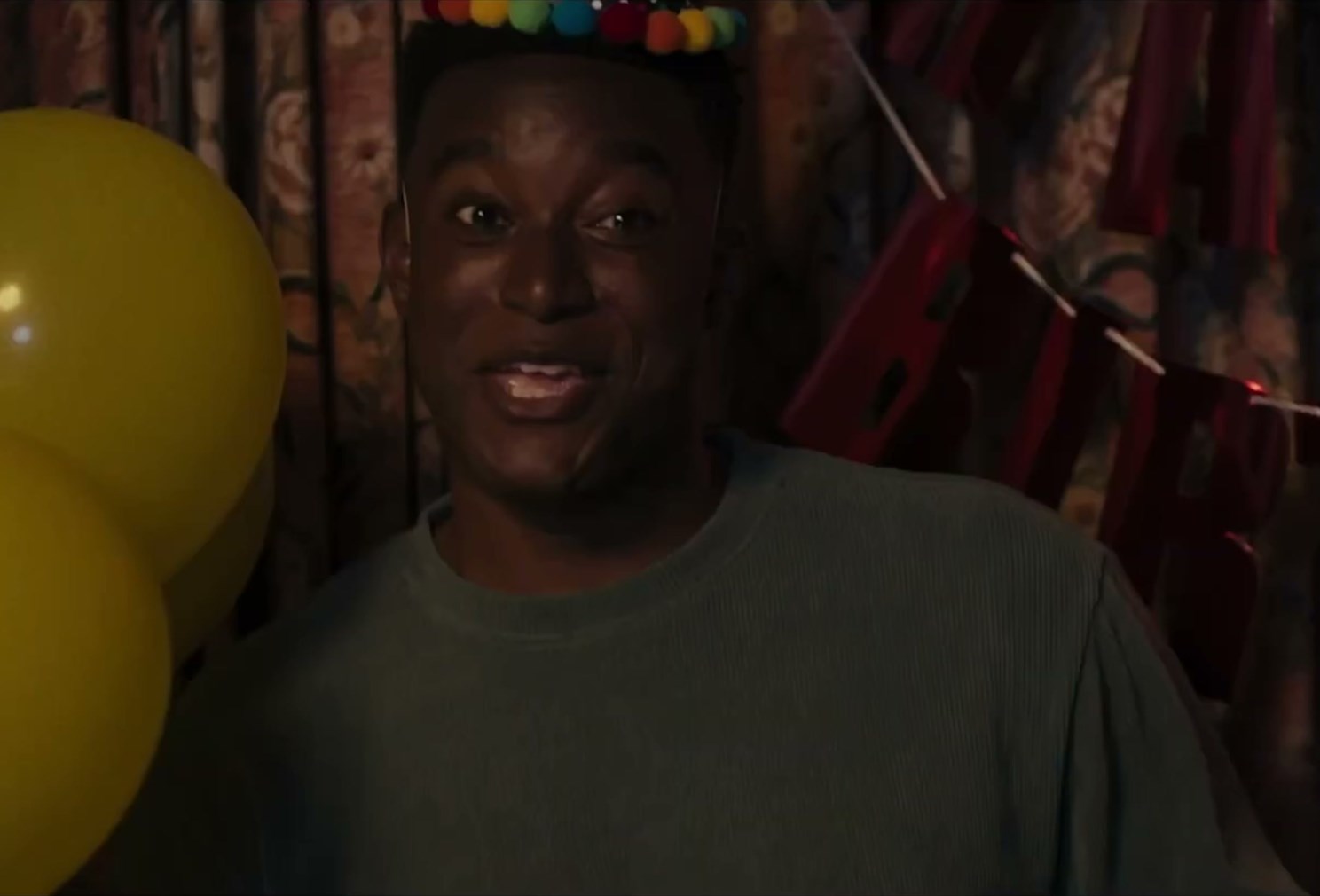
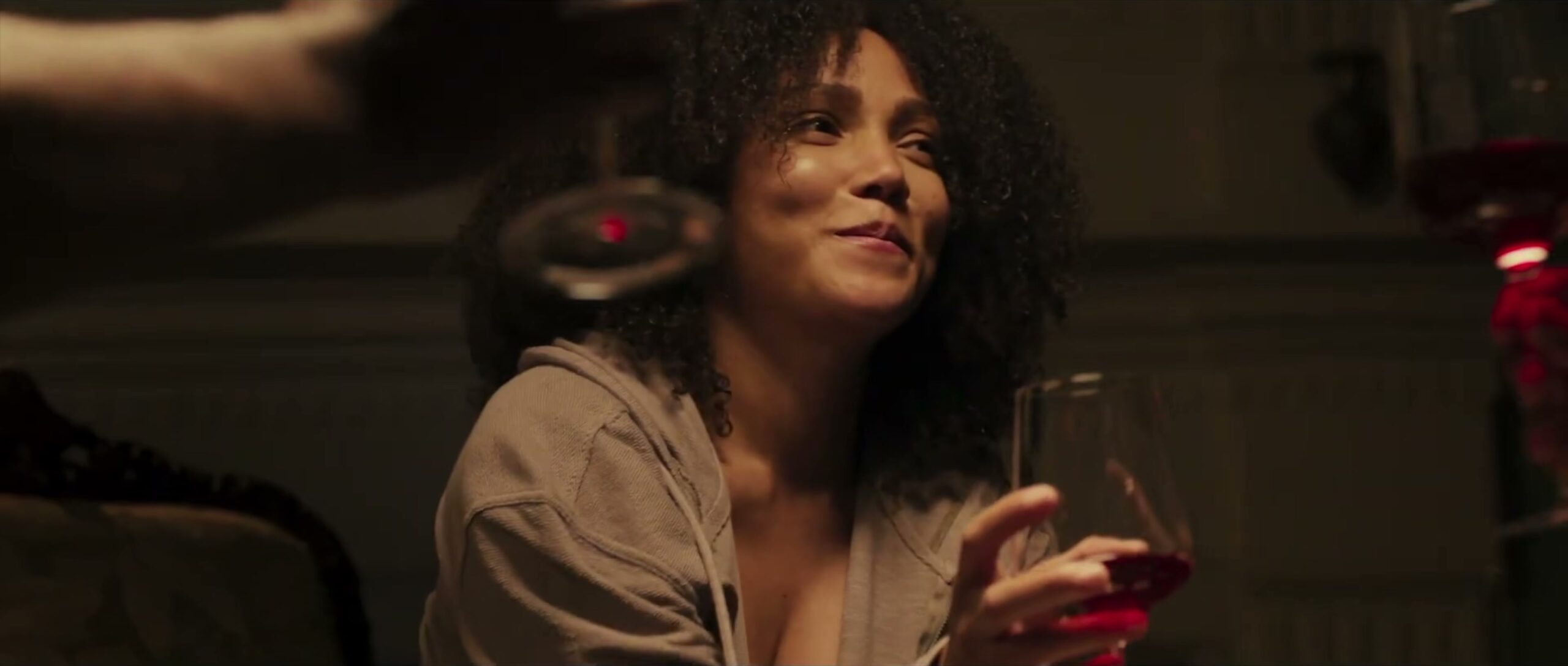
Shudder’s trailer for “Parasomnia” opens on the happiest sound in the world and holds on it a beat too long. Balloons, paper streamers, a man in a party hat mid-shout, a whole room singing happy birthday, and a young woman laughing on a couch like she means it. Then the color drops out of the frame and everything goes red, and by the time the trailer gets to the birthday cake again it is sitting in a black room with one candle burning and nobody around it. That is a smart piece of trailer cutting, because the film’s whole premise is that the worst thing in this woman’s life arrives while she is asleep, and sleep is the one appointment nobody gets to skip.
The specifics, before we walk it. “Parasomnia” is the debut feature from writer-director James Ross II, it runs a lean 85 minutes, and it lands on Shudder on Friday, September 4. Jasmine Mathews plays Riley, a woman with a history of night terrors and an unresolved tragedy behind her, and the film pushes her toward the suspicion that the thing standing in her dreams has found a way out of them. RJ Brown, Sally Stewart, Stephen Barrington, Danny Brown and Simon Longnight co-star, Gabrielle Chapman and Pacey Hansen produce, and Christopher Lee Fatt shot it. It premiered at the Brooklyn Horror Film Festival last year and Shudder picked it up out of Overlook alongside two other acquisitions. Warning beyond this point there are spoilers for the “Parasomnia” trailer and for the setup of Riley’s night terrors.
The film’s whole premise is that the worst thing in this woman’s life arrives while she is asleep, and sleep is the one appointment nobody gets to skip.”
The trailer runs its first act as a conversation rather than a scare. Riley is in bed, lit in that sickly magenta that horror cinematographers reach for when they want you to know a room is not safe, and there is a cut to an extreme close-up of an eye in deep red. Then daylight, and a man asking her about it: last night, he says, she was in her room making strange noises, and he thinks she had a night terror. She tells him she does not get them anymore. He does not believe her, and he brings up a woman named Miss Margaret and what happened the last time he heard those sounds. Somebody says, quietly, “don’t tell me this doesn’t seem familiar.” The dread here is entirely domestic, and it works.
Then the film shows you its architecture. A cut to a child sitting alone on the floor of a bedroom, which is the memory the trailer keeps circling without explaining, and a line that reframes the whole party we just watched: “I think it’s a pattern. Both times, ten years apart.” Watch the door in one shot and you can read a hand-lettered sign taped to it, “Happy 15th Birthday Riley,” which is the trailer telling you exactly how the arithmetic works if you are paying attention. That is a nice piece of construction. The birthday is not a setting, it is a clock.
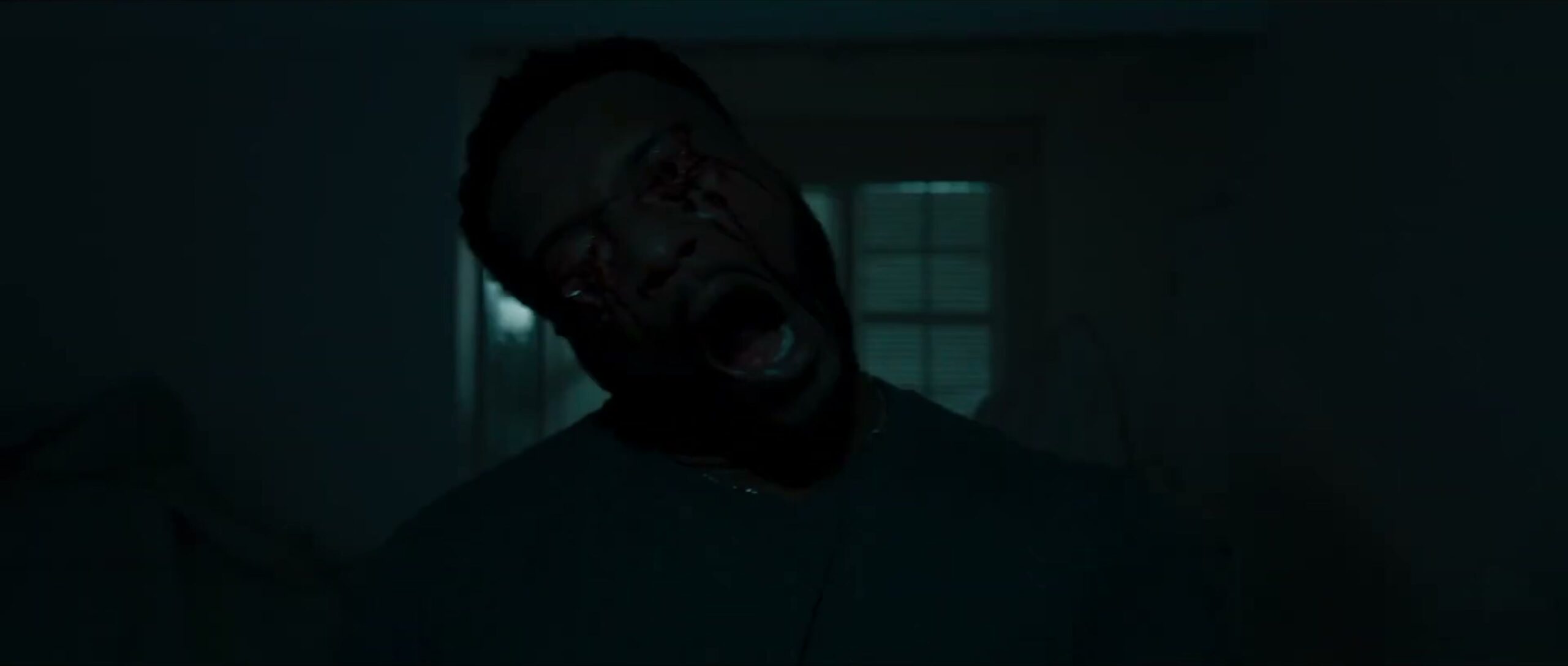
The back half stops arguing and starts hurting. Hands sorting through pill bottles on a kitchen counter. A dark hallway with a single light at the far end. A man face down on the floor in a striped shirt, bloodied, absolutely still. Riley’s voice over the top of it: “David was right. My night terrors, they hurt people.” Then the supernatural machinery arrives in fragments, the way good horror trailers deliver it, a few frames at a time. A grinning face in the dark that the cut does not let you study. Riley’s reflection caught inside a red rectangle. A man weeping in red light holding a lit match. Somebody says “there’s something in there with me,” and somebody else says “she’s his vessel,” and the last line before the title card is an instruction: find out what he needs from her, and then take it away.
What impresses about the cut is how little of the monster it spends. Ross has said “A Nightmare on Elm Street” was the model here, and you can see the lesson he actually took from it, which is not the glove or the one-liners but the structural cruelty of a threat that waits for you to be unconscious. The trailer leans on candles, brick basements, bathtubs and doorways, all shot with almost no fill light, and it lets three critic pull quotes carry the hype rather than a voiceover. One of them calls it a bold, bloody and blood-curdling feature debut. Dread Central’s Chad Collins, writing out of Brooklyn Horror, called it a terrifying debut feature. Whatever the finished film does, nobody cutting this trailer was reaching for the safe version.
Mathews is the reason to believe this can carry 85 minutes. If the face is familiar and you cannot place it, she was Lieutenant Hart in “The Tomorrow War,” she turned up in “The Man from Toronto” and “Big George Foreman,” and before the film work she played Heather McNamara in the “Heathers” series and had runs on “Sweetbitter” and “The Rookie.” That is a decade of being the reliable presence in somebody else’s ensemble, and a horror lead is the opposite job, because the camera never leaves you and the audience has to want you to survive. Every frame of her in this trailer is doing that work, whether she is laughing at her own party or lying awake with the room going red around her.
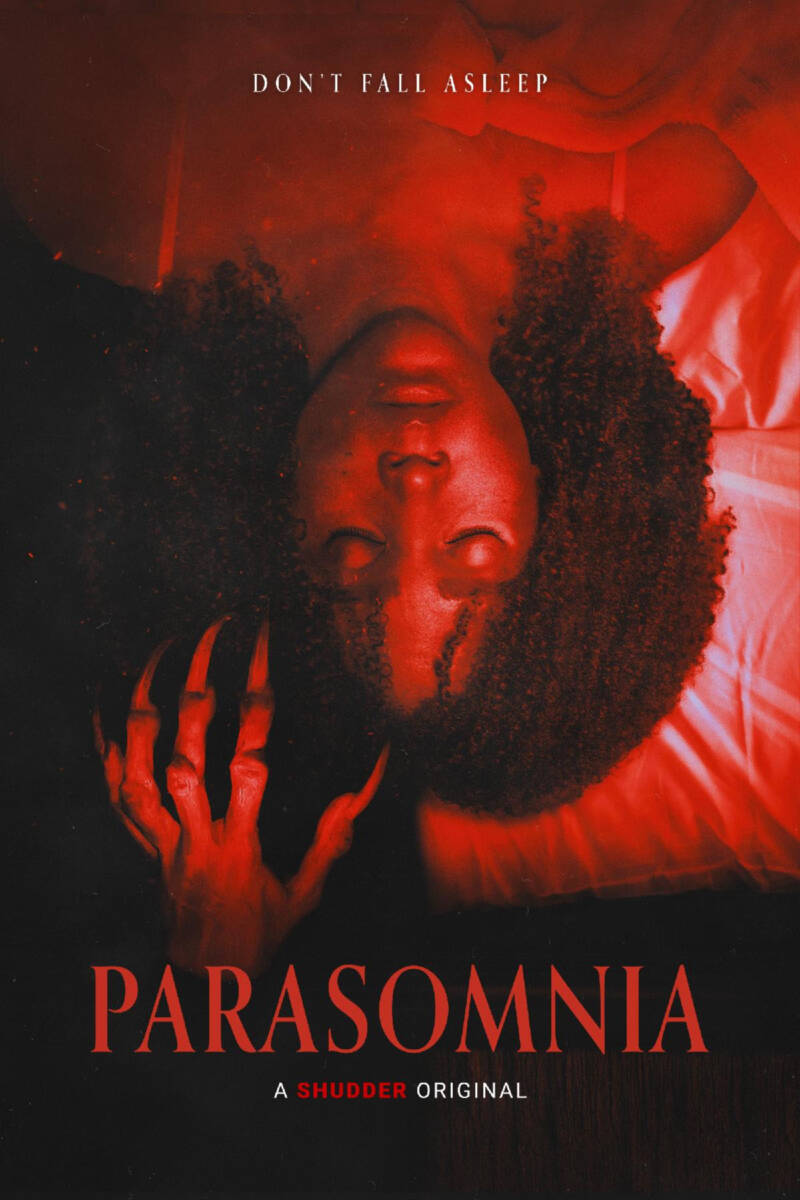
The Shudder context matters too, and it is a decent story on its own. The platform bought “Parasomnia” out of the Overlook Film Festival this year as part of a three-film grab, which is how the service has been feeding itself for a decade now: take the debut that terrified a festival room, put it on a Friday, let the horror internet do the rest. A September 4 drop puts it right at the front of the run into Halloween, ahead of the crowded weeks, where a small film with a real hook has room to get talked about. That is a better slot than a first-time director usually gets, and the key art is not hedging either, a clawed hand over a sleeping face and two words of instruction: don’t fall asleep.
Our honest reservation is that trauma-as-a-monster is the most worn premise in modern horror, and a lot of films that open this confidently spend their third act explaining the metaphor instead of paying it off. The trailer does flirt with it, all that talk of patterns and unresolved grief. What gives us hope is the ten-years-apart line, because it suggests the film has a plot rather than a mood, and a rule the characters can discover and then try to break. If Ross has built an actual mechanism under this, “Parasomnia” is the kind of debut people remember. If it is only atmosphere, it will still look better than most of what shares its shelf.
What Do You Think? Does a night-terror horror movie need to show you the demon clearly at some point, or is the fear entirely dependent on never letting you get a good look? Is the ten-years-apart structure a promise of a real mythology, or the setup for the usual grief metaphor with a monster stapled on? And has Shudder become the best home in the business for a first feature, or does dropping straight to streaming still cost a debut like this the theatrical word of mouth that made its festival run matter?
See you on the next binge!