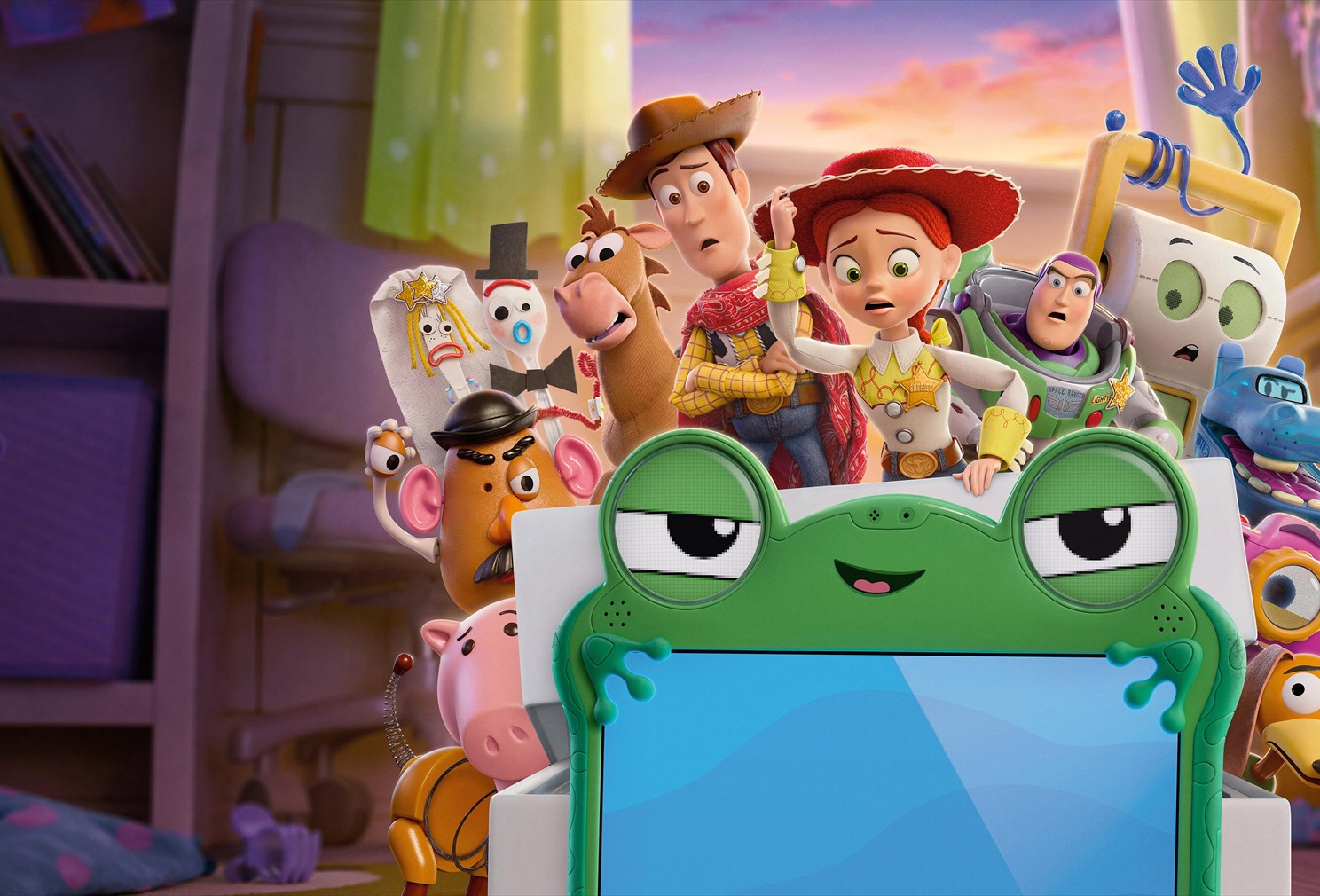
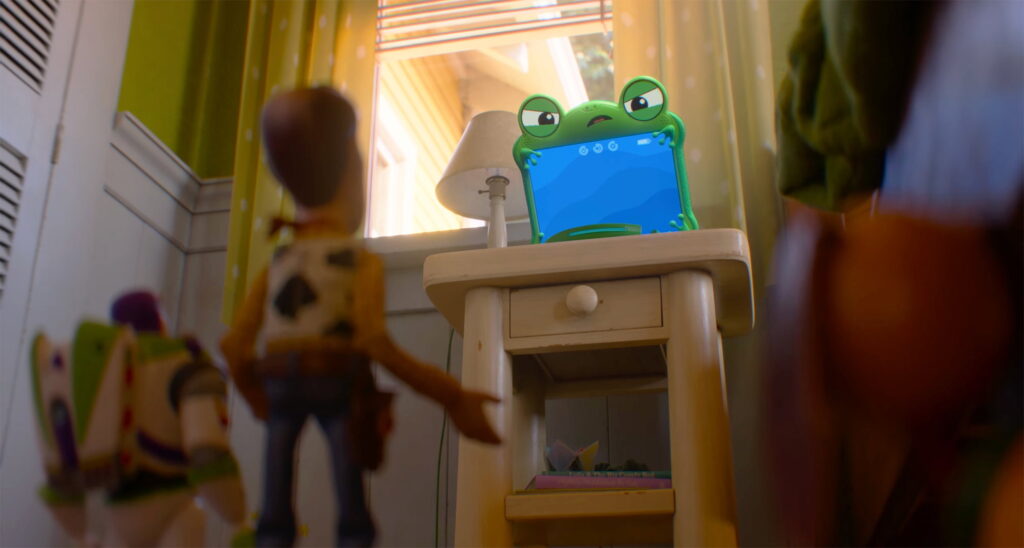
Pixar just showed us the villain of “Toy Story 5,” and it is the exact thing currently glowing in your child’s hands. The first teaser for the fifth installment dropped today, November 11, 2025, and it introduced Lilypad, a high-tech, frog-shaped tablet device who waltzes into Bonnie’s room with her own disruptive ideas about what kids actually need. In other words, the toys are no longer competing with each other or with the fear of being outgrown. They are competing with a screen. It is a premise that is either brilliantly of-the-moment or dangerously on-the-nose, and the whole movie is going to live or die on which one it turns out to be.
Let us acknowledge the elephant in the toy box first. “Toy Story 4” ended about as perfectly as a franchise can end. Woody (Tom Hanks) made an agonizing, mature choice to leave his kid and his friends behind and start a new life with Bo Peep, and it landed as a genuine, tear-streaked goodbye. A lot of us walked out assuming, and honestly hoping, that was the finish line. So the announcement of a fifth film came with a familiar knot of anxiety: does this story really need more, or is Pixar reopening a book it had already closed beautifully? Warning: beyond this point there are spoilers for the ending of Toy Story 4 and the setup of Toy Story 5.
In other words, the toys are no longer competing with each other or with the fear of being outgrown. They are competing with a screen.”
The teaser’s answer is to change the question entirely. Rather than rehashing the fear of being forgotten by a growing child, “Toy Story 5” is pitting the toys against technology itself. Lilypad represents every glowing rectangle that has quietly replaced imaginative play in a generation of kids’ lives, and Buzz Lightyear (Tim Allen), Jessie (Joan Cusack), and the rest of the gang suddenly find their entire reason for existing threatened not by a rival toy but by a device that never needs to be wound up, dressed, or imagined into life. For a franchise that has always been secretly about mortality and purpose, aiming that lens at screen addiction is a genuinely clever angle.
The trick, and it is a real one, is tone. “Toy Story” has always smuggled heavy themes inside gorgeous, funny, heartfelt adventures. Handled with a light touch, a story about toys versus tablets could say something true and moving about childhood in the age of screens. Handled clumsily, it risks becoming a finger-wagging lecture about kids these days, the kind of thing that makes parents nod and children squirm. Pixar has earned enormous trust here, but the line between poignant and preachy is razor-thin, and this premise walks right along it.
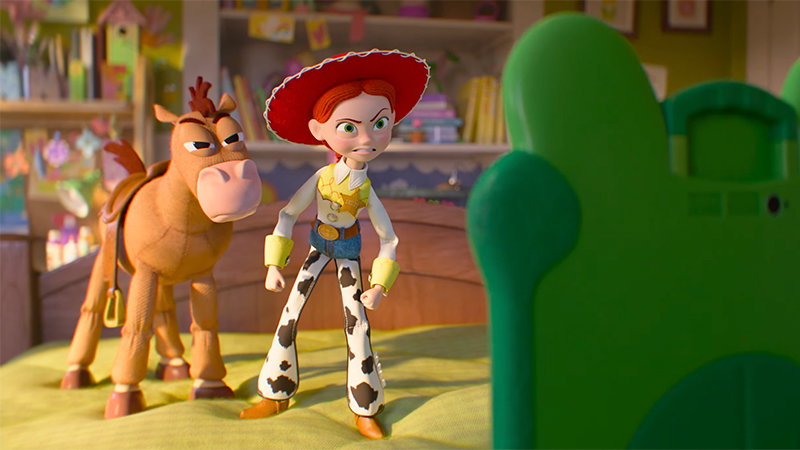
There is reason for optimism in the credits. Andrew Stanton, a Pixar veteran whose fingerprints are on some of the studio’s very best work, is directing, and the core voice cast is intact: having Hanks, Allen, and Cusack back means the soul of these characters is preserved. The teaser also leans into the warmth and humor that have always defined the series, suggesting Pixar knows the danger of the premise and is trying to disarm it with charm rather than sermons. If anyone can make “toys versus screens” feel like a story instead of a lecture, it is this team.
On one hand, “Toy Story 4” already stuck a near-perfect landing, and every additional sequel risks chipping away at that. On the other, if there is a subject worth pulling Woody and Buzz off the shelf for, the way technology is reshaping childhood is a big, resonant one, and it is exactly the sort of theme this franchise was built to explore. A “Toy Story” movie has never really been about the toys. It has been about what we hold onto, what we outgrow, and what we lose along the way. Screens fit neatly into that lineage.
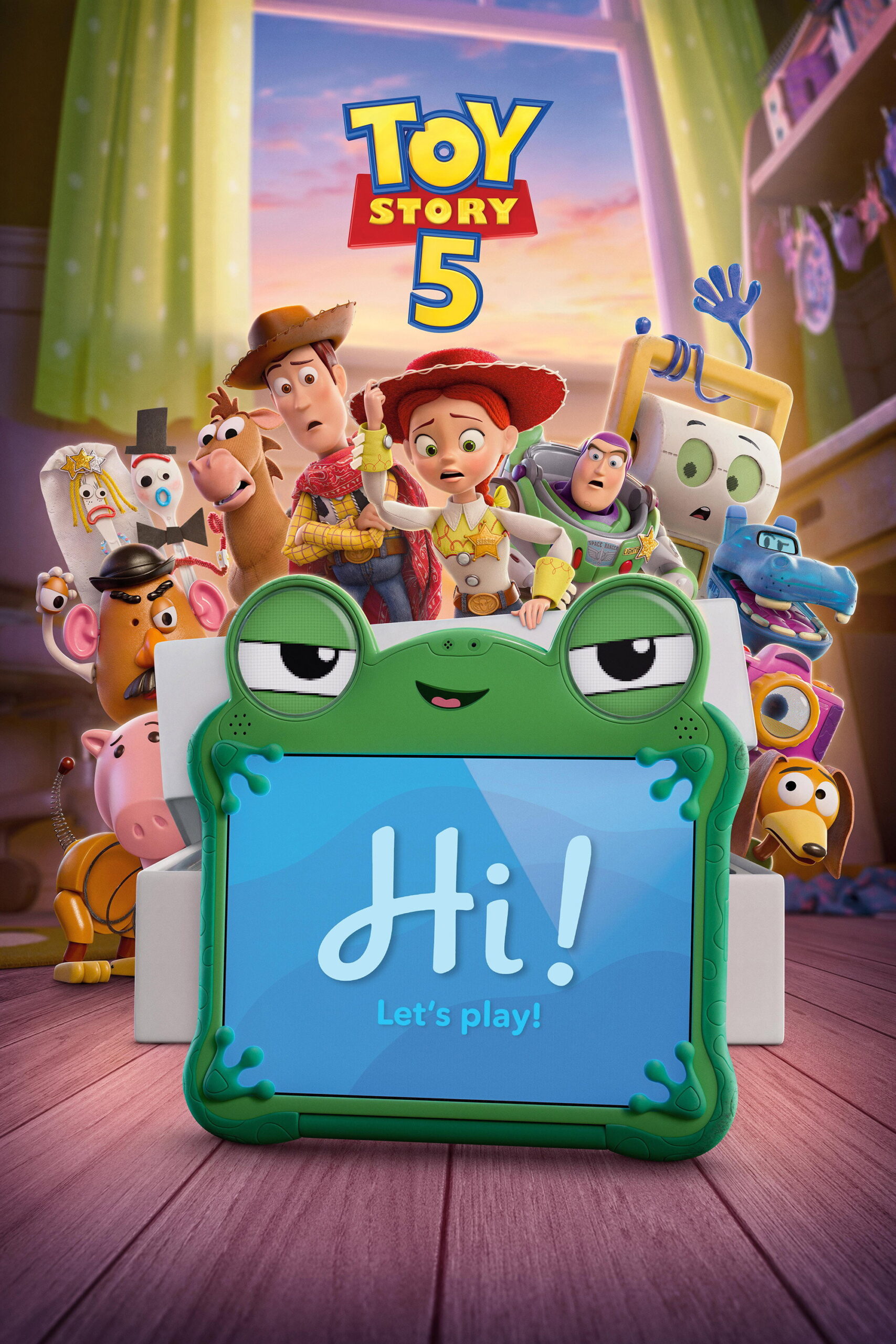
With the film headed to theaters in 2026, there is plenty of time for more footage, more of Lilypad, and more speculation about whether Pixar can justify going back to this well one more time. For those of us who have followed Woody and Buzz across four films and a couple of decades of growing up, “Toy Story 5” is the moment the franchise decides whether it still has something essential to say or is simply reluctant to let go. The enemy, this time, is the device we have all handed our kids. That is a fight worth watching these toys pick. Let us hope Pixar remembers to make us feel it, not just agree with it.
What Do You Think? Was “Toy Story 4” the perfect ending this franchise should have left alone, or does the toys-versus-technology premise justify one more adventure? Can Pixar tackle screen addiction without tipping into a preachy lecture about kids and their devices? And after everything Woody and Buzz have been through, what story could actually feel worthy of pulling them back off the shelf?
See you on the next binge!