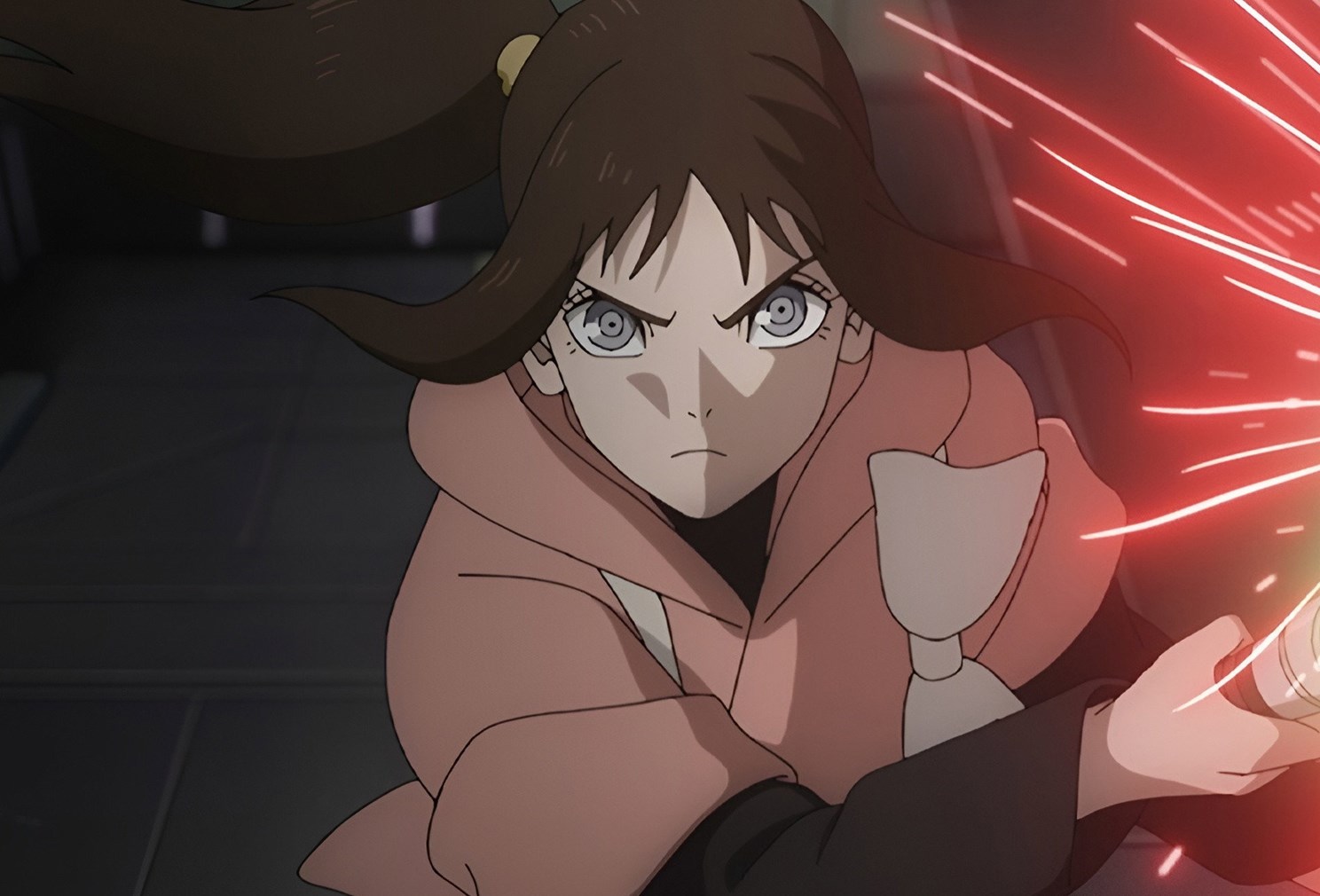
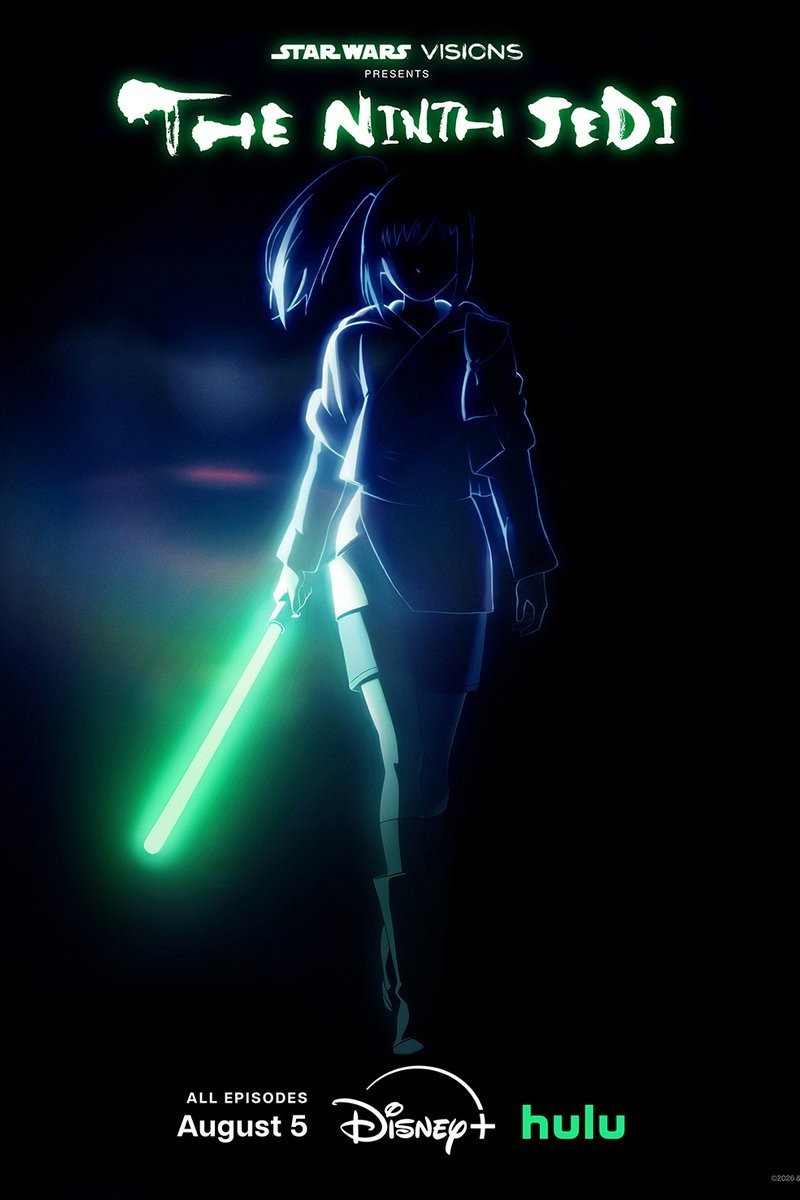
Star Wars has spent the better part of a decade arguing with itself about canon, timelines, and which corner of the map it is allowed to touch next. So it is quietly hilarious that the best-reviewed thing the franchise has released in years is a hand-drawn anime set so far in the future that none of that argument applies. “Star Wars: Visions Presents: The Ninth Jedi” dropped all eight of its episodes today on Disney+ and Hulu, and it landed with a perfect 100% on Rotten Tomatoes off its first ten reviews. Not good for an anime spin-off. Not good for a side project. Just good, full stop.
Here is what it actually is, because the title does the show no favors. “Visions” was Lucasfilm’s anthology experiment: hand the sandbox to Japanese animation studios and let them build whatever they want, canon be damned. Two of those shorts, ‘The Ninth Jedi’ from Volume 1 back in 2021 and its follow-up ‘Child of Hope’ from Volume 3 last year, were good enough that Lucasfilm greenlit a full continuation from Production I.G, the studio behind “Ghost in the Shell.” Eight episodes, 21 to 30 minutes each, all of them there at once. A note before we go any further: this is a mostly spoiler-free review. We are going to walk you through what each of the eight episodes feels like and whether it works, and we are leaving the reveals, the losses and the turns exactly where the show put them.
It is quietly hilarious that the best-reviewed thing the franchise has released in years is a hand-drawn anime set so far in the future that none of that argument applies.”
“A New Threat” starts the way a lot of Star Wars starts, which is mid-chase and moving. It is confident and quick and it gets you oriented without a crawl or a lecture, but it is also the most familiar half hour of the eight: you can feel the shape of “A New Hope” underneath it, and the show is not especially trying to hide that. “A Hidden Weapon” is the better of the opening pair and the point where the series stops borrowing. The setup here is a galaxy that has largely forgotten the Jedi ever existed, so turning up as one is not a rescue, it is a stranger with a sword asking people for help they have no reason to give. Watching the show play that as a negotiation rather than a spectacle is far more interesting than any fight, and it is the first sign this thing has a personality of its own.
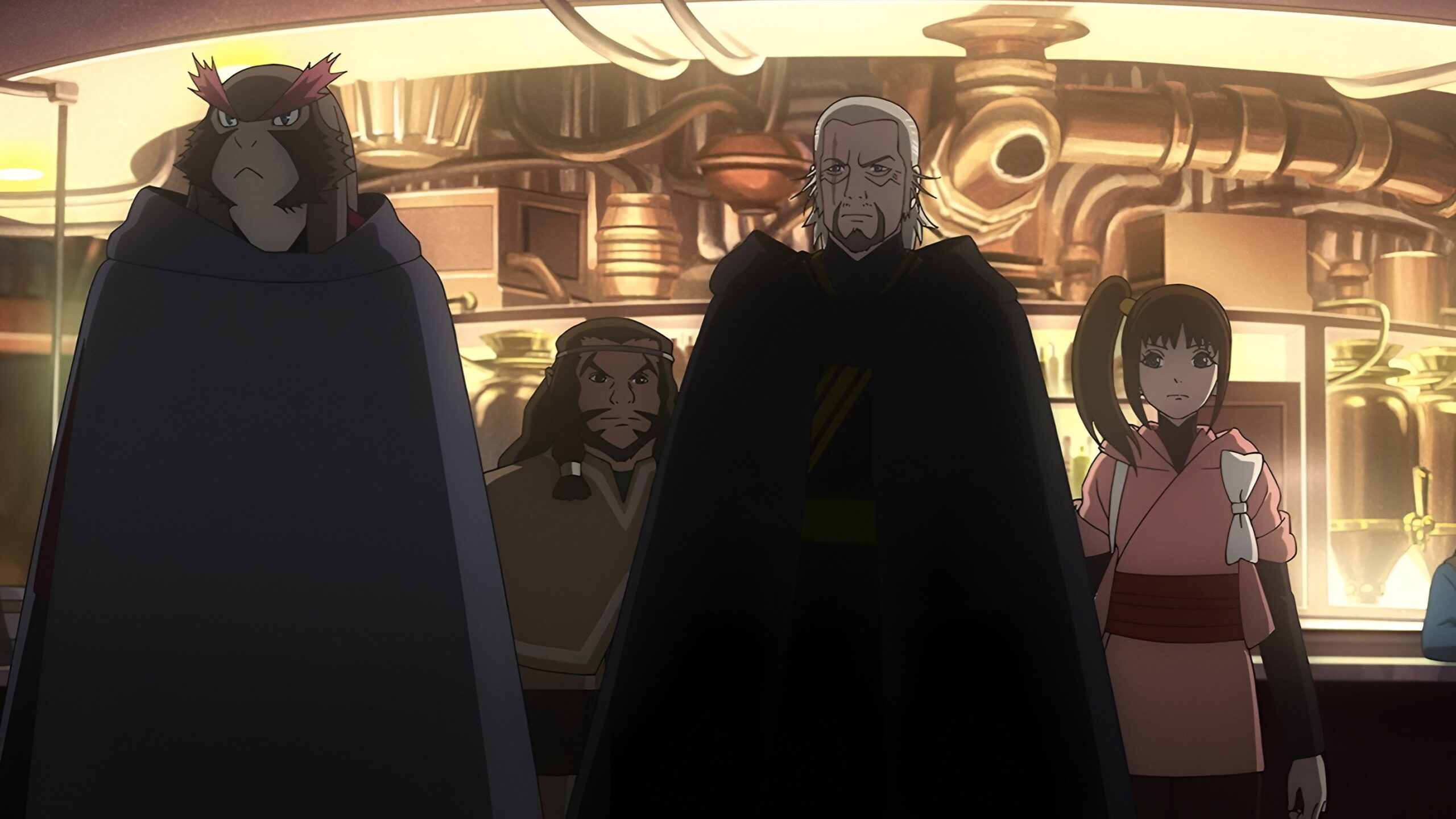
“Voice From the Past” is where the tone drops a few degrees. It has action in it, but the episode is really about history catching up with people, and the series shows some genuine patience here: it is willing to sit in an uncomfortable conversation rather than cut to a hallway fight. Lah Zhima (Simu Liu in English, Shin’ichirô Miki in Japanese) emerges as the most interesting figure in the whole show around this point, which is a slightly awkward thing to say about a series named for his daughter. Then “Nawaam Attacks” is the confrontation episode, and it is where the villain earns his place. General Nawaam (Young Mazino in English, Nao Omori in Japanese) is not a snarling warlord: he argues, and his argument is coherent enough that you can follow it even while you are rooting against him. He also carries a blue lightsaber, which in a franchise that trained us for fifty years to read blade color as a moral label is a deliberate poke in the eye.
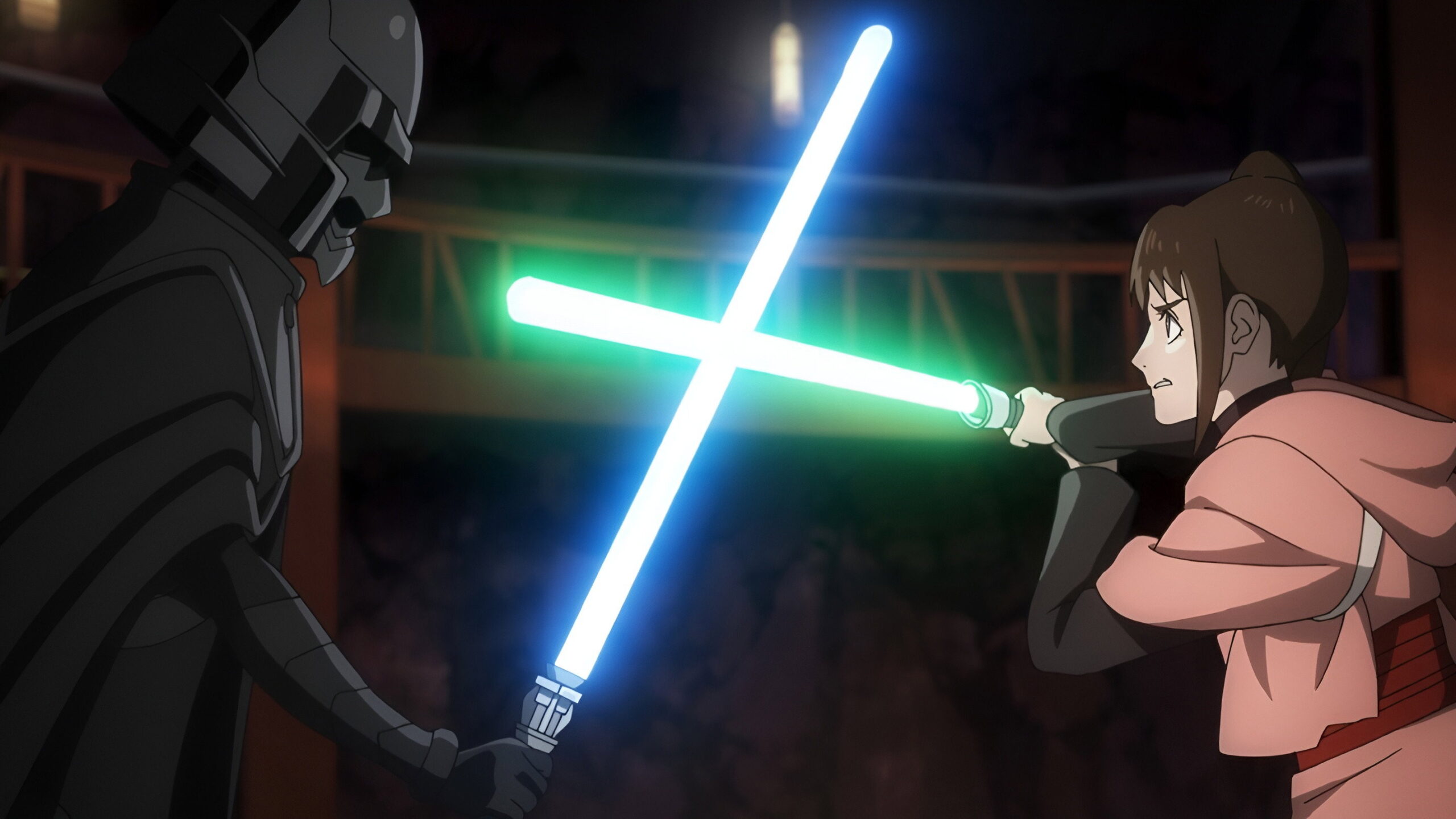
“The Storm of Violence” is the best episode of the eight and it is not particularly close. It is the heavy one, the chapter where the show puts its lead through something and then refuses to move past it at the usual television speed, and Lah Kara (Kimiko Glenn in English, Chinatsu Akasaki in Japanese) is asked to carry doubt rather than determination for a while. Anime does this better than almost any other format and this is a clean demonstration of why. “Light of the Force” is the shortest chapter at 23 minutes and the lightest on its feet, tighter, more contained, closer to a caper than an epic. It is the least ambitious episode here and probably the most purely enjoyable, which is a perfectly good trade. It also keeps leaning on the series’ best idea, where a blade only shows its color once its wielder ignites it, so nobody in a room full of strangers knows quite who they are standing next to.
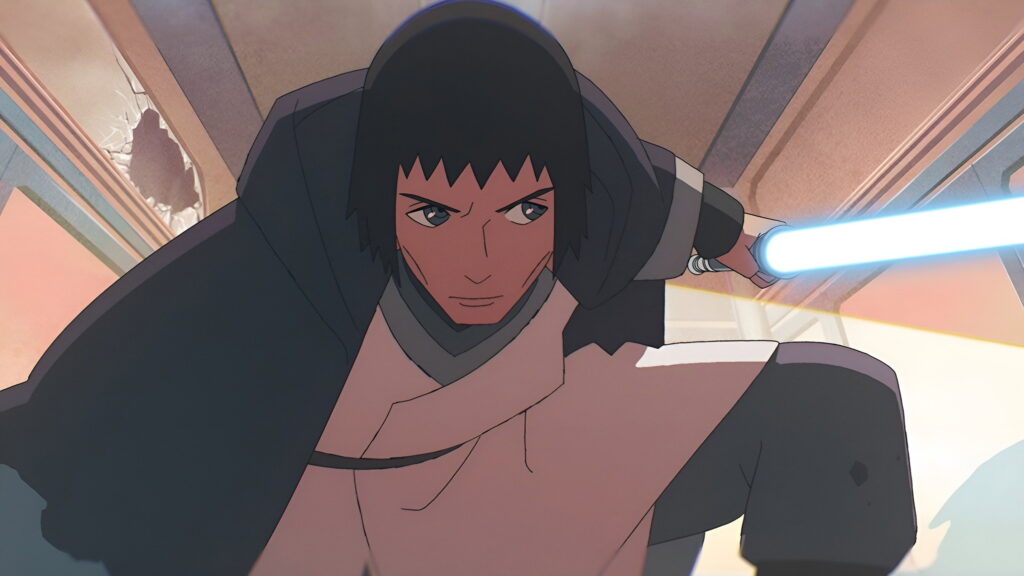
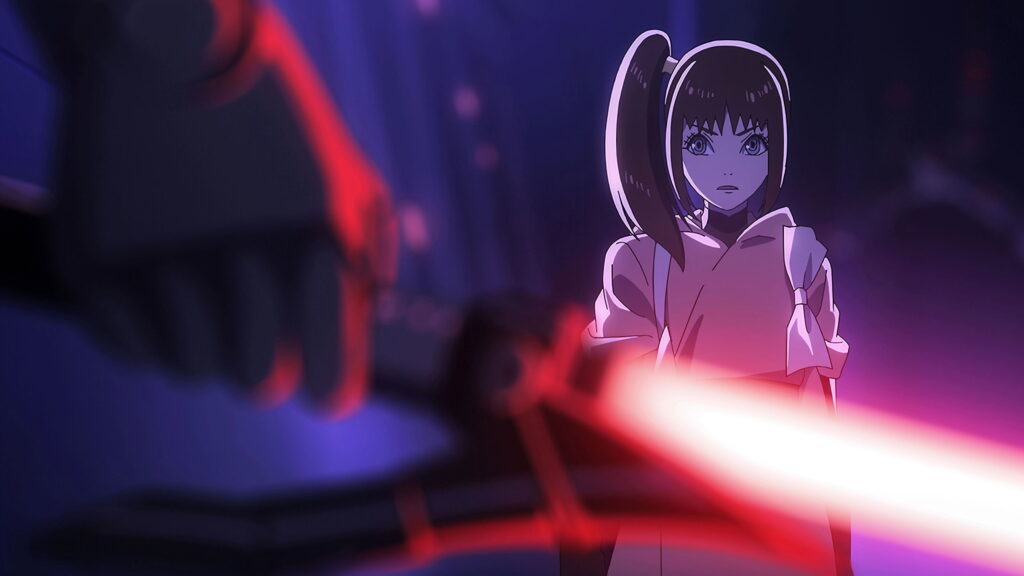
The last two are the payoff and the only place we would really push back. “The Jedi Strike Back” is the shortest of the lot at 21 minutes and it is pure forward momentum, but it is also the stretch where the show is most obviously filling in a Star Wars template rather than writing its own: Empire’s review put a finer point on it, noting the franchise has handed us yet another variation on the Death Star, and that is a fair hit. Then “The Ninth Jedi” closes things out across a full thirty minutes and it is the best-looking half hour the series has. The duels here are extraordinary, which is the claim Collider made in its 9-out-of-10 review and which nobody seems in a hurry to dispute. Fair warning on one structural point: it does not tie everything off. This is a first movement rather than a complete symphony, and whether that lands as exciting or annoying is going to depend entirely on your patience for open endings.
The craft is not in question. Roughly 200 people at Production I.G made this, with Shunsuke Tada directing and Kenji Kamiyama, who made both of the original shorts it grew from, supervising, and Mitsuyasu Sakai writing. It is drawn, not rendered, and you feel that in the fights, where the blades read as heavy objects with weight behind them instead of glowing sticks that pass through each other. The score, from Nobuko Toda and Kazuma Jinnouchi, is the one genuine craft miss, and Empire put it about as well as it can be put: it is a forgettable imitation of Williams. For a show this committed to not sounding like everything else in the franchise, hiring an orchestra to do a John Williams impression is a strange retreat.
The reservations are real but small. The eight episodes split cleanly down the middle and the back four are stronger than the front four, which means the show asks for a patience it does not entirely need to ask for. Kara absorbs so much of the focus that the people around her, Ethan, Homen, Margrave Juro himself, end up thinner than they should be, and a couple of the bigger turns land faster than they have quite earned. But set against all that is the thing the series gets completely right: it asks a real question about the blue-and-green versus red arrangement that Star Wars has treated as physics for half a century, and Nawaam is the argument. A galaxy where the Jedi are a half-remembered rumor and a lightsaber shows you the color of the heart holding it is a genuinely new idea in a franchise that mostly recycles old ones.
Our honest read, with one caveat attached: a 100% rating off ten reviews is a real signal but a small sample, and a number like that always slides once the wider crowd files in. Set the percentage aside and the interesting question stands anyway. Lucasfilm has now proven twice that when it hands the franchise to animators with a distinct voice and tells them not to worry about the timeline, the result is better received than most of what the mothership produces at ten times the budget. “Visions” was pitched as a fun detour. Eight episodes in, it looks a lot more like the blueprint, and the fact that you can hand this to somebody who has never seen a Star Wars film is not a footnote: it is the entire argument.
What Do You Think? Does giving General Nawaam a blue lightsaber land as a genuinely bold move, or is it a visual trick the series only half cashes in by the finale? Is a Star Wars story that needs zero prior knowledge the franchise’s smartest possible play right now, or does cutting every tie to the Skywalker era cost it the weight that made people care in the first place? And the one we would bet money on, after two hits from the “Visions” experiment, which anthology short do you want promoted to a full series next?
Catch up properly: every Star Wars film and series in chronological order on our Timeline Hub’s Star Wars timeline.
See you on the next binge!