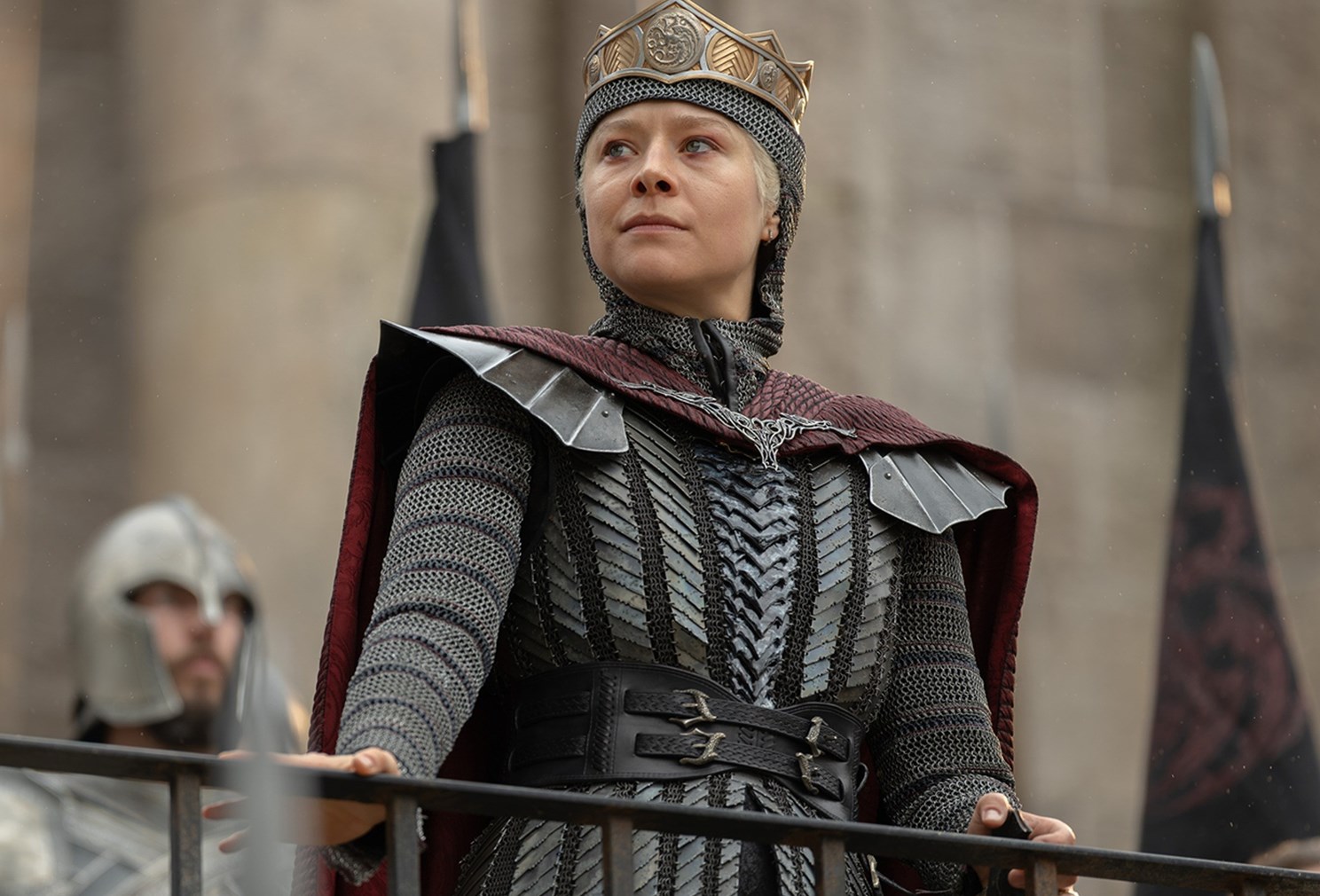
Something broke in Westeros on Sunday night, and it was not only the walls of Tumbleton. The “House of the Dragon” season three finale ran seventy-five minutes, the longest episode the show has ever aired, and it spent almost every one of them taking apart the woman we have spent three seasons defending. Queen Rhaenyra Targaryen (Emma D’Arcy) opens the hour hearing that Aegon II (Tom Glynn-Carney) is alive and closes it standing over a dead sister-in-law and an embroidered prophecy of her own ruin. In between, a drunk with a dragon torched an entire town, a captive queen was force-fed soup by soldiers, and the Faith of the Seven found out what happens when you tell a Targaryen no.
The BR team has been arguing about this one since the credits rolled, because the finale finally stops circling the question the season kept raising. It is no longer about whether Rhaenyra deserves the throne. It is about what she is willing to turn into to keep it, and the answer is not flattering. Co-written by showrunner Ryan Condal and directed by Andrij Parekh, this is the twenty-sixth episode of the series and the last one before a fourth and final season that is still being written, so the wait is going to be long and this is the taste it leaves. Warning beyond this point there are spoilers for “House of the Dragon” season three, the full Battle of Tumbleton, and the death of a major character in the season finale.
In between, a drunk with a dragon torched an entire town, a captive queen was force-fed soup by soldiers, and the Faith of the Seven found out what happens when you tell a Targaryen no.”
The hour opens with Grand Maester Orwyle carrying the worst news in the realm into the queen’s chambers. Aegon is alive, Sunfyre is alive, and ravens spread it across Westeros before anyone in King’s Landing can decide how to spin it. The smallfolk do the arithmetic faster than the small council does: a king who falls out of the sky with his dragon and gets back up is a king somebody upstairs wants on the throne. Rhaenyra takes the news without visibly flinching, which is somehow worse than screaming. She turns to Daemon (Matt Smith) and tells him to root out every Hightower and kill them to the last man, and that is not a battle plan. That is a woman out of moves reaching for fire.
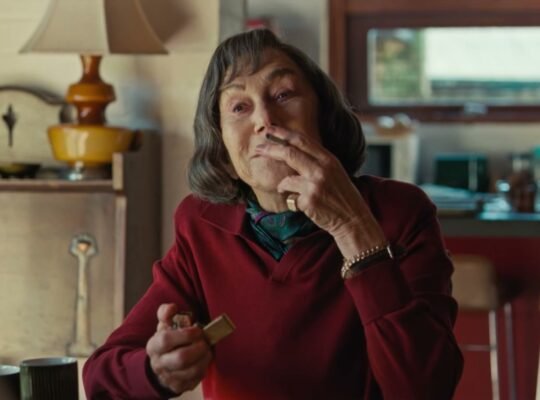
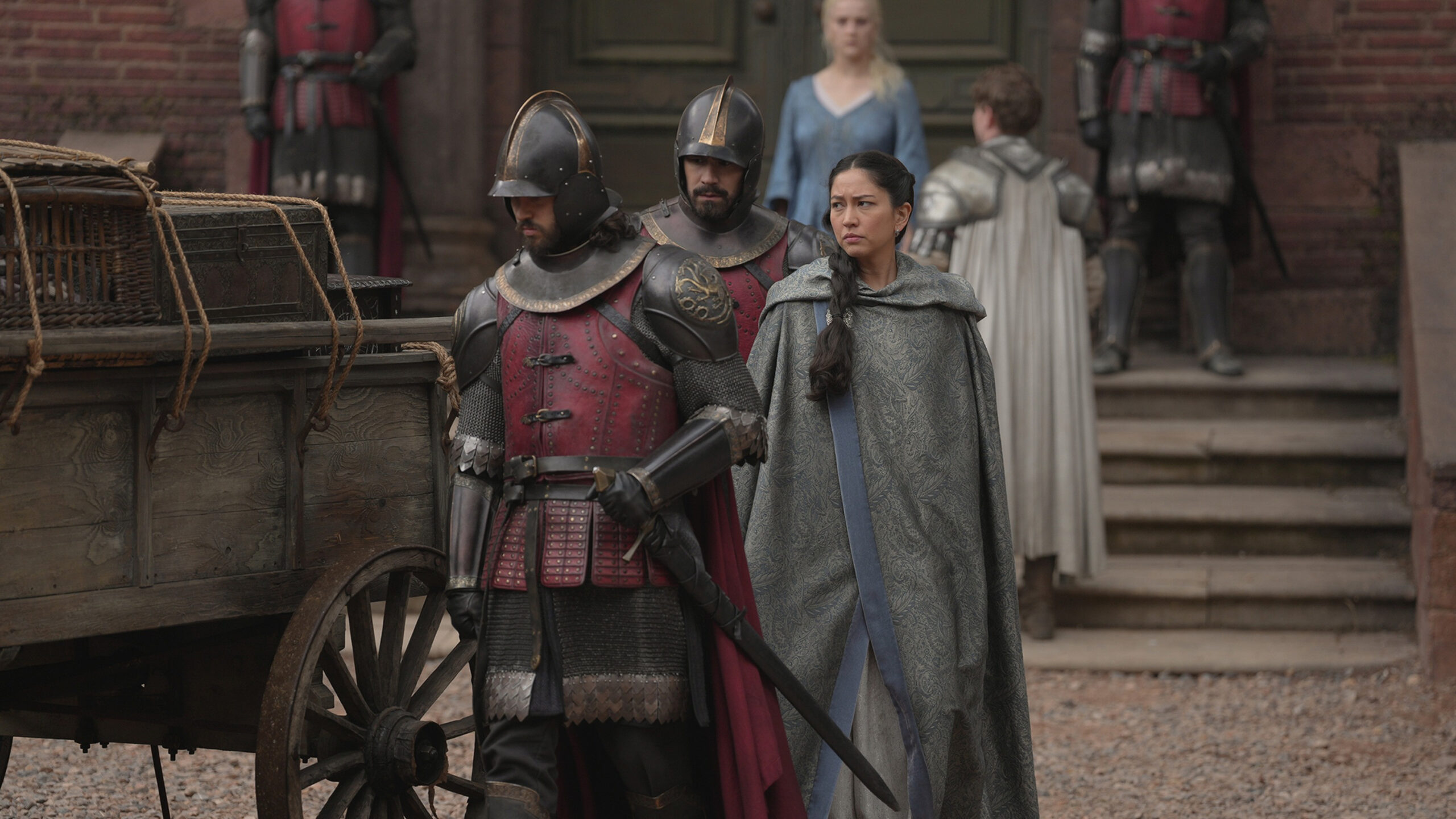
What follows inside the Red Keep is the hardest stretch of television this show has produced, and not one second of it involves a dragon. Rhaenyra cuts Mysaria (Sonoya Mizuno) loose through an intermediary, discarding the one person who has told her the truth all season without so much as a conversation. When Baela (Bethany Antonia) challenges her over Lord Corlys being taken in chains, Rhaenyra grabs her by the face and has her confined for asking a fair question. And then there is Helaena (Phia Saban), captive, pregnant and refusing food, pinned by guards while soup is poured into her mouth. D’Arcy plays the whole sequence with the flat calm of someone who has stopped hearing objections, and the camera refuses to look away and let anyone off the hook.
Exiling Mysaria turns out to be the error that costs everything, because nobody thinks to keep a woman who knows every corridor in the castle away from the prisoner. She gets to Helaena and lays it out without softening it: Aegon lives, the child she is carrying is a bargaining chip, and the Blacks intend to spend both. Helaena has spent three seasons catching fragments of the future and being patted on the head by everyone holding a sword. This is the first time somebody hands her the entire picture, and it is precisely the wrong thing for her to be holding alone in a tower. Saban plays it small, which makes it land harder.
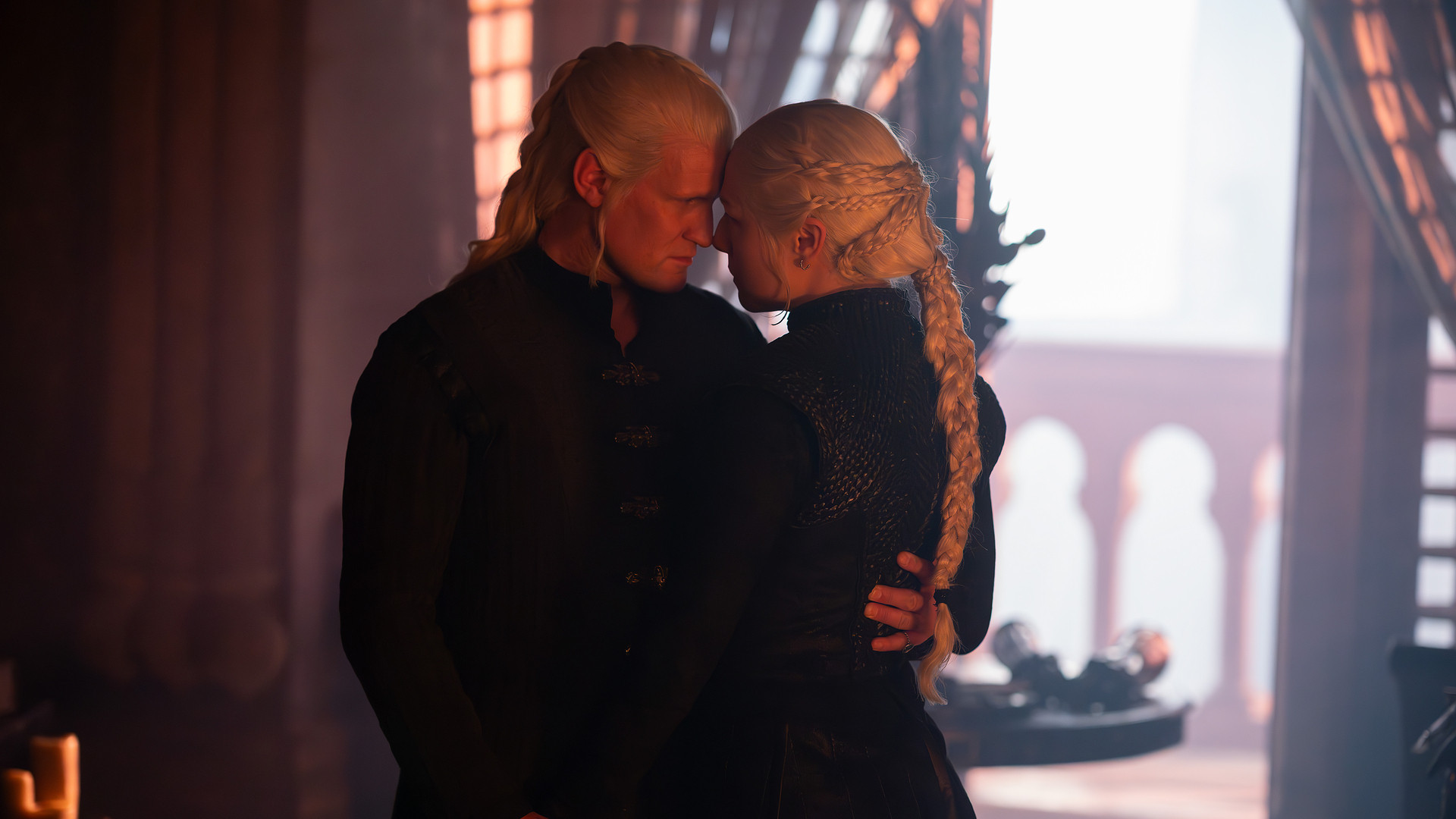
Out at Harrenhal, the show finally answers a question it has been dangling since Daemon’s first bad night in that castle. Alys Rivers (Gayle Rankin) tells Aemond (Ewan Mitchell) who she actually is, and it reframes the entire Riverlands arc: she was the wife of Harren Hoare, the last King of the Isles and the Rivers, and when Balerion turned Harrenhal into a chimney she reached for old magic to save her burned son. The magic worked on her instead. She has been bound to those walls for more than a century, stripped of her name, unable to die and unable to leave. Aemond, who has spent the season folding in on himself, kisses her, and it is the only tender beat in seventy-five minutes of misery.
That quiet lasts about as long as you would expect. Aegon comes down into the yard on Sunfyre, scarred and burned and vibrating with the certainty of a man who believes surviving a fall from the sky is the same thing as being chosen, and he greets the brother who tried to have him killed with more contempt than warmth. Forgiveness gets floated as something that might arrive later, after the war, if Aemond earns it. What Aegon wants now is Vhagar found, Tumbleton burned and King’s Landing taken back, in that order. Mitchell plays a man who has nothing left to argue with, and the gap between what the brothers say and what they mean is where the Greens are going to live from here.
Tumbleton is where the season has been pointing since the first episode, and the show refuses to rush it. Ser Gwayne Hightower (Freddie Fox) rides out under a peace banner with a genuine offer on the table, a version of the war that ends with Daeron holding the Reach and everybody’s sons walking home. Daemon turns it down flat, because his queen asked for dead Hightowers and he is not in a bargaining mood. Lord Corlys (Steve Toussaint) argues for taking the deal and gets himself put under guard for the trouble, which leaves nobody in the Black camp with the standing to say stop. By the time the Winter Wolves start moving, the negotiation is a formality nobody was ever going to honour.
The assault itself is the largest military sequence the series has attempted, and Parekh shoots it as chaos rather than choreography. Roddy the Ruin (Tommy Flanagan) takes the northmen up the walls with the energy of a man who rode south specifically to die somewhere people would talk about, while Daemon brings Caraxes down on the main gate and opens Tumbleton like a tin. Then it stops being a battle and becomes a street fight, house by house, with Lord Ormund Hightower’s (James Norton) men giving up a yard at a time and making the Blacks pay for each one. Ormund and Roddy find each other in the middle of it, and it goes about how you would want a Roddy the Ruin fight to go: Ormund takes his arm off, and Roddy keeps coming anyway, close enough to put a blade in him.
And then Ulf White (Tom Bennett) ruins the day for every single person on that field. Found sleeping off a drunk in a latrine, hauled out and beaten by Ormund and sent to fetch his dragon like a stable hand, Ulf climbs onto Silverwing and remembers that he is the only man there who can end an argument by breathing. He burns the Black host first, his own side, the army he flew in with, and then he wheels around and burns Tumbleton itself, smallfolk and all, until the town is a smoking ruin with nothing left to hold. Ormund and Roddy are still locked together when the fire reaches them, and the man who insulted him and the man who wounded him go up in the same wash of flame. Somewhere in the rubble Hugh Hammer (Kieran Bew) finds his wife Kat dead in her brother’s house, and whatever loyalty the dragonseeds had left to anybody’s cause dies with her.
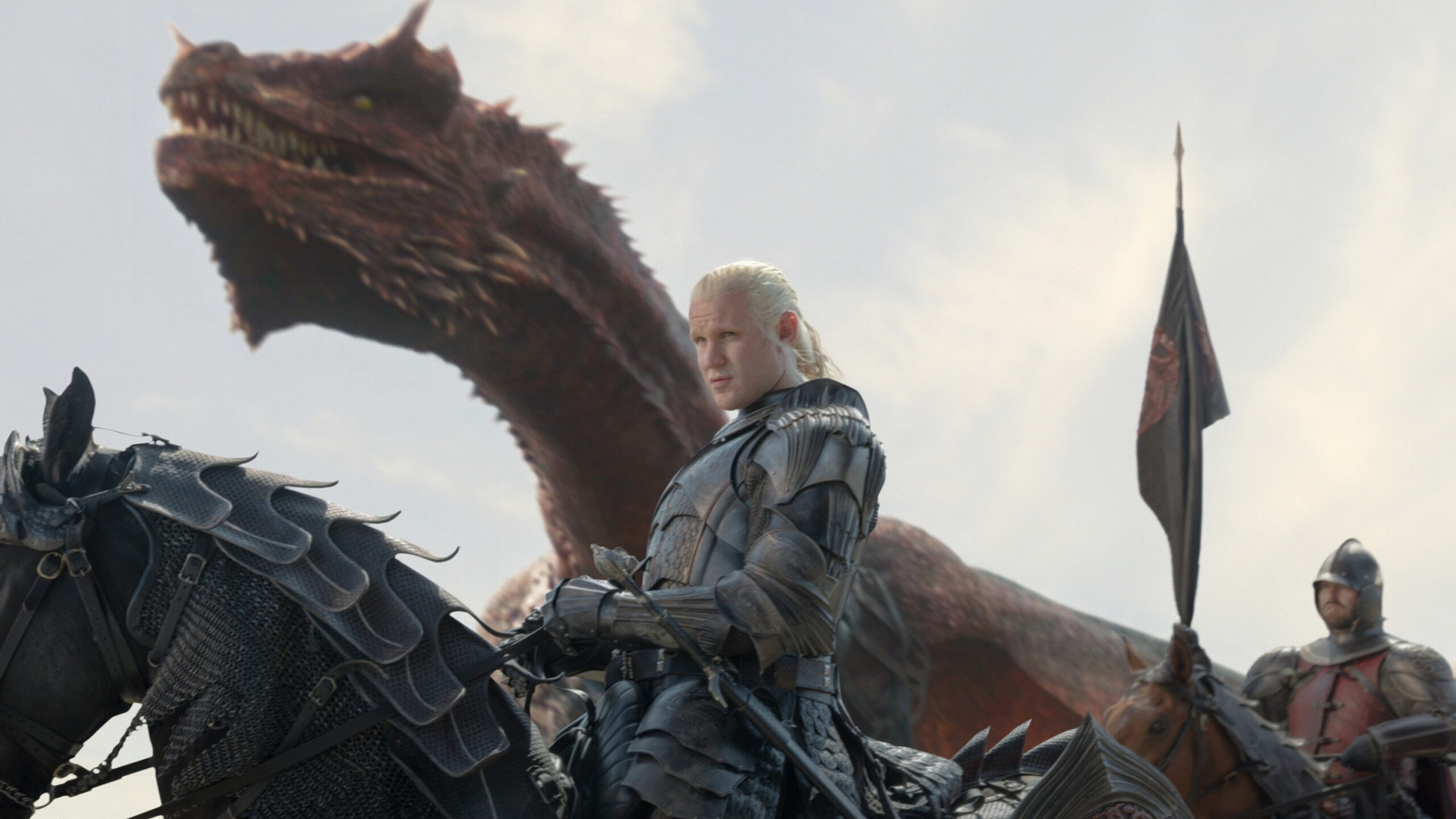
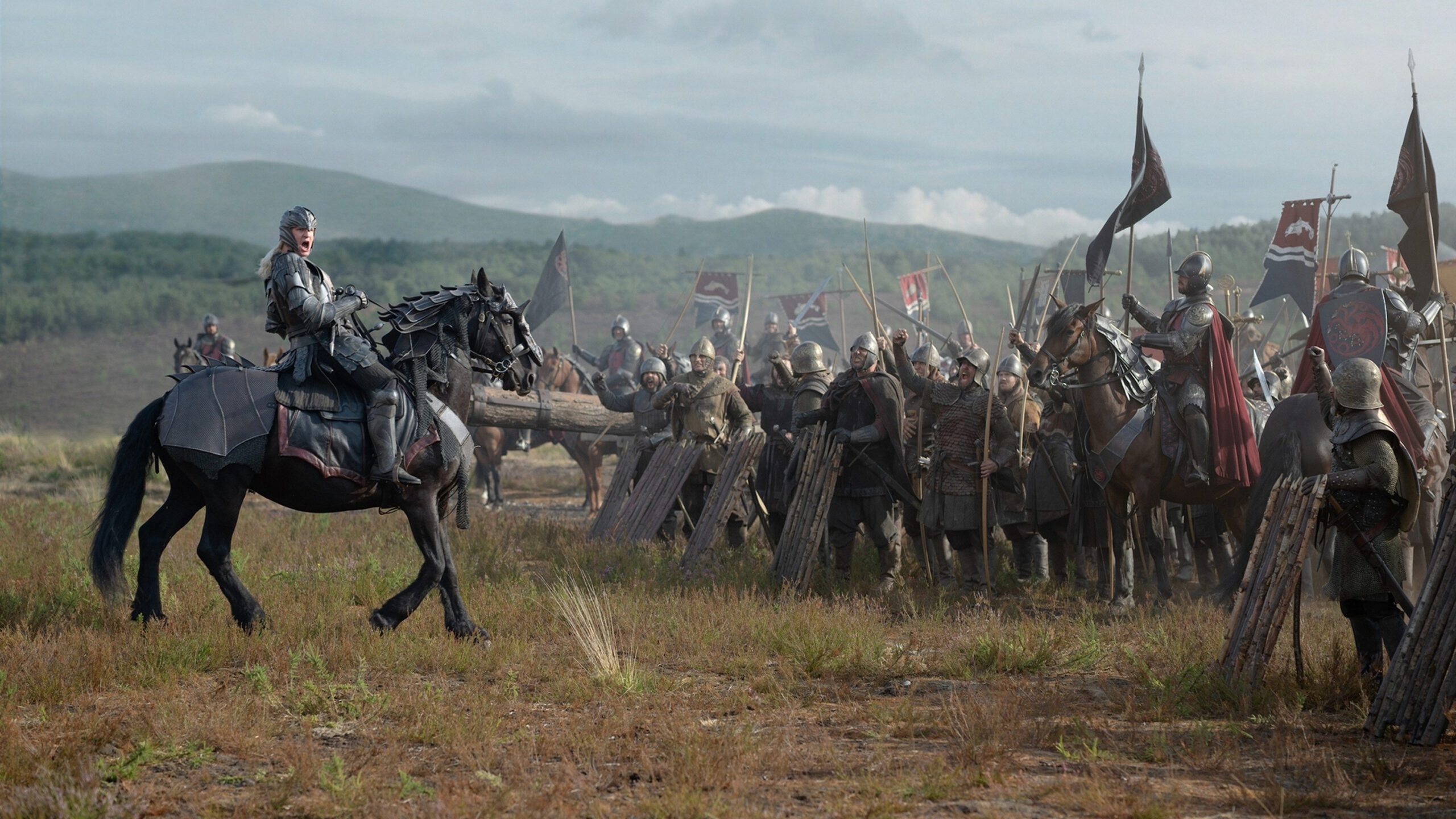
Daemon barely gets out alive, and the show is careful to make sure it is not his sword that saves him. He is cornered in the burning streets and spared by a collapsing building, and it is Corlys, the man he had put in chains that same morning, who drags him clear and calls the town lost. The Blacks pull back with dragons overhead and nothing to show for the day but a scorched field, a broken siege and a casualty count in the thousands across both armies and the townspeople who never picked a side. Smith plays the retreat as a man who has finally seen a thing he cannot swagger past. It is the ugliest kind of defeat, the sort where nobody can honestly claim to have won.
Back in King’s Landing, Rhaenyra’s answer to losing a battle is to try to win a crowd, and it goes about as well as burning a town did. She arrives at the Great Sept in full ceremony with her son Joffrey, and when the High Septon refuses to anoint her and warns her what moving against the Faith will cost, she has Alyn (Abubakar Salim) cut him down on the sept’s own steps. Then she turns to the assembled city and gives away the secret her family has guarded since Aegon the Conqueror, telling the smallfolk about the song of ice and fire and declaring in High Valyrian that she is the prince that was promised. It is a genuinely startling scene, and it does not work on the people it is aimed at. They do not cheer. They stare at a woman who just killed a priest and started speaking a language they do not understand.
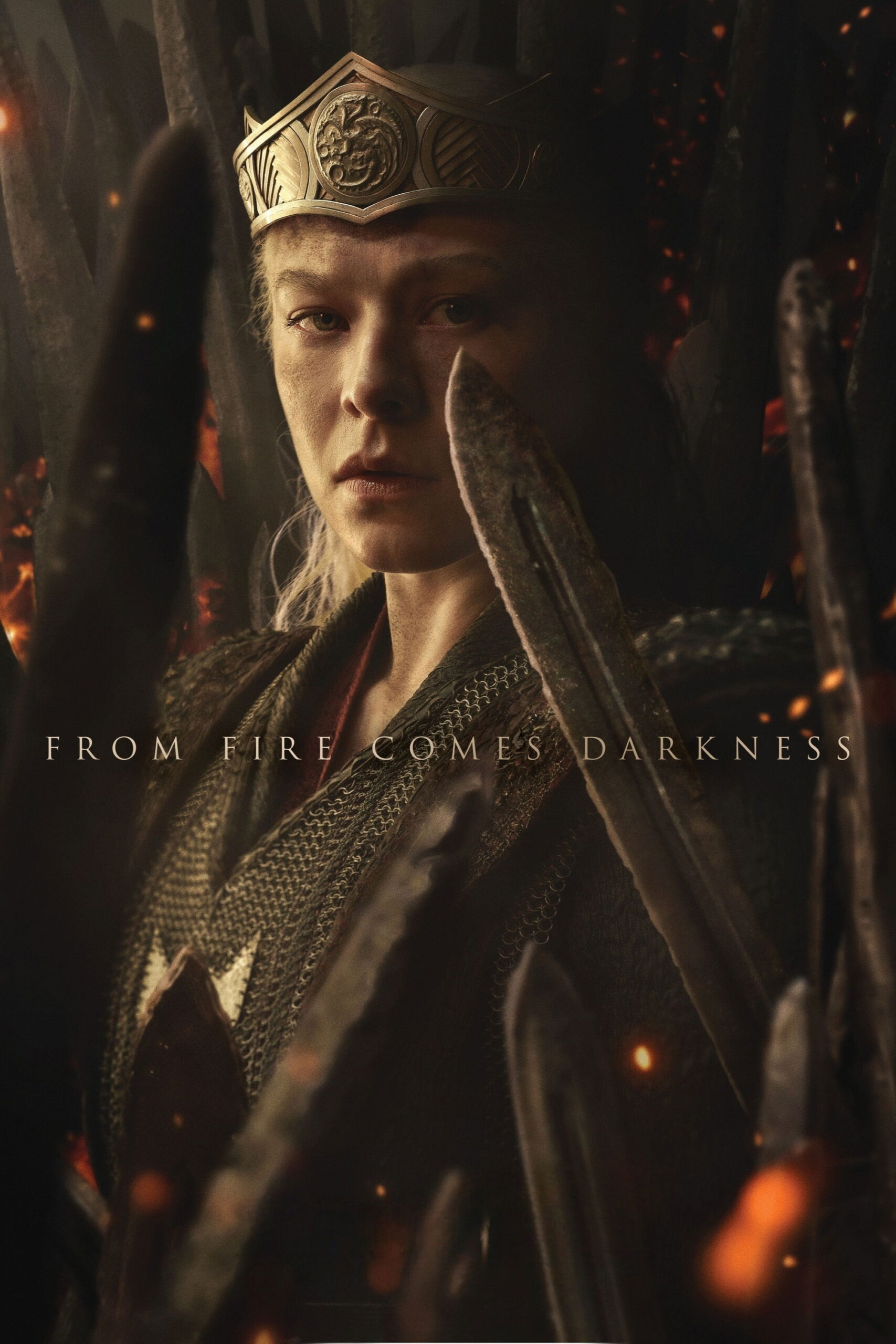
Then she goes home to the Red Keep and finds the window open. Helaena has thrown herself from the tower, and the thing she leaves behind is the gut punch of the season: an embroidery she had been working at for episodes, showing her own fall and Rhaenyra seated on the Iron Throne surrounded by fire and blood. She saw all of it coming, said so repeatedly in the only language she had, and was medicated, ignored and finally imprisoned for the trouble. What makes the scene unbearable is not the death, it is Rhaenyra’s face afterwards. There is no collapse and no grief. She looks at the tapestry, looks at the body, and quietly closes the window, and Emma D’Arcy plays that stillness as something a great deal colder than sorrow.
The last image is the one that will keep people talking until the final season arrives. Alicent (Olivia Cooke) barely features in the episode, and the show gives her the closing beat anyway: walking back alone from Harrenhal as butterflies rise around her, an omen for a woman who does not yet know that her daughter is dead. It is a beautiful, quiet, deeply mean piece of filmmaking, and it works because the audience already knows what she is walking toward. Whatever season four is, it starts with Alicent finding out.
So where does that leave the show? The Battle of Tumbleton is the best action the series has staged, full stop, and the Ulf turn is the rare betrayal that feels earned rather than plotted, because the show spent two seasons telling us exactly what happens when you hand a dragon to a man nobody has ever respected. The prophecy material is where opinion is going to split hard. Rhaenyra shouting the song of ice and fire at a crowd of strangers is a bold swing that some viewers will read as a queen cracking in public and others will call the moment “House of the Dragon” chose Targaryen mysticism over the political knife-fight it does better than anyone. Our take is that it is both, and that the show knows it, which is why the crowd’s silence is the most important sound in the scene.
What Do You Think? Is Rhaenyra still the hero of this story after force-feeding a pregnant prisoner and executing the High Septon on the steps of his own sept, or has the show quietly moved her into villain territory while we were watching the dragons? Was Helaena’s death the tragic endpoint her visions were always building toward, or did the series take a character it never fully used and spend her for a season-ending shock? And now that Ulf has burned both sides in a single afternoon, which dragonseed do you trust to still be flying by the end of the final season?
Catch up properly: every Game of Thrones episode, prequel and book in chronological order on our Timeline Hub’s Game of Thrones timeline.
See you on the next binge!