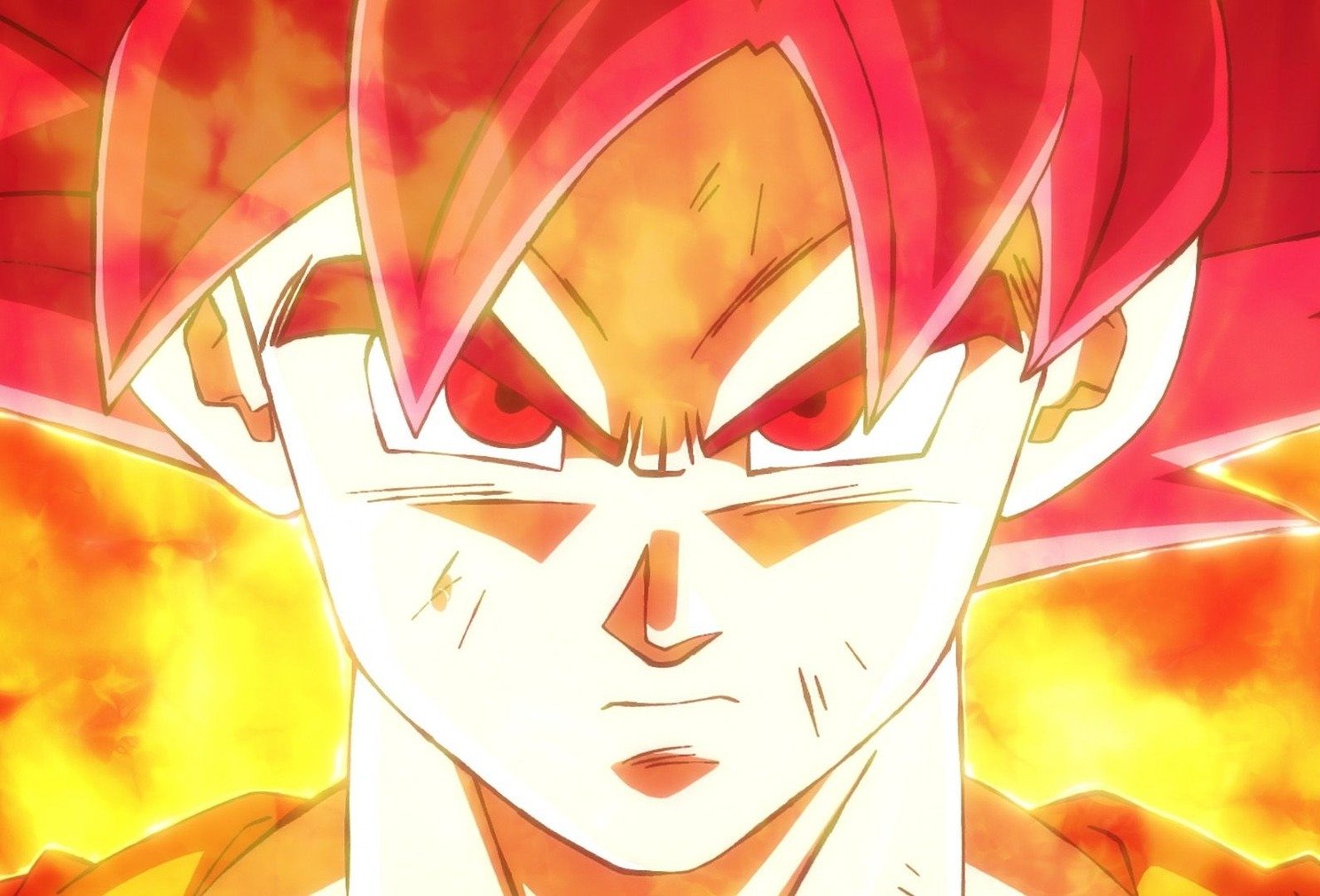
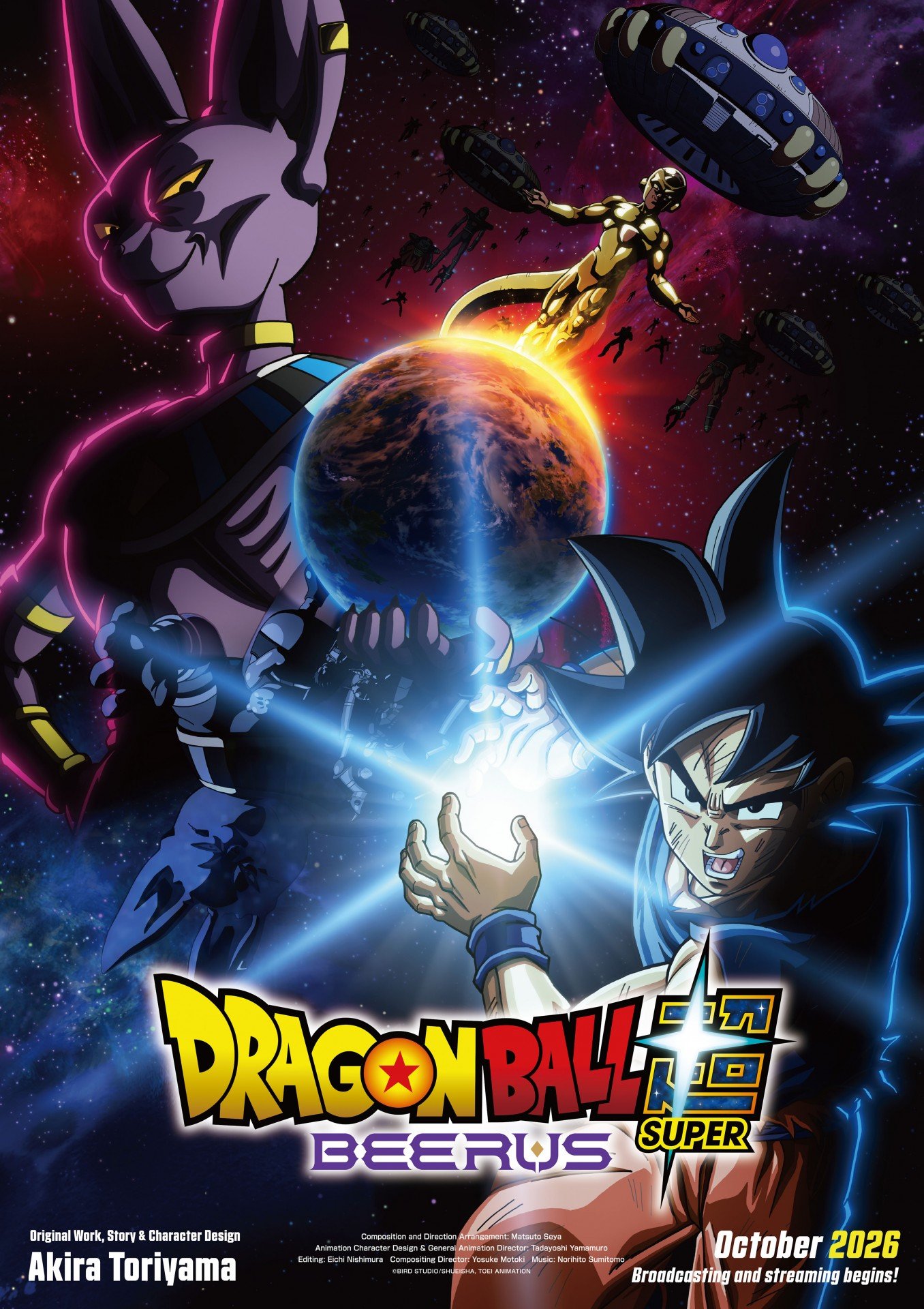
A God of Destruction stretched out asleep on a chaise, a Saiyan wreathed in red flame, and then, a little under two minutes later, a Netflix logo where the Toei card used to be. That is the whole shape of the new “Dragon Ball Super: Beerus” trailer, and the logo is the news. Netflix has confirmed that the enhanced remake of “Dragon Ball Super” will stream in the United States starting Saturday, October 17th, with new episodes arriving weekly, six days after each one airs in Japan.
That puts the American release almost exactly a week behind the Japanese premiere, which is set for Sunday, October 11th, at 11:15 p.m. on Fuji TV and its affiliates. It also settles a question that had been hanging over the project for weeks, because Toei had promised an international streaming release without ever saying who would carry it, and most fans had quietly assumed the answer would be Crunchyroll. Warning beyond this point there are spoilers for the trailer and for which arcs of the original series the remake covers.
Toei had promised an international streaming release without ever saying who would carry it, and most fans had quietly assumed the answer would be Crunchyroll.”
The trailer itself is not as new as the headlines suggest, and it is worth being precise about that. Netflix Anime posted it this week, and it runs two minutes and ten seconds. The first hundred and eleven of those seconds are the “Super Surge” trailer that Toei released on September 2nd, cut for cut. The three title cards land where they did before, “The Strong Descends” at forty-four seconds, “The Ultimate Fighter” at fifty-one and “To Save the Earth” at seventy-three. The crew card that follows is the same one, naming Matsuto Seya on composition and direction and Tadayoshi Yamamuro as animation character designer and general animation director. What has changed is the wrapping. The English subtitles are Netflix’s own, and the last nineteen seconds are Netflix’s too: a card reading “October 2026”, the Netflix logo and a subscribe button.
So the footage tells you nothing you could not have seen a month ago, but it is still good footage, and on a second pass a few things stand out more clearly than they did the first time. Beerus, one arm raised beside Whis, announces “Now I’m going to destroy the Earth” with the flat calm of someone reading a dinner menu. Frieza, freshly resurrected, follows a wide shot of the assembled Frieza Force with a delighted “To think I’d be resurrected.” The Super Saiyan God reveal is still staged as a joke, with the Oracle Fish finishing the sentence in open-mouthed horror, and there is a brief shot of Hit, the assassin from Universe 6, standing over a fallen opponent under the line “Aren’t you afraid to die?” That last shot matters more than it looks, because it confirms the remake is going further than the two film stories.
The first run is set at nineteen episodes, according to ComicBook and ScreenRant, and it covers three arcs of the original series: Beerus and Battle of Gods, then Resurrection ‘F’, then the Universe 6 tournament where Goku first meets Hit. ScreenRant points out that the original anime needed more than forty episodes to get through the same material. Game Rant reports the run reaches into mid-February and ends on Goku’s final fight with Hit, which would make sense of the trailer’s closing stretch, though that detail rests on a single outlet and Toei has not said it out loud. Compressing forty-odd episodes into nineteen is, in a sense, the entire pitch, because the stretching was a large part of what fans disliked the first time around.
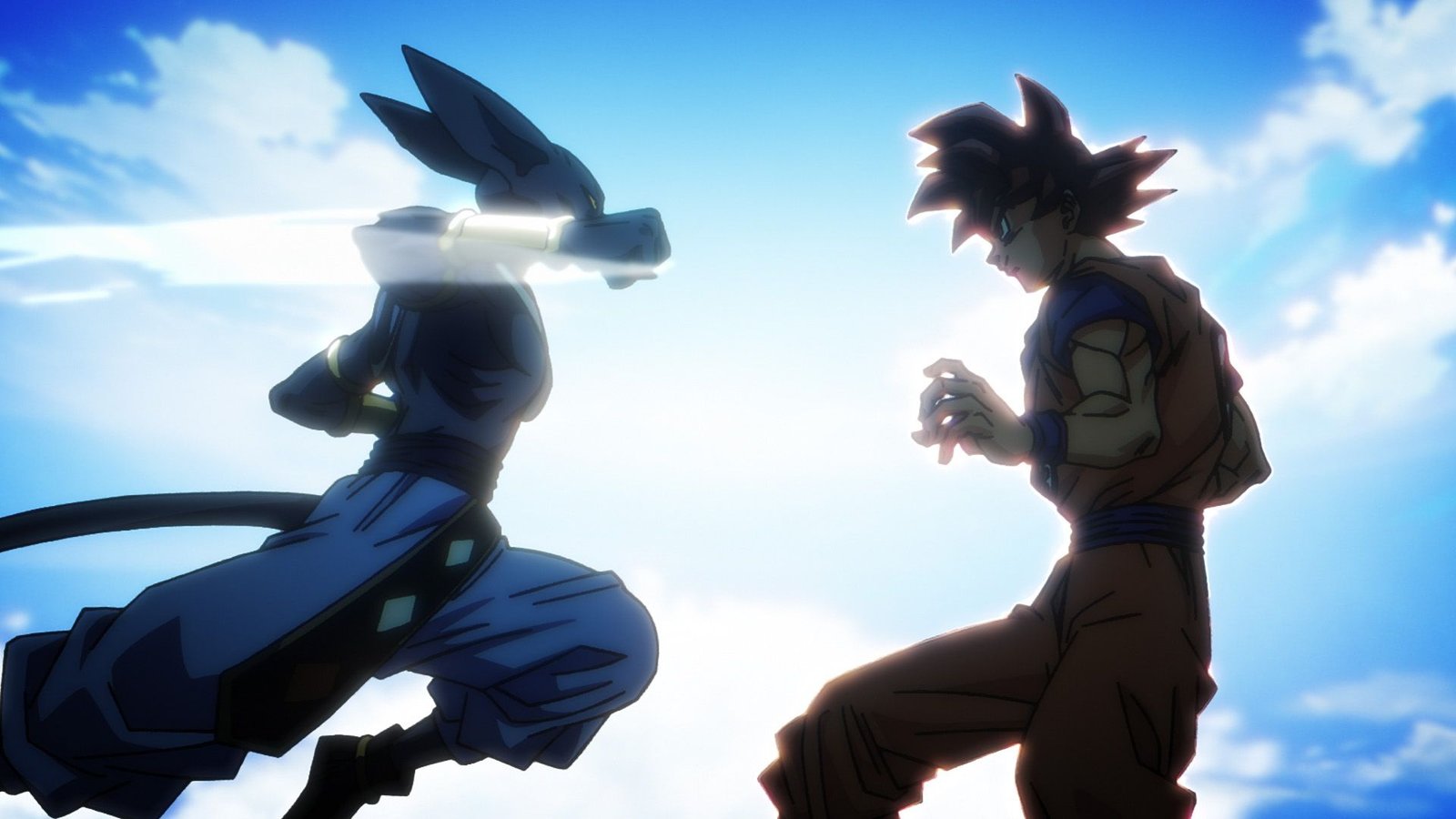
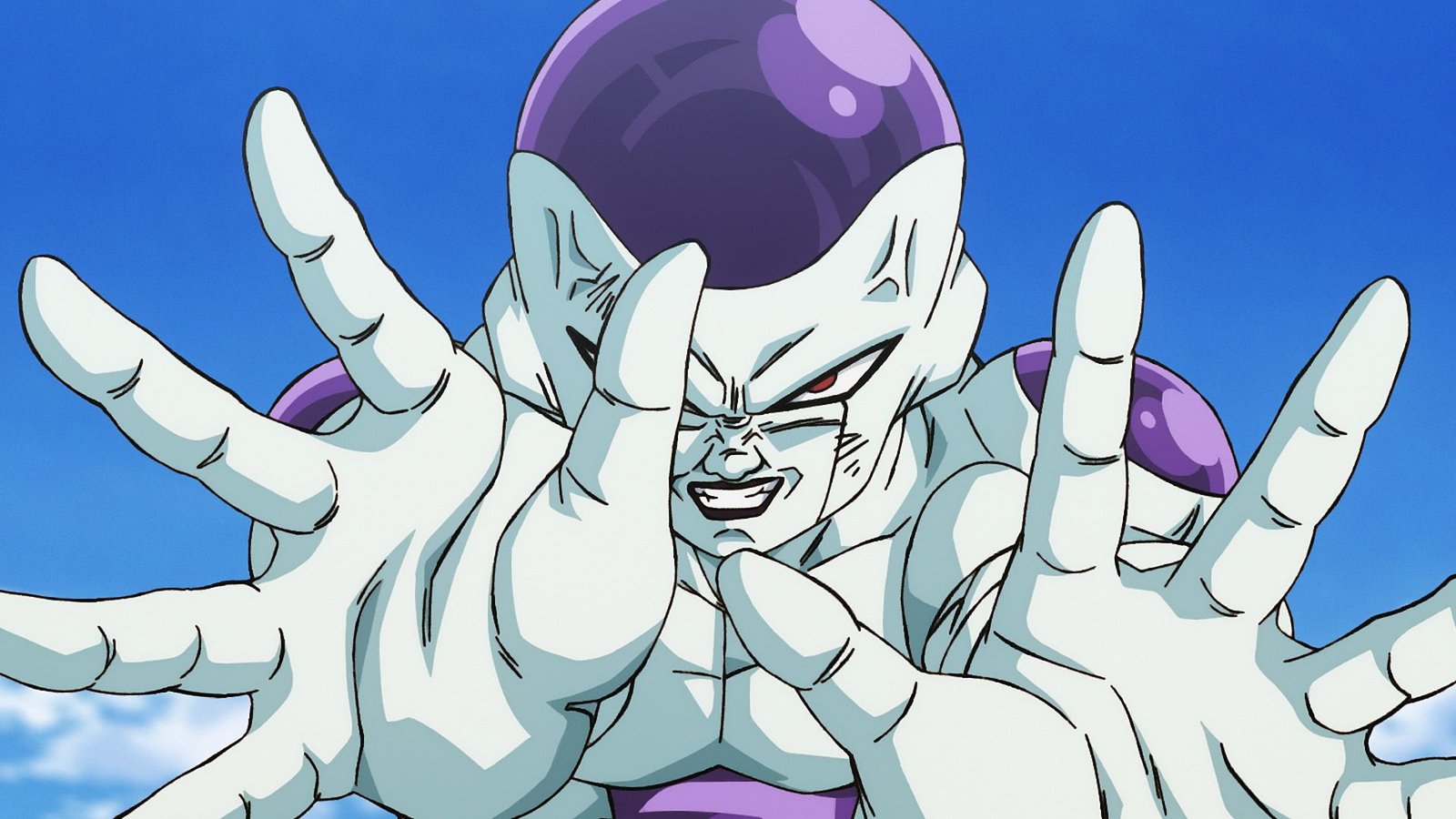
The other part was the drawing. “Dragon Ball Super” ran for 131 episodes on Fuji TV between July 2015 and March 2018, airing on Sunday mornings at nine, and its opening months became a byword for uneven television animation. The fifth episode, Goku’s first fight with Beerus on King Kai’s planet, drew harsh reactions in Japan and abroad for how far off model the characters drifted from one shot to the next, and Toei quietly corrected much of the early run for the Blu-ray release. Toei has never said, in so many words, that the remake exists to fix that, and its official framing is gentler, an “enhanced” edition, tied to Toei’s seventieth anniversary and Dragon Ball’s fortieth, meant to express “Akira Toriyama’s original idea and worldbuilding more accurately.” It is hard, though, to watch Yamamuro’s credit sitting on the card and not read it as an apology of sorts.
The move to late night tells a similar story. The original aired in a breakfast slot built for children. The remake goes out at a quarter past eleven on a Sunday night, a slot that in Japan likely signals an audience of adults who grew up with the show and are now willing to pay for the polished version of it. Netflix’s interest probably runs along the same line. The streamer released “Dragon Ball Daima” on the same weekly pattern, a few days behind Japan, and What’s on Netflix notes that “One Piece” follows the same rollout, so the company has a template and, presumably, some data on how many Americans will show up for a Saturday morning episode of a show they half remember.
Crunchyroll has not been shut out entirely, and the arrangement is a split by territory rather than a straight loss. In Europe, including the United Kingdom and Ireland, as well as the Middle East and Africa, Crunchyroll will carry “Dragon Ball Super: Beerus” with subtitles from October 11th, simulcast with the Japanese broadcast. CBR has noted that it is still unclear whether Netflix will be the only home for the series in North America, so the picture may not be finished yet. For American viewers, though, the one confirmed date is October 17th, and it comes from Netflix.
What nobody has confirmed yet is the language question, and it is the one American fans will care about most. An English dub looks likely, and the people attached to the project’s American push are not strangers. Jason Douglas, Ian Sinclair and Monica Rial, the English voices of Beerus, Whis and Bulma in the original dub, are set for a “Dragon Ball Super: Beerus” panel at New York Comic Con on October 8th, with Rial hosting. Whether Netflix launches with a dub on October 17th, or starts with subtitles and adds one later, has not been announced, and it would be a surprise if the panel did not answer it.
The Japanese side is on steadier ground. Masako Nozawa returns as Goku, as she has since 1986, and Kōichi Yamadera is back as Beerus. Norihito Sumitomo, who scored the original “Dragon Ball Super” as well as the “Battle of Gods” and “Resurrection ‘F'” films, returns on music, and the trailer burns both theme songs into the footage: the opening is “ONOGAMI” by MEGATERA·ZERO, and the ending is “Kan Peki No Peki” by VK Blanka. Toriyama, who died on March 1st, 2024, keeps the top credit for original work, story and character design, and the card says so in letters larger than anything else on screen.
That credit is the quiet weight behind all of this. “Dragon Ball Daima” was the last story Toriyama built himself, and its finale was timed to the first anniversary of his death. The “Dragon Ball Super” manga, drawn by Toyotaro, has been on hiatus since February 2025, with no return date. A remake of material Toriyama already wrote is, for now, the safest way for Toei to keep the franchise on screens while it works out what comes next. Whether that reads as respect for the source or as a holding pattern might depend on how the first few episodes look when they land in American living rooms.
What Do You Think? Is Netflix the right home for “Dragon Ball Super: Beerus” in the United States, or should it have gone to Crunchyroll? Will you wait for the new English dub, or go subtitled from day one? And does cutting Battle of Gods through the Universe 6 arc into nineteen episodes sound like a fix or a rush?
Catch up properly: every Dragon Ball series, film and saga in chronological order on our Timeline Hub’s Dragon Ball timeline.
See you on the next binge!