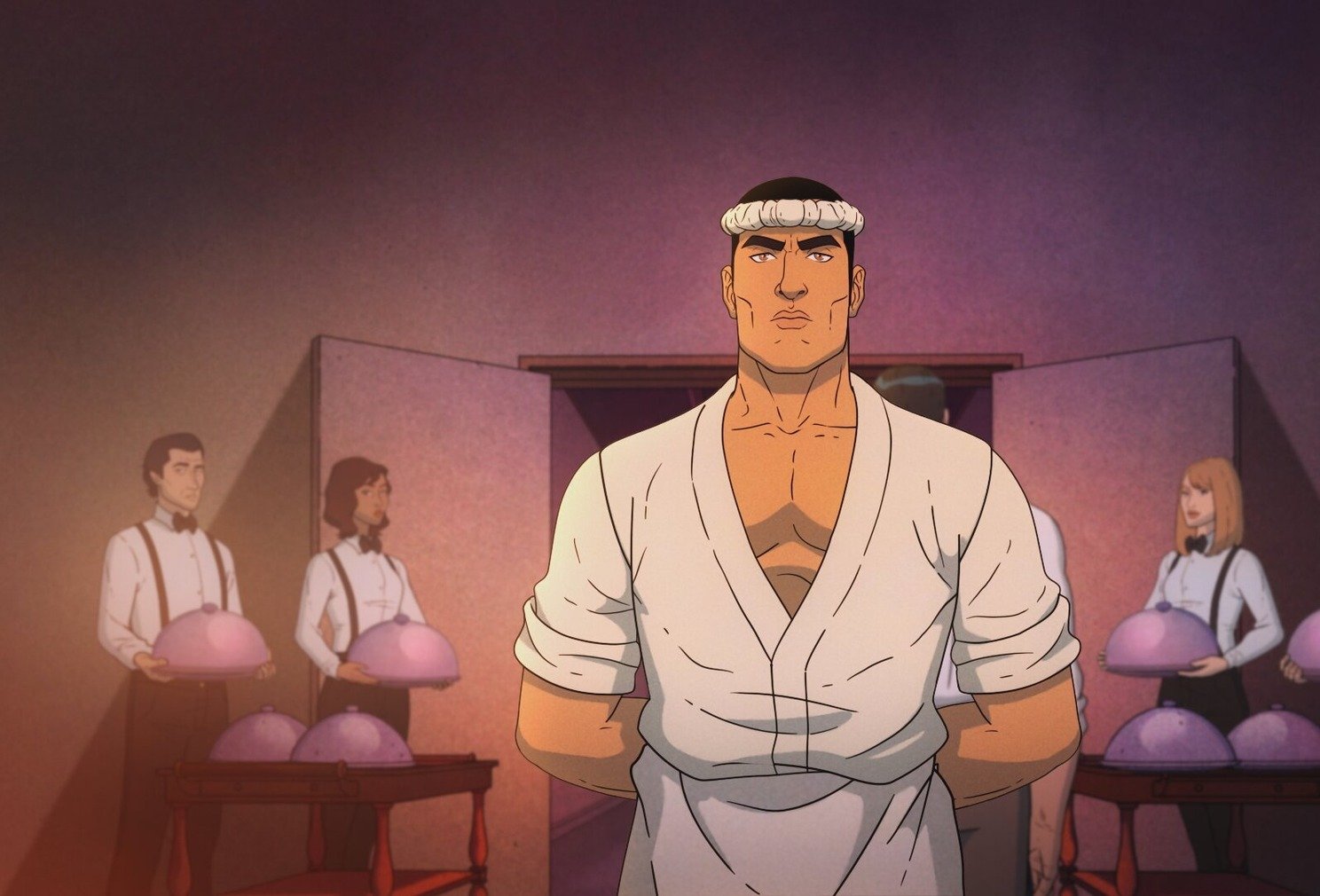
A sushi chef named Jiro (Brian Tee) works a small counter in the wreckage of a future Los Angeles, with one rule for his customers and a city full of people who would rather kill him than follow it, and that tension tells you more about this show than the scene everyone already knows about. Adult Swim’s adaptation of Anthony Bourdain and Joel Rose’s 2012 graphic novel premiered on the network’s Toonami block at midnight on October 3rd, with two episodes airing back to back. The show moved to HBO Max the next day, and with critics given several episodes ahead of time, the ten-episode season has already drawn a first round of verdicts. Jiro’s rule at his own counter is simple, blunt, and absolute: no substitutions, no modifications, and no soy sauce, full stop.
Los Angeles in “Get Jiro” has collapsed into two rings. The Inner Ring runs like a cyberpunk fortress, and the Outer Ring reads closer to a Mad Max salvage yard, which is where Jiro keeps his sushi counter. The premise asks what a society does with itself once almost everything else has been automated, digitized, or piped straight into a headset. Jiro, inconveniently for both sides, refuses to pick one. Food is the one appetite nobody has figured out how to simulate. So the chefs who can still cook it have become the city’s warlords, and two of them, a French-trained purist named Bob (Titus Welliver) and a vegan separatist named Rose (Alison Pill), are already at war with each other by the time Jiro’s counter becomes impossible for either side to ignore. Warning beyond this point there are spoilers for the shape of “Get Jiro’s” first season and the culinary war the show spends its early episodes building out.
Food is the one appetite nobody has figured out how to simulate.”
Tee plays Jiro as something close to a held breath, soft-spoken and almost motionless next to everyone else shouting around him. Both the AV Club’s review and the premiere coverage that ran under Yahoo’s entertainment banner single out that stillness as the performance the rest of the show leans on. Welliver brings the same gruffness that carried him through “Bosch.” Pill plays Rose as his ethical-eating mirror image, though the AV Club review is less sold on the pairing, calling the two rival chefs broadly rendered next to Tee’s restraint. Courtney Taylor plays Cynda Lynn, a health inspector dragged into cleaning up after the two kitchens go to war, and Justin Kirk and Garret Dillahunt round out a supporting bench that the same reviews describe as deep enough to carry a season built mostly around rotating antagonists. CGMagazine’s review also credits the production for casting Japanese voice actors in the show’s Japanese roles, calling it a meaningful nod to representation that bigger-budgeted projects often skip.
The animation comes from Mercury Filmworks, the Ottawa studio behind “The Bob’s Burgers Movie” and “Hilda,” working under director Rick Morales. CGMagazine’s review credits the studio with the show’s best trick, which is that the food itself looks distractingly good, rendered with a care a cheaper production would have skipped entirely. Yahoo’s premiere review describes the same quality from a different angle, calling the cooking scenes Miyazaki-esque in how they linger on rote, silent kitchen motions, and arguing those quieter stretches are where Bourdain’s own sensibility comes through most clearly. The same review describes the character designs outside the kitchen as closer to “Archer,” a blend the review says does not always sit comfortably next to the Ghibli-style food work. The character animation gets a cooler reception overall, since that review calls it solid but a bit stiff in motion, which tracks with a show that is visibly spending its budget on sauces and knife work, rather than on fight choreography.
None of that restraint applies to the violence, which Adult Swim Central’s review calls one of the most graphically violent shows the network has made in years. The AV Club backs that up with specifics: a waterboarding done with butter sauce, a creme brulee torch put to use for something other than dessert, and arterial spray the review says the animation never shies away from. CGMagazine describes the season settling into a kill-of-the-week rhythm once the premiere’s business is done. Jiro moves through a rotating cast of hired killers and rival cooks, on his way toward whoever is actually running the war between Bob and Rose. The violence, in other words, is not random; it is procedural, structured, and escalating, one rival cook at a time. That same review flags one episode, set in Tokyo and told entirely in Japanese with English subtitles, as a detour into Jiro’s past that the rest of the season is built to pay off.
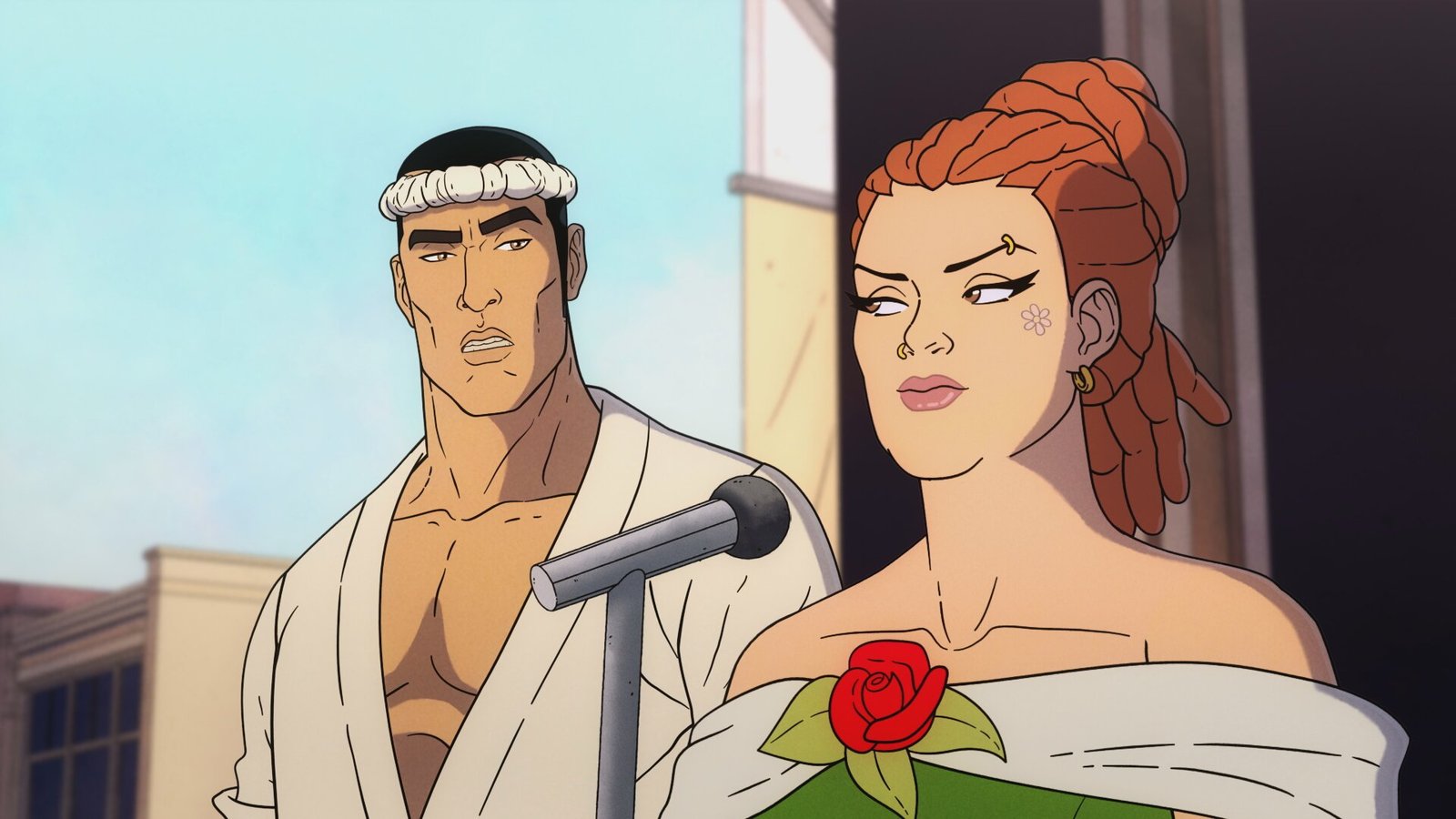
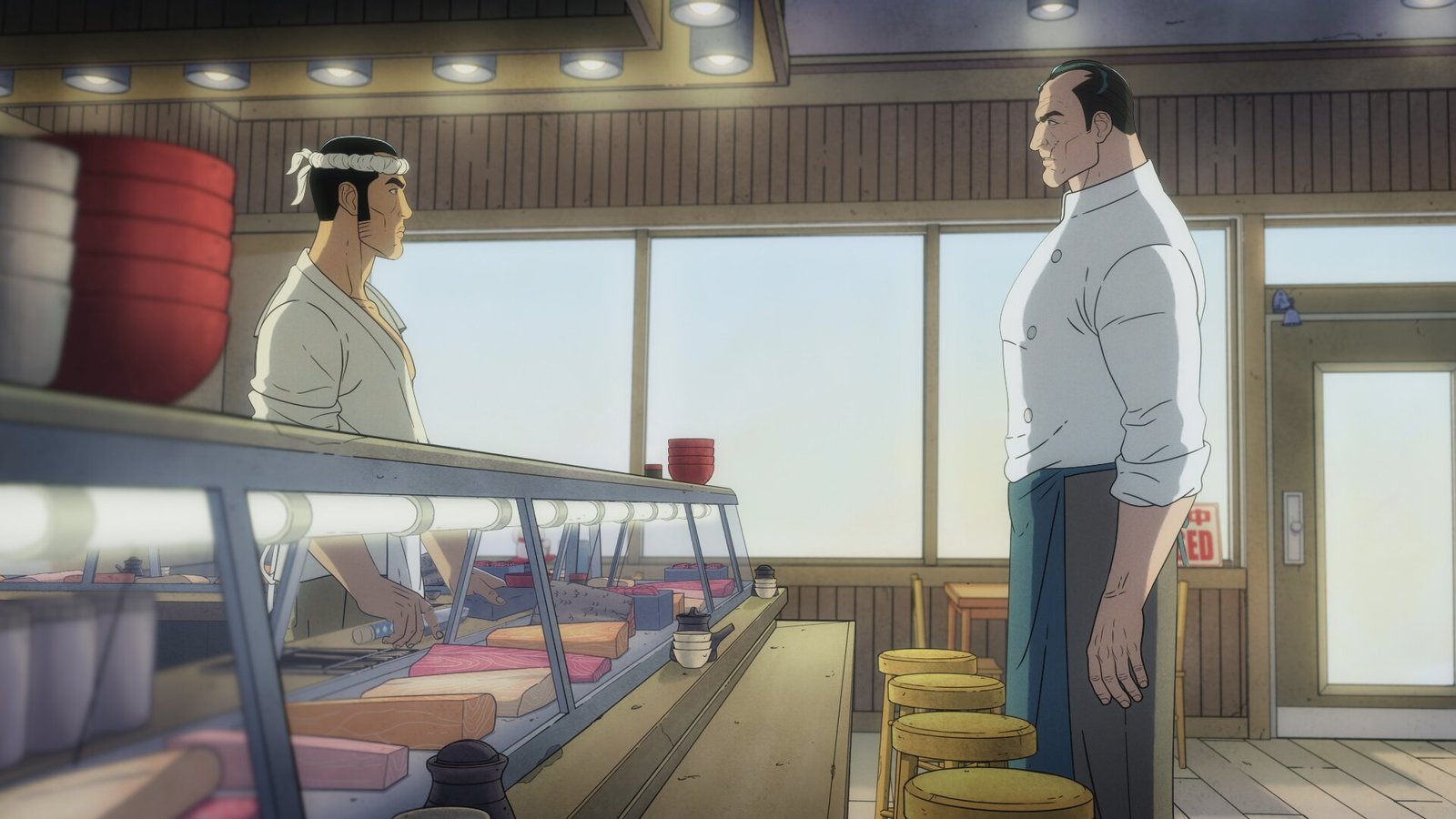
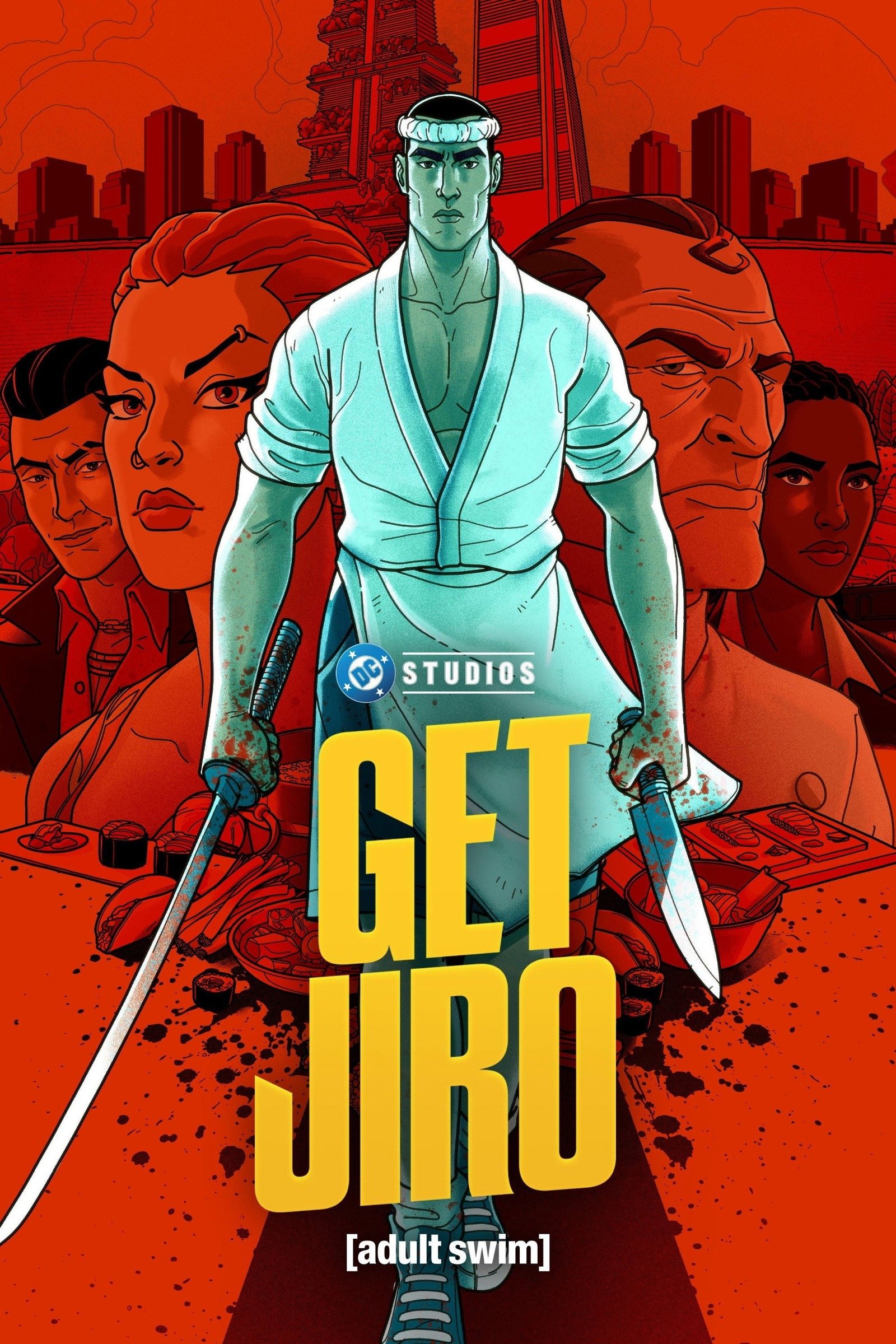
Bourdain and Rose published the original “Get Jiro!” as a Vertigo graphic novel in 2012, illustrated by Langdon Foss. It sold well enough to spin off a 2015 prequel, “Get Jiro: Blood and Sushi,” drawn by Ale Garza, before Bourdain’s death in 2018 left the question of a screen adaptation hanging for years. Warner Bros. Animation and Adult Swim eventually set the series up, with Brian Gatewood and Alessandro Tanaka developing it after years in the studio’s pipeline. Warner Bros. Animation, Adult Swim, and DC Studios all share credit on the finished series, a lineup that reflects how many corporate owners a single Vertigo comic can collect over fourteen years. The finished show does not simply restage the graphic novel’s events panel for panel. Bubbleblabber’s production feature, filed ahead of the premiere, describes an original antagonist invented for the show and referred to in that piece only as the cannibal. That addition, and others like it, stretch one book’s worth of material across a full ten-episode season, so the story does not run out of plot by the midpoint.
The reviews that have run since the premiere land closer together than the source material’s reputation for savagery might suggest. The AV Club’s Leila Latif gave the season an A-, writing that the adaptation feels like having one last meal with the “No Reservations” host himself. Rotten Tomatoes was showing the season at 83 percent from a still-small sample of six critics as of this week, a number that will likely move once more reviews post. CGMagazine was just as warm, rating it the equivalent of three Michelin stars, its top mark, and recommending it to anyone who liked the kitchen satire of “The Menu” or the body count of “John Wick.” That review also flags the same stiffness in the fight animation that Yahoo’s review noticed. None of the reviews read for this piece argue that it buries Bourdain’s voice under the gore, which, for a posthumous adaptation this violent, might be the result that matters most.
What the premiere mostly proves is that the joke from the trailer, played straight instead of broad, was never going to be the hardest trick this show had to pull off. Sustaining a culinary crime war across ten episodes without the gimmick curdling is the harder one. It is blunt, it is bloody, and it is, somehow, still a show about cooking. On the evidence of the episodes critics have already seen, “Get Jiro” is managing it by treating the food with more seriousness than it treats almost anything else on screen. That may be the closest thing to Bourdain’s own sensibility a show this violent could have kept.
What Do You Think? Does “Get Jiro’s” resource-scarce, food-obsessed Los Angeles work as satire, or is it mostly an excuse to animate elaborate kitchen violence? Does Brian Tee’s stillness as Jiro carry the show the way the AV Club suggests, or do Bob and Rose need more than a culinary gimmick to hold up a season? And is ten episodes enough to stretch Bourdain and Rose’s original graphic novel, or is this the kind of adaptation that runs thin before Jiro reaches whoever actually started the war?
See you on the next binge!