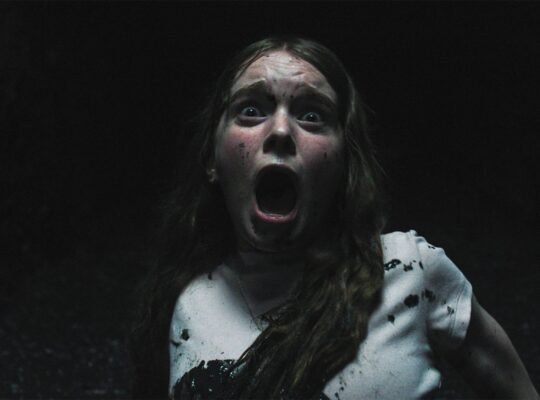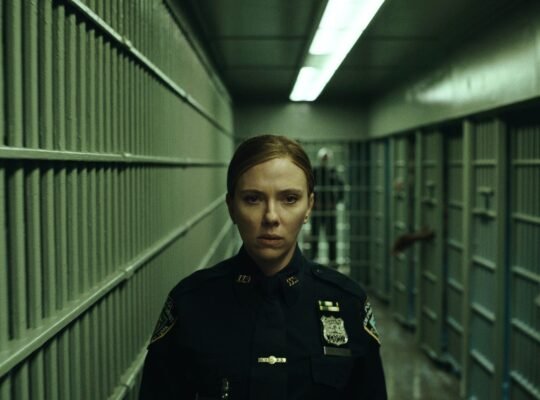
Somewhere above the clouds, in a lavatory lurching through severe turbulence, a movie star notices that his eyelids are fusing shut and grabs a pair of nail scissors to cut himself free. It is the image the “Clayface” trailers sold, and it is also the scene that reviewers from Variety to Empire single out among its most squirm-inducing set pieces. Much of its hour and 48 minutes is given over to melting skin and spilled blood. Warner Bros. Pictures and DC Studios released “Clayface” in theaters on Friday, October 23rd, with James Watkins, the British director of “Eden Lake” and “Speak No Evil”, guiding Matt Hagen (Tom Rhys Harries), a Gotham-born movie star whose ruined face is rebuilt by an experimental treatment with terrible side effects. Mike Flanagan and Hossein Amini share the screenplay credit, Flanagan also has the story credit, and the film carries an R rating.
The reviews, which began arriving on October 21st, split along the same seam as the film itself. The Hollywood Reporter called it “a big swing that definitely pays off” and Variety called it “odd, oozy fun”, while Deadline said it is “for the horror junkies” and Consequence of Sound judged it the scariest movie ever made from a DC Comics property. On the other side, The Guardian found it “effectively gross but otherwise middling” and IndieWire dismissed it as an “ambitious misfire”. Rolling Stone likened watching it to “eating a handful of Play-Doh” and called it twice as flavorless. The argument is less about whether the gore works, which even harsher reviews such as The Guardian’s concede, than about whether anything under the goo is strong enough to carry it. Warning beyond this point there are spoilers for all of “Clayface”, including the ending.
The argument is less about whether the gore works, which even harsher reviews such as The Guardian’s concede, than about whether anything under the goo is strong enough to carry it.”
The film opens with Matt at his peak, newly nominated for a Best Actor Oscar, charming the talk-show circuit and working in Coast City, which Variety and Deadline both describe as DC’s stand-in for Los Angeles. A trip back to Gotham, where he grew up poor in the district called the Narrows, turns into a night at a club with Mia (Joana Ribeiro). She is the girlfriend of the city’s most powerful gangster, Markos Szabo (David Dencik), and Matt ignores his best friend Corey (Joshua James), who warns him to stay away. The next morning, Szabo and his men are waiting at the bedside, and Szabo has the actor’s face carved up. Consequence of Sound says the scene immediately earns the film its R rating.
From there the fall is fast, and the film gives it very little room to breathe. Matt’s agent drops him, his business manager (Eddie Marsan) robs him, his civil case against Szabo collapses, and a smear campaign finishes off what the blade started, and he ends up in a roach-infested apartment back in the Narrows. Then he comes across coverage of Caitlyn Corr (Naomi Ackie), a scientist whose nanotechnology, designed to repair tissue in degenerative disease, is close to losing its funding, and he talks her into making him her first human test subject. The treatment works for a few months, and then it works too well.
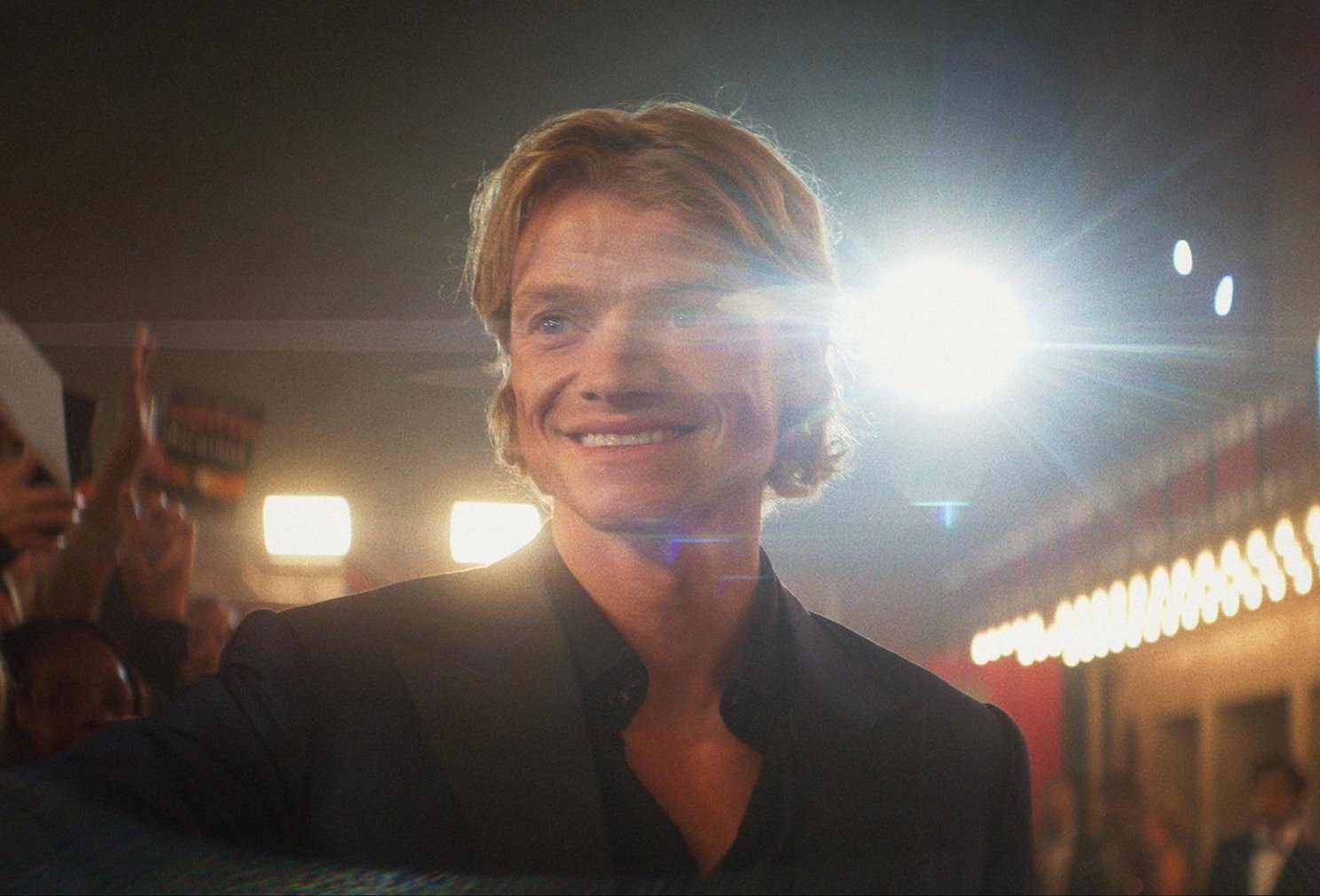
Matt is back on the red carpet at a premiere, looking restored, when his new face begins to droop. After he injects himself with a panicked megadose of Caitlyn’s formula, he can heal from any wound and rearrange his features into anyone’s. His first kill is an accident, the business manager who robbed him, and the second is deliberate, his old friend Corey, who failed him when it counted, suffocated by Matt. The film also has room for stranger flourishes, among them a dream in which the sleeping Matt shifts into Caitlyn and a fist that swells into a giant mace, and, as Inverse puts it, the film “makes his revenge feel fun” even as his descent is a sad one.


The set piece reviewers keep praising comes late, when Matt storms Szabo’s nightclub and works his way toward the boss by slipping from one face to the next. That lets supporting players such as Marsan and James play Matt playing them. The Hollywood Reporter called the sequence “Brilliantly orchestrated and filmed”, the San Francisco Chronicle called it a “bravura climax”, and Empire singled out “a stand-out nightclub massacre sequence” among the gory highlights. Szabo and Mia do not survive the night, and the scene hides a cameo, as Matt takes the shape of his dead father (Aaron Paul) for the briefest of moments. Watkins told Entertainment Weekly that Paul “has a real brief Easter egg kind of moment”, since the larger flashbacks showing the abusive father were cut from the finished film.
The finale moves to the apartment of Caitlyn and her fiancé, John Borrelli (Max Minghella), one of the few honest cops in Gotham, who has been tracking the bodies Matt leaves behind. Matt has already killed John, and he takes John’s shape to greet Caitlyn when she comes home. She confesses what she has done and then spots the real John’s body in the next room, and Matt tells her he can be whoever she wants him to be. Caitlyn grabs John’s taser and sends Matt out of a window into the rainy street, where he swells into the hulking, comic-accurate Clayface and begs her to end it. She triggers the kill switch built into her nanotechnology, and he melts into a storm drain.
The epilogue is the bleakest stretch of the film, in which Caitlyn hands her research to the police, then walks home uneasy at strangers’ faces. She buys a newspaper carrying his story and gives a few dollars to an unhoused man, who thanks her with the same theatrical bow Matt once used. The camera follows him back to his makeshift home, where he becomes Matt again, and a Caitlyn appears behind him, tells him his reviews are glowing, and kisses him. The camera pulls back to show that Matt has molded her from his own body, and he sags back into the monster, alone, and screams. The film never explains how he lived through the kill switch, and there is no post-credits scene.
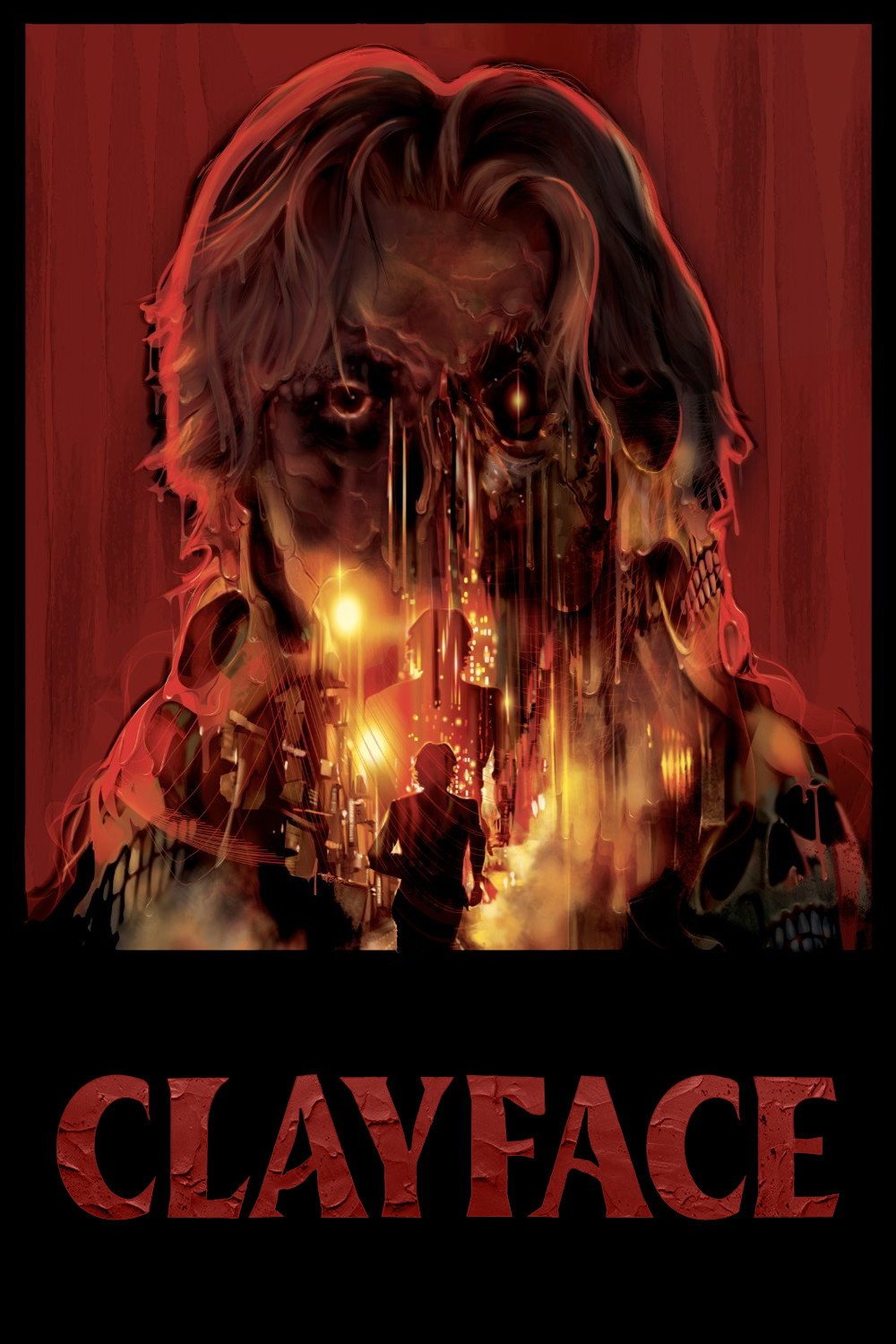
Batman is never mentioned and never appears, a choice that NPR sets beside the Joker, Venom, Morbius, Kraven the Hunter and Catwoman films and that Inverse sets beside Sony’s Venom and Morbius. Watkins told IGN that Batman exists in this world “but it’s just not his story.” DC Studios co-head Peter Safran told Collider, according to SlashFilm, that viewers should assume Batman is out there fighting crime. Clayface himself already appeared in the animated “Creature Commandos”, voiced by Alan Tudyk, and the movie is set before that series. Co-head James Gunn has told fans that this is not the last they will see of the character, according to ComicBook.com, which leaves the sequel question open without the film doing anything to answer it.
How the film got made helps explain the split. The idea began with a pitch from Flanagan that won over Gunn, according to the San Francisco Chronicle and Rolling Stone, but Flanagan could not direct it, and Watkins stepped in with Amini. The Guardian says Flanagan’s original script “was entirely rewritten”, while The Independent says it was “dramatically overhauled” by Amini, which may be why several critics sense a more ambitious film hiding behind this one. Liverpool stands in for Gotham, a fact The Guardian, The Independent and NPR all bring up. The Guardian says the film looks “closer to a network TV series, more Fox than HBO Max.”
Many of the harsher reviews fault the story, and some, including The Guardian and NPR, the setting. NPR called the film “underbaked” and said it lacks “style for days”, and the Los Angeles Times wrote that the body horror is great but the script is a “sloppy mess”. Empire said that beneath its “fleshy, liquescent mask” there is not “a lot of memorable meat underneath” to find. TheWrap raised the sharpest question, noting that Matt is accused, once his career collapses, of mistreating women in his past and that the film “never actually proves he wasn’t a creep.” Harries draws praise even from reviewers who otherwise find fault, with The Independent calling his performance a “breakout turn” and IndieWire saying he is “very good at conveying genuine pathos under gobs of makeup and VFX” even as it calls the film a misfire.
Our lean is that the split has more to do with expectations than with craft. A viewer who arrives for a B-movie monster picture with a strong stomach will probably leave satisfied, which is roughly how IGN frames it, though The A.V. Club found it “a little workmanlike.” The final image of Matt alone in his makeshift home with a Caitlyn he has made from himself is a tragic touch that a bigger studio picture might have cut. Anyone hoping for the brooding, Batman-scale Gotham of the comics, or for the thought-provoking character study Empire found in “A Different Man” and “The Substance”, may leave cold, and that is the risk. “Clayface” is a test case, as NPR put it, for whether the DC Universe can stretch into horror, and the answer, for now, is a cautious yes.
What Do You Think? Does a DC villain movie with no hero in sight work better as a gory monster picture or as a tragedy about a face? Did the nightclub set piece justify the long road to it, and was the final image of Matt alone in his makeshift home a fitting end or a cheat? And should the DC Universe keep making films like this one, or is “Clayface” best left as a one-off experiment?
See you on the next binge!