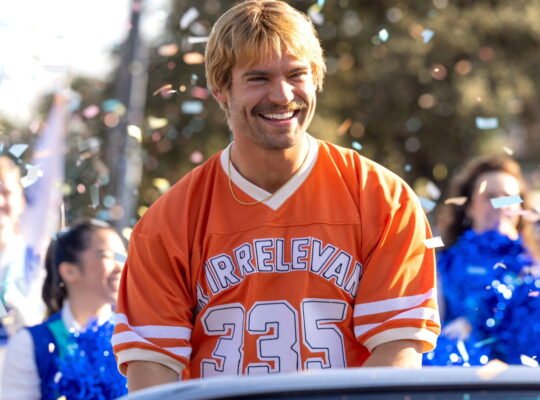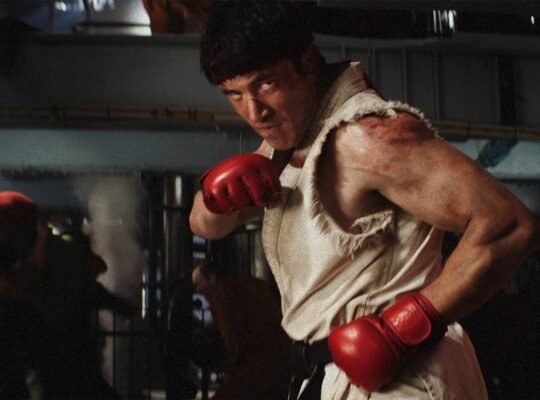
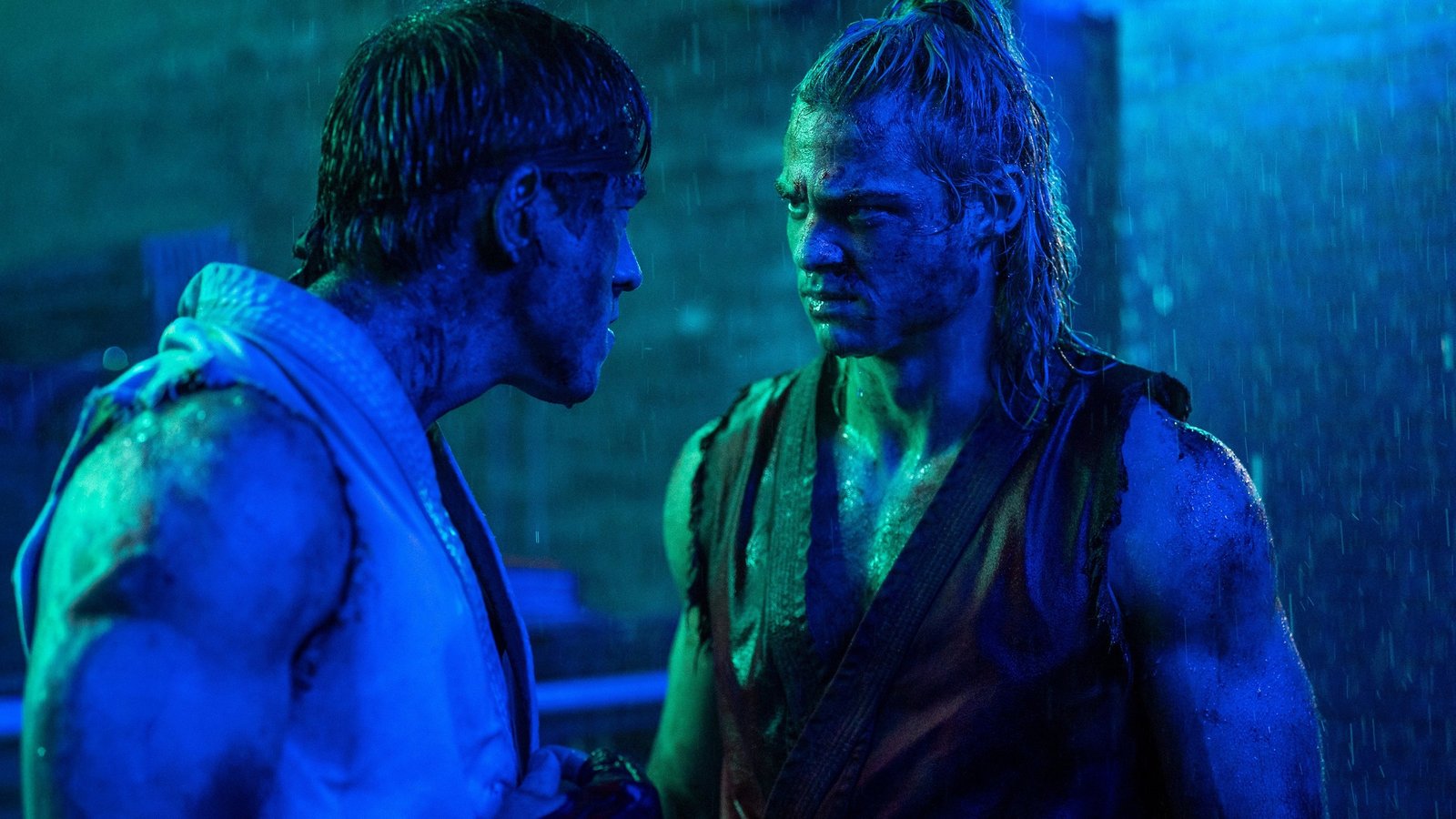
The best fight in “Street Fighter” might be the one where almost nobody lands a punch. Ken Masters (Noah Centineo) comes at Ryu (Andrew Koji), the friend he fell out with six years earlier, in a hotel room, swinging wild kicks and roundhouses, and Ryu spends the whole bout dodging, ducking and refusing to hit back. The Guardian describes him blocking with a pillow and then slipping it under Ken’s head to catch his fall. Kitao Sakurai’s reboot of the Capcom fighting game opened in theaters on Friday, October 16th, from Legendary and Paramount, and even The Guardian, which panned it, called that fight “a standout scene that really does feel like it belongs to another, smarter movie.” That line is the whole critical conversation in miniature, because the critics who loved this film and the ones who could not stand it are mostly describing the same movie. It is a two-hour rush of neon, needle drops and cosplay-perfect wigs, and it keeps forgetting, perhaps on purpose, that it was supposed to be about a tournament.
This is the third live-action swing at the games, after the 1994 film with Jean-Claude Van Damme and Raul Julia and the much-mocked 2009 “Street Fighter: The Legend of Chun-Li.” Sakurai is an unusual fit on paper, a comedy director best known for “Bad Trip” and “The Eric Andre Show.” He wrote the screenplay with T.J. Fixman, from a story by Dalan Musson and Gary Dauberman, set the whole thing in 1993, and handed the flashbacks to the animation studio Titmouse, which drew them by hand in the style of ’90s anime. Sakurai said that “each frame of our animation was painstakingly drawn by hand, a true labor of love” when the studios unveiled those sequences. The drawings win praise even in mixed reviews, with Variety calling them the film’s masterstroke and The Hollywood Reporter saying they outshine the live action. Jason Momoa is one of the producers, the rating is PG-13, and the running time lands right around two hours. Warning beyond this point there are spoilers for “Street Fighter” and its ending.
That line is the whole critical conversation in miniature, because the critics who loved this film and the ones who could not stand it are mostly describing the same movie.”
The film opens in that hand-drawn style at the first World Warrior Tournament in 1987, where a young Ryu beats Sagat for the title. Ryu and Ken grew up training together under their master Gouken (Don Lee), and the victory costs Ryu more than it pays him, because it stirs a dark power that the demon Akuma (Joe “Roman Reigns” Anoai) wants him to embrace. Akuma kills Gouken, and the death splits the two students apart, since Ryu could have stopped it only by giving in to the very darkness he fears. Six years later the movie switches to live action and to MTV-style tabloid clips that bring everyone up to speed. Ken is a party-boy celebrity who wins staged fights and chases endorsements, and his manager Dan Hibiki (Andrew Schulz) proudly promises him that Taco Bell will name a Gordita after him. Ryu, meanwhile, has walked away from fighting and runs a ramen stall whose food, according to The Hollywood Reporter, is “so bad even a stray cat won’t eat it.”
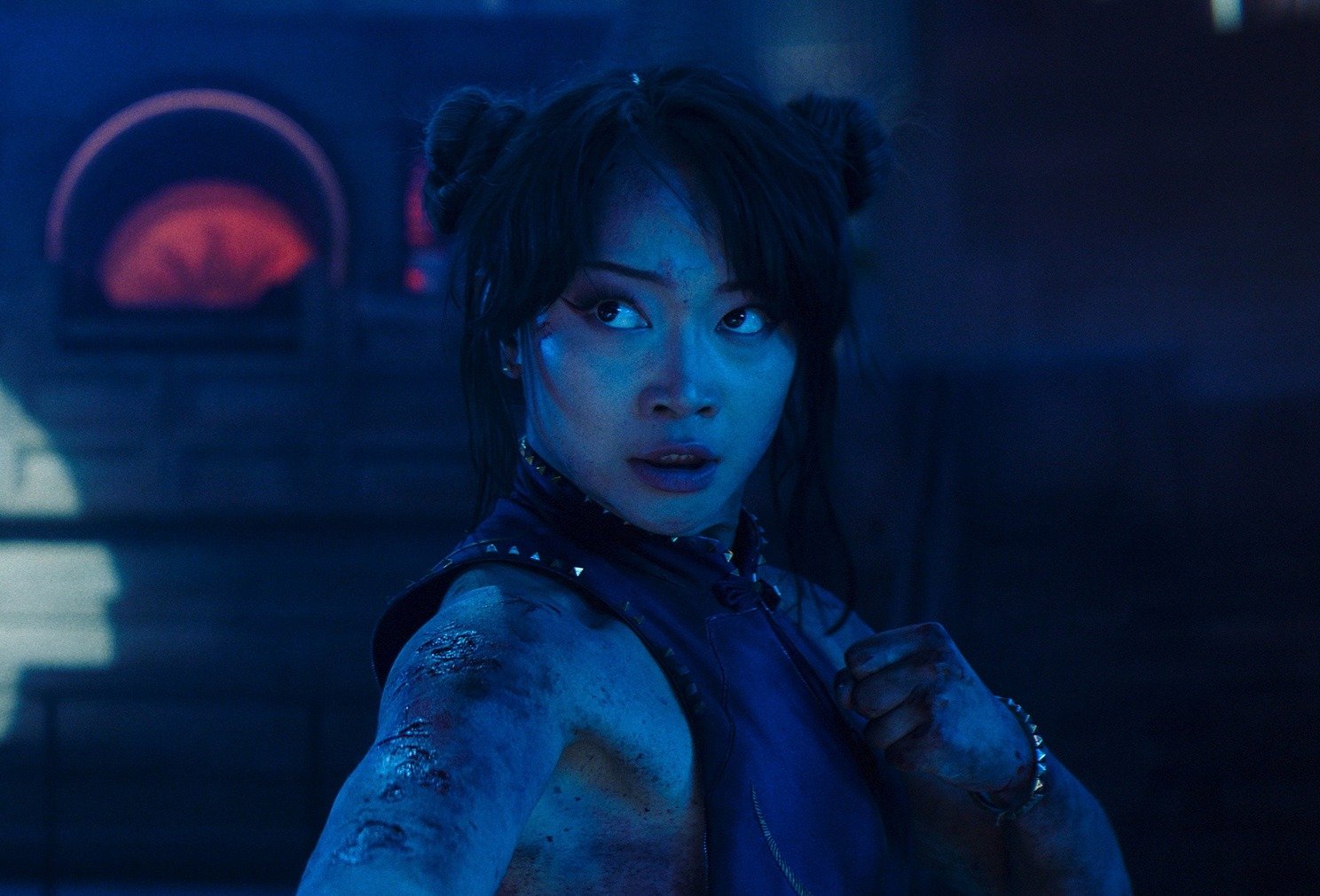
The man pulling them back together is M. Bison (David Dastmalchian), a dictator who stages a second World Warrior Tournament as a trap. What he wants is the power inside Ryu, which his side of the film calls Psycho Power, and his plan is to drain it out of Ryu and into himself. His recruiter is Chun-Li (Callina Liang), who signs up the world’s best fighters on his behalf while secretly working for Interpol, because Bison murdered her father and she means to bring him down. Ken takes the invitation as his chance to finally step out of Ryu’s shadow. Ryu wants no part of it until Akuma raises the stakes by promising to kill whoever wins, which is about the only threat that could drag a man who refuses to fight back into the ring. Kyle Mooney turns up as Chun-Li’s Interpol colleague, a desk agent with a crush on her. Mashable’s Kristy Puchko, who otherwise loved the movie, wrote that the bit “takes up way too much screen time.”
The reunion is that hotel-room fight, and it is easy to see why it travels so well in reviews. SlashFilm said it “has the ingenuity of early Jackie Chan films,” and IGN said it captures the bickering between the two leads better than anything else in the film, since Ryu’s calm keeps driving Ken further up the wall. The film’s running musical gag is, of all things, the 4 Non Blondes song “What’s Up,” which Ryu listens to on his Walkman before the 1987 final and Ken later belts out at karaoke, even though the song did not exist yet in 1987. Stunt coordinator Jon Valera told IGN during a set visit that the cast performed the game’s signature moves themselves. “We haven’t needed any digi-doubles or anything; all the guys are doing the iconic moves from the game.”
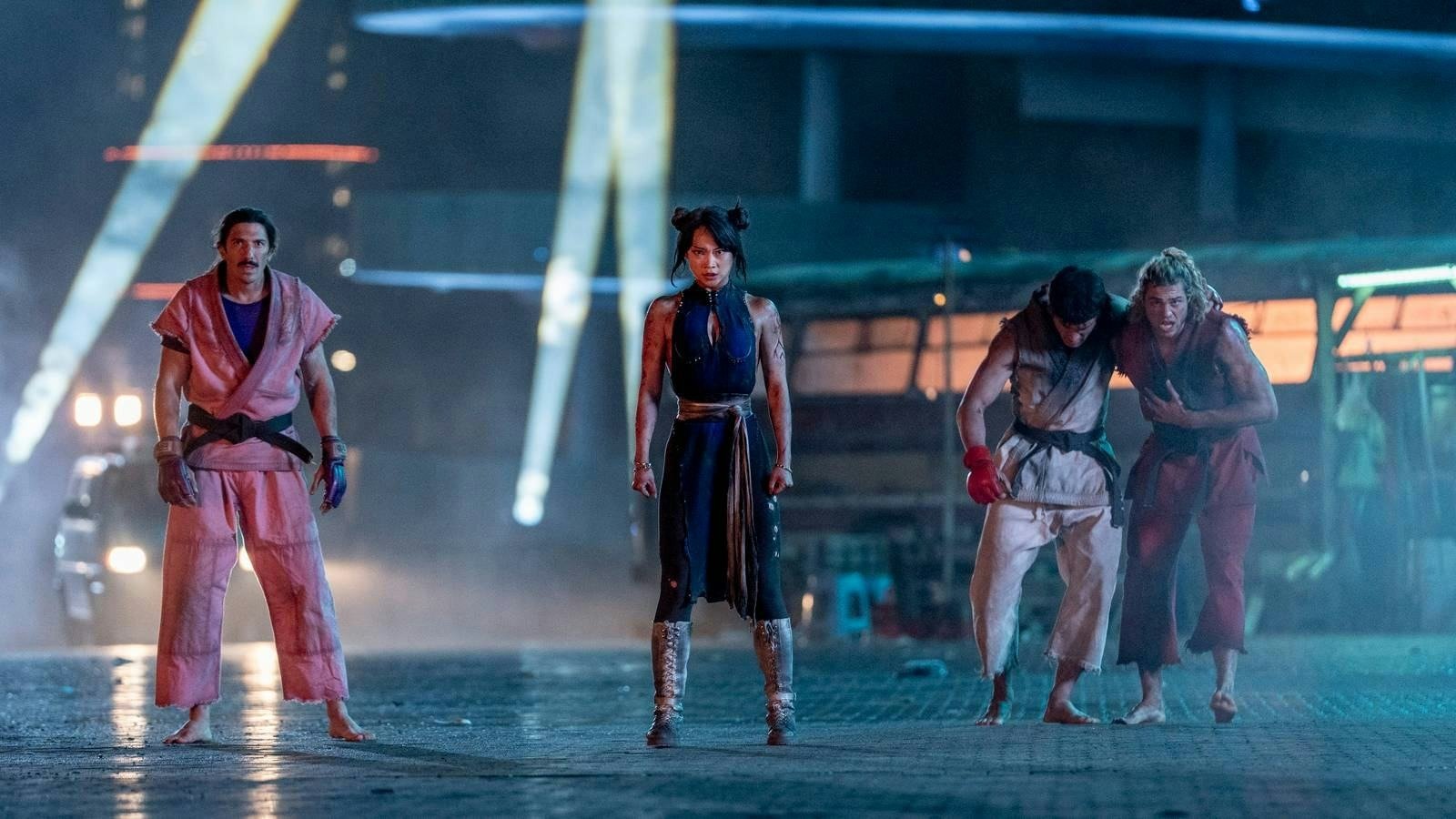
Once the fighters reach Bison’s hotel, the movie crowds the frame with the rest of the roster. Eric André plays ring announcer Don Sauvage at maximum volume. The field includes Guile (Cody Rhodes), who is introduced hair first under an enormous blond flattop, along with Dhalsim (Vidyut Jammwal), Vega (Orville Peck), Zangief (Olivier Richters), Balrog (Curtis “50 Cent” Jackson), E. Honda (Hirooki Goto) and even Joe (Alexander Volkanovski). Blanka (Jason Momoa) is a CGI green brute who was raised by electric eels and is looking for his mother. The effects work on him drew complaints from Mashable and Den of Geek. Ryu fights E. Honda in a steam bath with both men in towels. Chun-Li gets a steamy shower scene in which, Variety wrote, the camera “simply leers at Liang’s body” without the story purpose the same moment had in “Street Fighter II: The Animated Movie.”
Then the tournament mostly happens somewhere else. Consequence counted “only two actual tournament fights” on screen, IndieWire wrote that more than half of the marquee fights end in offscreen forfeits, and Guile’s bout with Vega, the matchup fans buy a ticket for, happens off camera. What fills the space is brawling away from the arena, at the hotel, a nightclub, a prison and Bison’s lair, as Mashable listed them, while Bison’s real plan closes in on Ryu. The Guardian praised one matchup that does make it to the screen, Ken against Balrog, saying Sakurai “learns the right lessons from Martin Scorsese’s Raging Bull” with its mix of quick cuts and slow-motion impacts. Variety marked the halfway point as the moment the film turns, writing that once it reaches the tournament it “becomes disastrously scattered” after a first half it found a delight.
The finale walks away from the bracket entirely. Ryu finally faces Akuma and gives in to the darkness he has spent six years running from, turning into the Evil Ryu of the games for the fight. Akuma goes down, but Bison’s forces carry him off in chains, so the villain who spent the movie chasing Ryu’s power leaves with a new source of it. The big showdown with Bison never comes. Variety wrote that “every character ends up with the wrong emotional climax,” and ScreenCrush was blunter about the last scene. “It doesn’t. It simply stops.” SlashFilm compared the swap of villains to “Batman & Robin” ending with Batman beating Bane while Poison Ivy and Mr. Freeze got away.
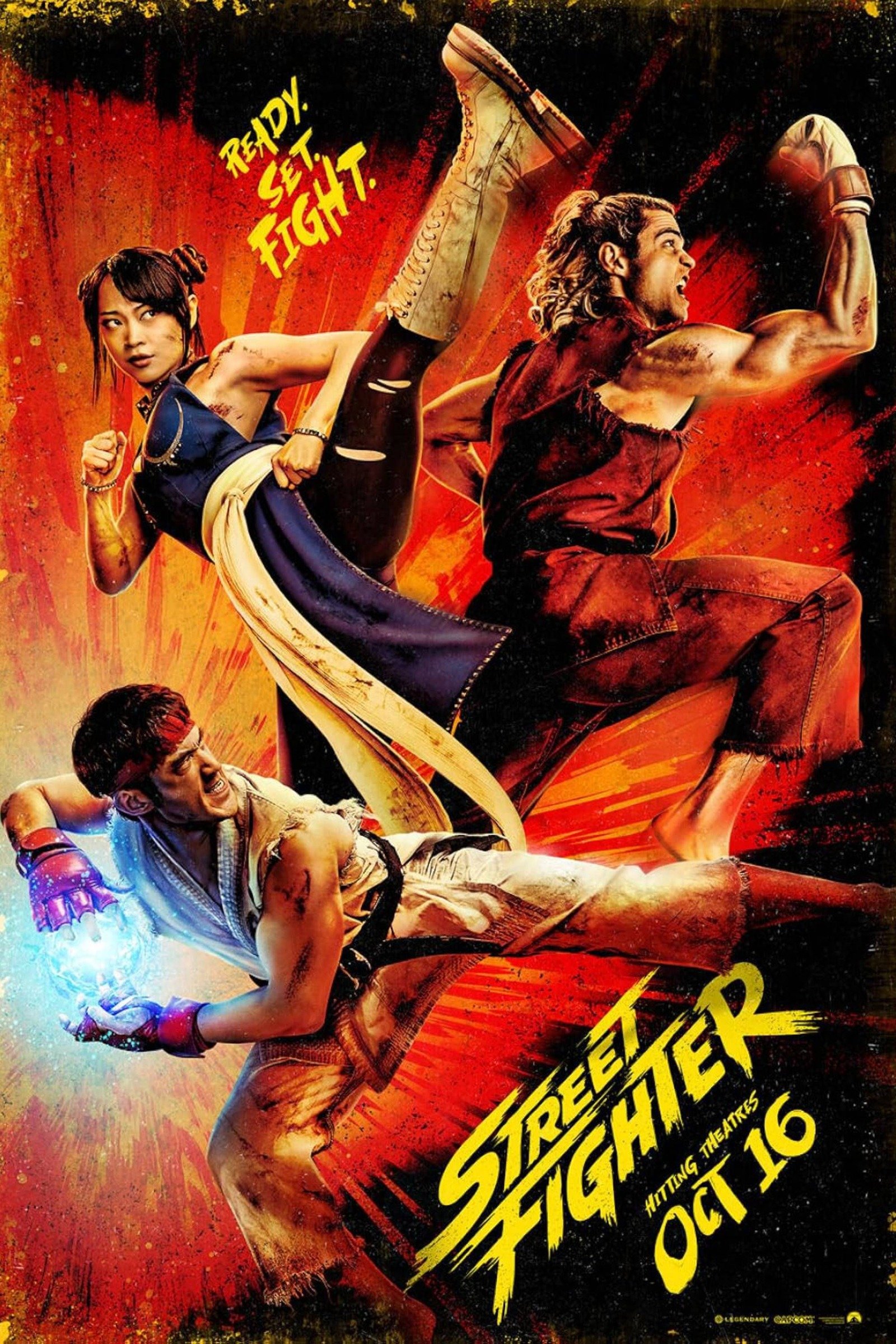
A brief animated mid-credits scene makes the sequel plan plain. Sagat, still nursing his grudge over the 1987 loss to Ryu, is training by punching a tree when Bison arrives with his lieutenants to recruit him. Sakurai has been open about wanting a second round, telling MovieWeb, “We definitely have a lot of ideas, and we’re writing currently,” while adding that it depends on how audiences react to this one. That is a fair hedge, because the ending only works as a promise, and a promise is a hard sell when the first round left so many fights on the table.
The critics split hard, and the split runs along taste more than quality. Puchko wrote at Mashable that she “had an absolute blast at this movie,” Empire said “the sucker-punch is that it’s actually quite fun,” and Esquire’s critic admitted that the film, “terrible as it is, is incredibly stupid fun.” IndieWire went further, predicting the film “seems destined to flop upon its initial release before being reclaimed as a cult classic over the next quarter century.” On the other side, The Guardian called it “a garish and incoherent mess” and AP gave it one star out of four. IGN landed in the middle with the most quotable line of the week. “Street Fighter is dumber than a box of rocks, but have you ever thrown rocks at things?”
Our lean is that IndieWire probably has the long view right. The film’s flaws, the skipped matches, the abrupt ending and the jokes that run long, hurt most on opening weekend and matter less on a couch with friends years later, which is exactly how the 1994 film earned its second life. Dastmalchian gives the movie an odd, creepy Bison who sniffs feet and rolls his eyes back in pleasure at other people’s pain, the anime flashbacks seem to be the best thing in it, and the brotherhood between Koji’s Ryu and Centineo’s Ken is the part worth rooting for, even when the script keeps interrupting it. TheWrap’s William Bibbiani summed up Sakurai’s gamble neatly. “For better and for worse, he succeeded.” Whether that buys a sequel is the open question, and the mid-credits scene has already placed the bet.
What Do You Think? Is a “Street Fighter” movie that skips most of its own tournament a deal breaker, or is the hotel-room fight enough? Did the hand-drawn flashbacks make the case for an animated version instead? Would you come back for a sequel built around Sagat and a captured Akuma?
Catch up properly: every Street Fighter adaptation in chronological order on our Timeline Hub’s Street Fighter timeline.
See you on the next binge!