The wait for the continuation of the Gilead saga is officially over. Hulu has launched the first three episodes of “The Testaments”, and the landscape of this dystopian nightmare has fundamentally shifted. Picking up fifteen years after the ambiguous finale of “The Handmaid’s Tale”, this premiere establishes a world where the cracks in the regime have fossilize into permanent structural failures. The transition from June Osborne’s localized rebellion to the multi-generational collapse of Gilead offers a masterclass in atmospheric dread. The three-episode drop—titled “Precious Flowers,” “Perfect Teeth,” and “Daisy”—reintroduces a world that is recognizable but terrifyingly evolved.
Ann Dowd returns to her career-defining role as Aunt Lydia, but the version of the character seen here is a far cry from the blunt instrument of state terror witnessed in earlier seasons. Dowd’s portrayal is now firmly grounded in the 2019 Booker Prize-winning source material. She serves as a clandestine archivist of Gilead’s sins, operating in the shadows of the power structure she helped build. Dowd kept a secret journal in character as Lydia for years before ‘Testaments’ was even greenlit, documenting her internal justification for the regime’s atrocities. That level of method preparation bleeds through the screen. The production, filmed under high security in Toronto, leans into a Baroque-gothic aesthetic. It wisely moves away from the clinical minimalism of the original series. The use of high-contrast chiaroscuro lighting in Aunt Lydia’s private quarters symbolizes her divided loyalty between the state and her own survival. Warning, beyond this point are spoilers for “The Testaments” 3 episode series premiere on Hulu/Disey+.
Dowd kept a secret journal in character as Lydia for years before ‘Testaments’ was even greenlit, documenting her internal justification for the regime’s atrocities.”
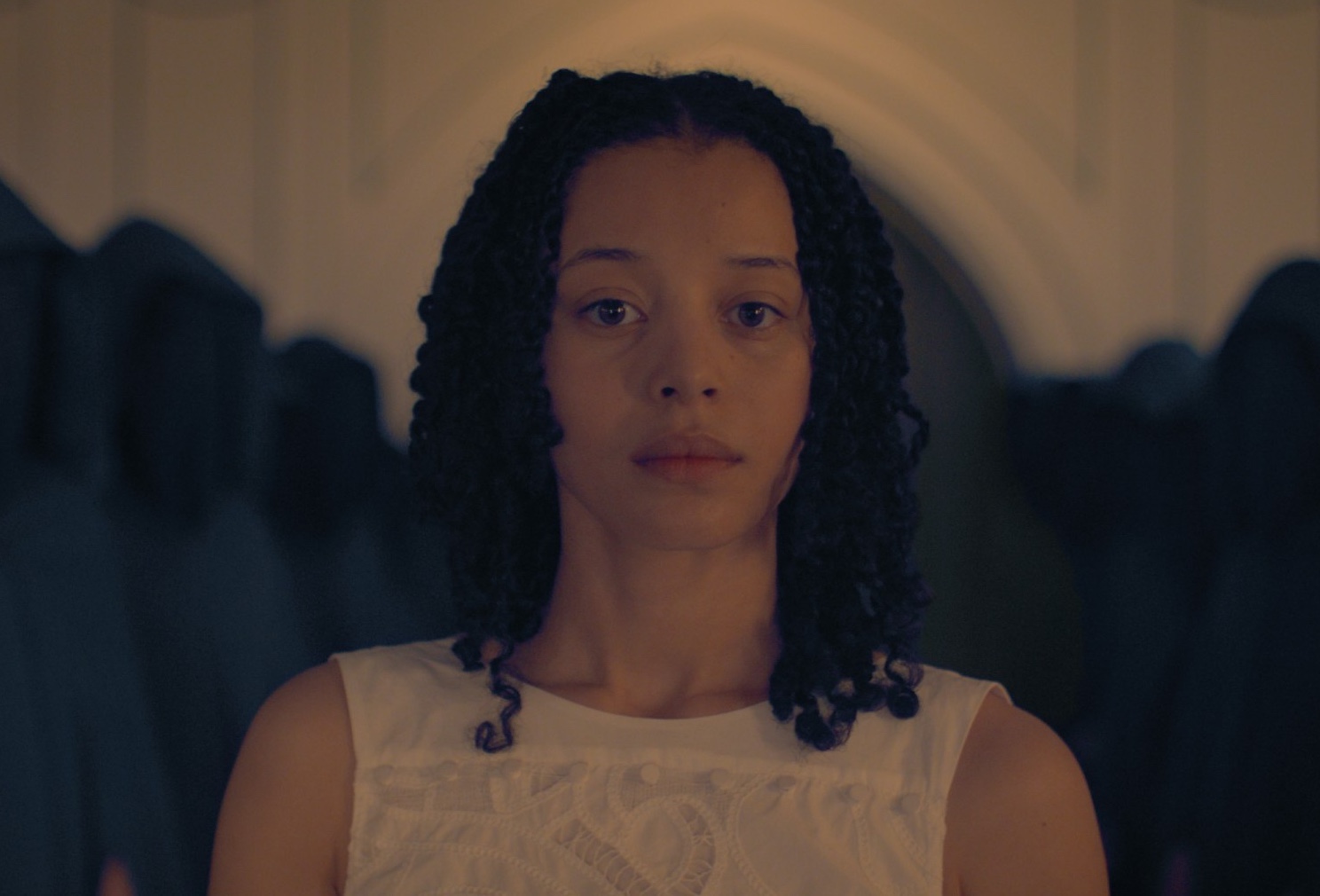
Episode 1, “Precious Flowers,” reintroduces Gilead through the eyes of Agnes, played by Chase Infiniti. Agnes is a young woman of the elite Commander class who has never known another life. The episode’s visual language is dominated by the suffocating greenery of Gilead’s gardens, a stark contrast to the blood-red uniforms of the past. The costume department introduced the Pearl Girls—Gilead’s new overseas missionaries—wearing silver-grey. This color choice signifies a pure but metallic coldness that feels distinctly predatory. Chase Infiniti’s rise in Hollywood has been meteoric, transitioning from the Apple TV+ series “Presumed Innocent” to a leading role in a Paul Thomas Anderson film before landing the part of Agnes. Her performance captures the Princess of Gilead vibe perfectly. She shows a girl whose privilege is nothing more than a gilded cage slowly closing in on her.
Episode 2, “Perfect Teeth,” shifts the perspective to Aunt Lydia’s private quarters deep within Ardua Hall. The cinematography here is claustrophobic and shadow-heavy. Lydia is revealed to be the true power behind the throne, possessing a massive vault of secrets known as the Holograph that could dismantle the state overnight. The episode features a chilling sequence where Lydia interviews new Handmaids, utilizing a psychological precision that proves she has traded her cattle prod for a much more dangerous set of manipulative tools. This episode also introduces the Pearl Girls mission in Canada, providing the first glimpse of the world outside Gilead in this new era. The contrast between the sterile fundamentalism of the Hall and the chaotic streets of Toronto highlights the cultural chasm that has widened over fifteen years. The Canadian sequences were filmed with a wider handheld lens to contrast directly with the rigid, fixed camera work of the Gilead sequences.
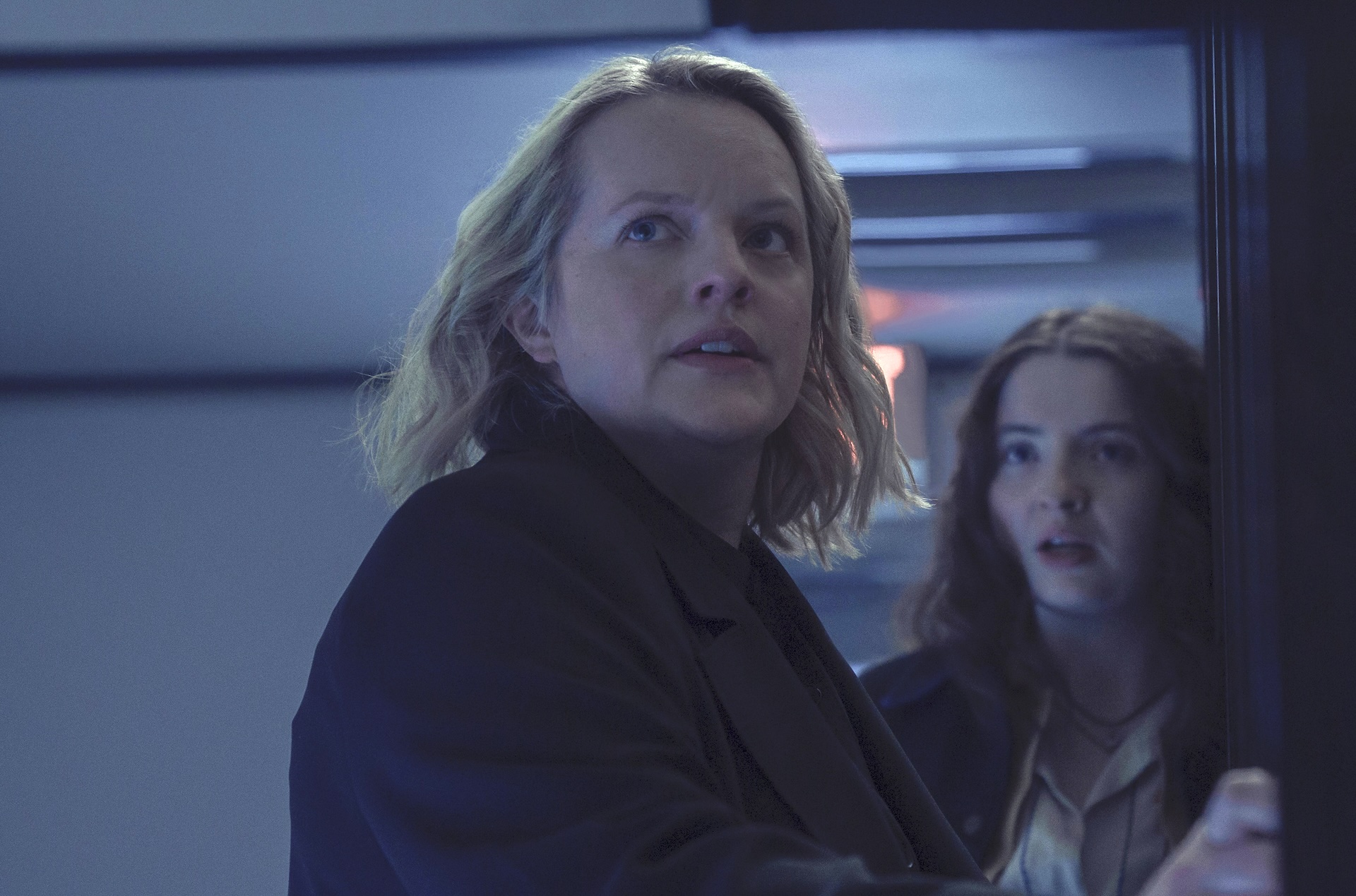
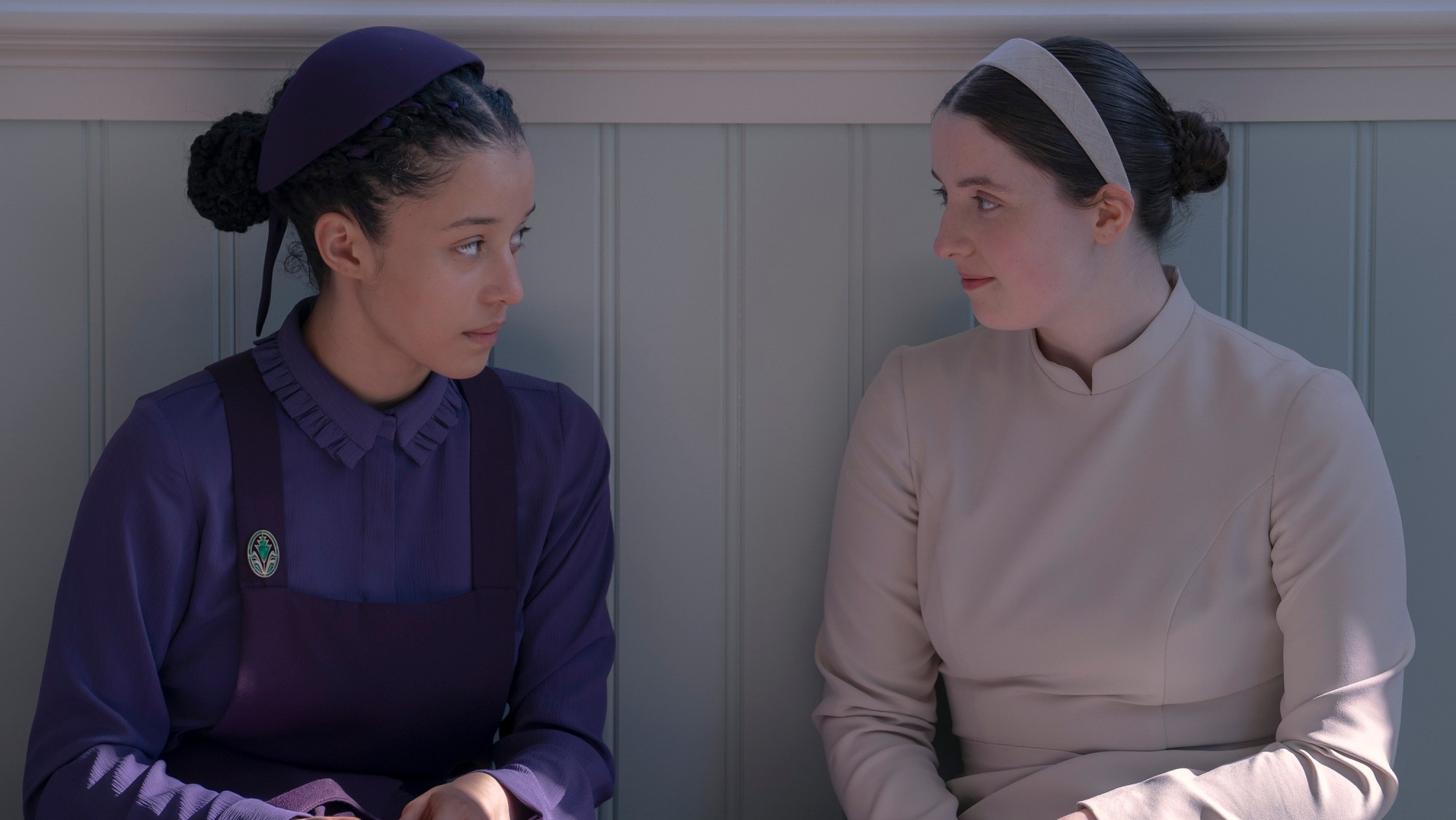
Episode 3, “Daisy,” centers on a teenager in Canada who is blissfully unaware of her genetic connection to the totalitarian regime operating across the border. Following a sudden tragedy, Daisy is thrust into the path of Mayday. The resistance group has evolved into a paramilitary and cynical organization, hardened by years of failure. The narrative suggests she is the Baby Nicole of legend, and her inevitable journey back toward Gilead is the catalyst for the season’s primary arc. The premiere concludes with Aunt Lydia receiving a coded message from a Mayday operative known only as the Arawak, signaling that the endgame for Gilead has finally begun.
The technical breakdown of the episode shows a return to the unforgiving lighting of the original series’ first season, symbolizing a return to the light for the resistance fighters. The production design of ‘Testaments’ has been praised for its intricate world-building. It perfectly depicts the Gilead-lite propaganda heavily utilized to recruit disenfranchised young women in Canada. The production team consulted extensively with real-world cult survivors to ensure the psychological recruitment tactics shown on screen felt authentic. The haunting score, composed by Adam Taylor, incorporates more choral and dissonant string elements than the original series, reflecting the fractured religious identity of the state.
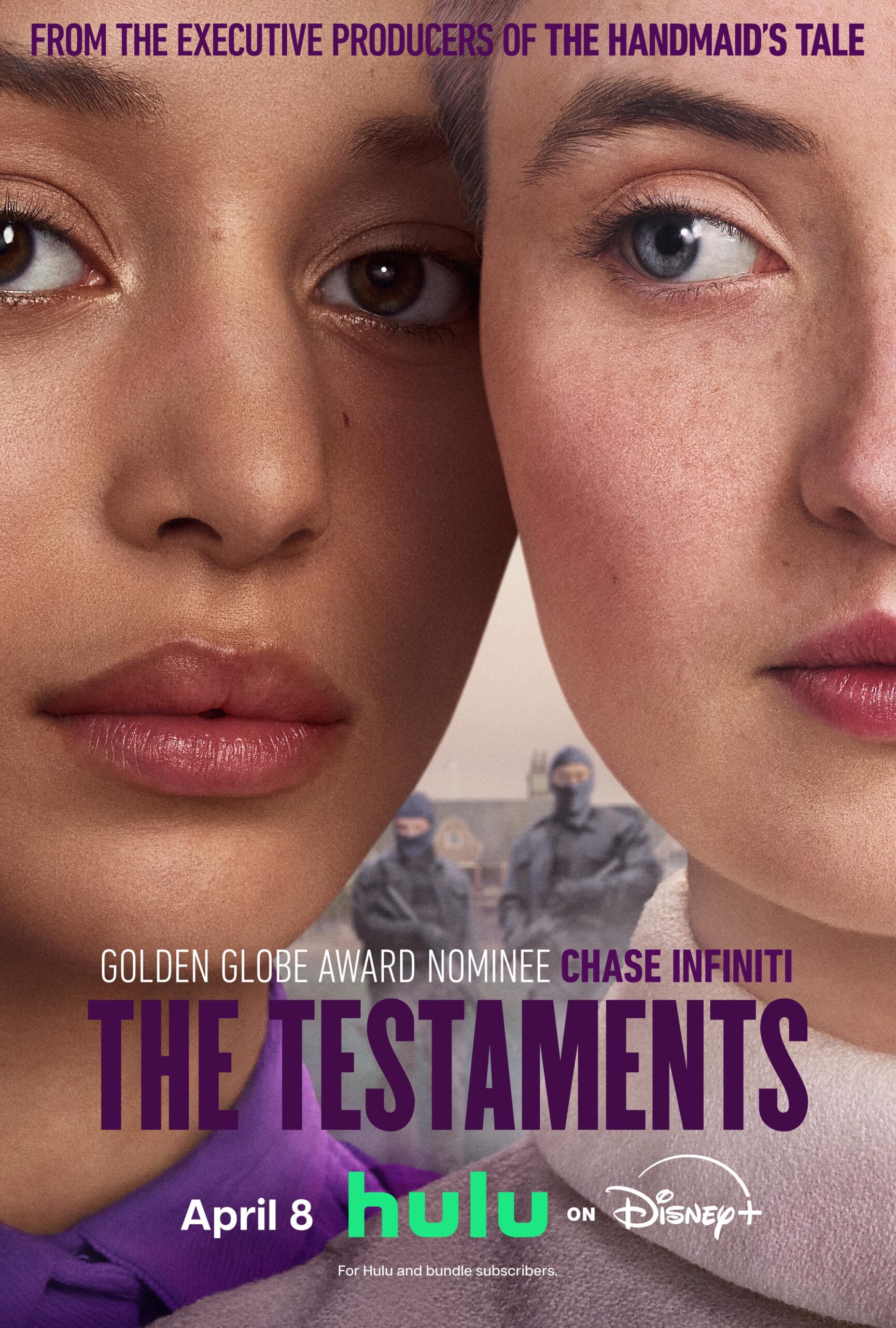
The agonizing detail in the Ardua Hall sets—complete with hand-bound dusty ledgers and flickering beeswax candles—proves that the production team is fully committed to the gothic-noir tone of the original novel. The inclusion of the infamous Wall in a state of visible disrepair serves as the ultimate visual metaphor for the collapsing authority of the Commanders.
What do you think? Is Aunt Lydia truly working to destroy Gilead from within, or is she simply positioning herself to rule the ashes once the Commanders fall?
How will Daisy react when she learns the true identity of her biological parents? Will the Pearl Girls successfully recruit more followers in Canada, or will Mayday stop them? Drop your theories in the comments below!
See you on the next binge!