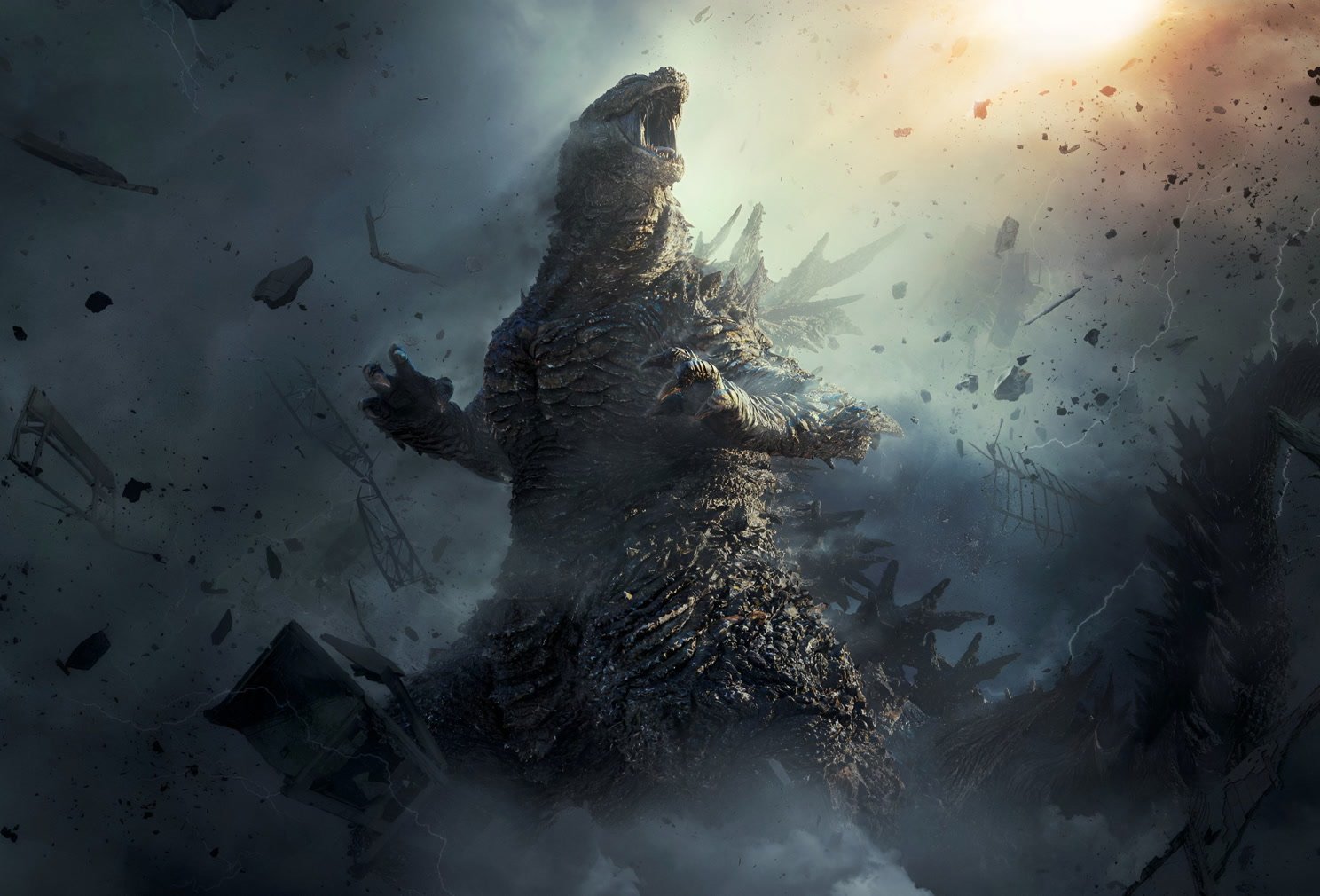
Toho and GKIDS have put out a new trailer for “Godzilla Minus Zero,” and the smartest thing about it is a decision most people will feel without noticing. The trailer runs eighty-four seconds and it changes shape halfway through. The first forty-eight seconds are letterboxed widescreen, and there is no Godzilla in them at all. Then the frame opens upward into the tall 1.43:1 IMAX ratio the film was shot in, and the monster arrives in the extra space. Toho titled the upload “Official 1.43:1 Trailer, Filmed For IMAX,” which is usually marketing noise. Here it is the structure of the thing.
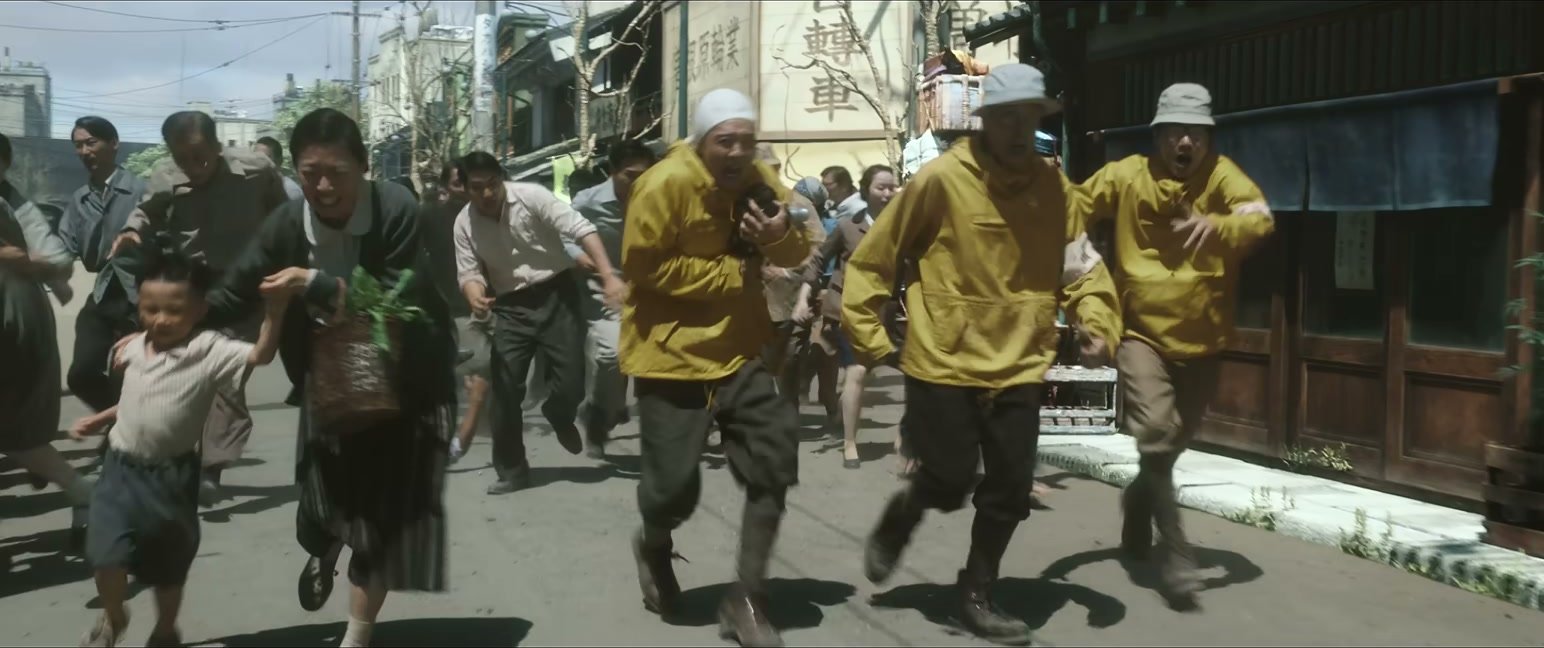
What fills that first widescreen stretch is the aftermath of the last film, and it is all people. A woman standing in rubble. Crowds in the street. Men in yellow hard hats running somewhere in a hurry. An office of clerks at desks. A battleship pushing through open water, and a flying boat hauling itself off the sea. The dialogue does the rest of the work, because the trailer’s opening line is a flat contradiction of the ending everyone remembers: “We didn’t finish the job like we thought.” Somebody else insists, “You saw it! Godzilla was blown to pieces!” They are both describing the same event and only one of them is right.
There is no third time.”
That is one of two title cards Toho drops into the widescreen half, and the other is “Everything ends here.” Between them sits a third card that tells you who is responsible for all of it: “VFX, Written and Directed by Takashi Yamazaki.” That credit is not a formality. Yamazaki supervised the effects on “Godzilla Minus One” himself, which is a large part of how a film made for a reported fraction of a Hollywood monster movie’s budget walked off with the Academy Award for Best Visual Effects. He is doing the same job again, and the trailer puts his name on screen the way other films put a studio logo.
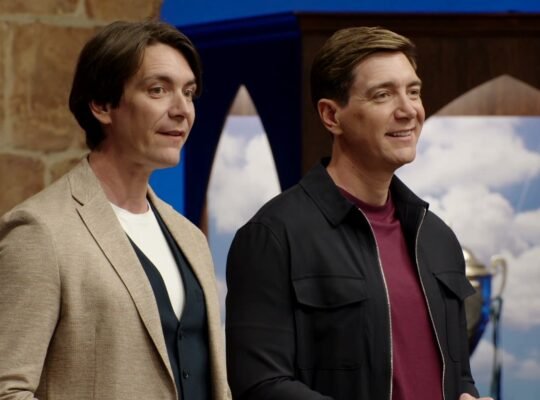
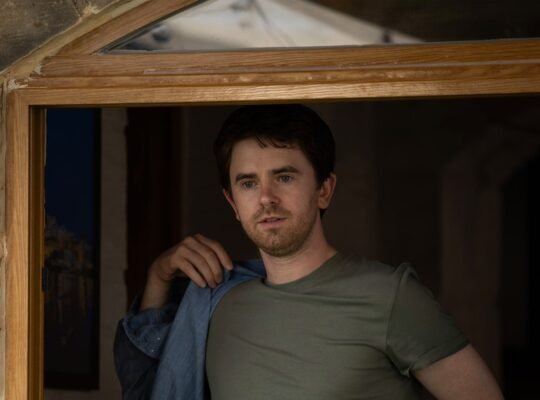
The cast additions arrived with the trailer and they are built around a specific idea: this time the response is organised. Nagasawa Masami joins as Makoto Aoyama, a weather forecaster assigned to the Disaster Response Bureau, which tells you the government has stopped improvising and started staffing. Kunimura Jun plays Dr. Ogata. Maehara Ko is Akira Hagiwara, assistant to Professor Murakami, played by Tanaka Min. Misuhashi Kenji, Okuno Eita and Inowaki Kai fill out the new faces. And Iida Motosuke returns as Akio Itagaki, the Toyo Balloon section chief who was part of the extermination effort in “Minus One,” which is the trailer quietly confirming that the survivors of the first film are the people being asked to do it again.
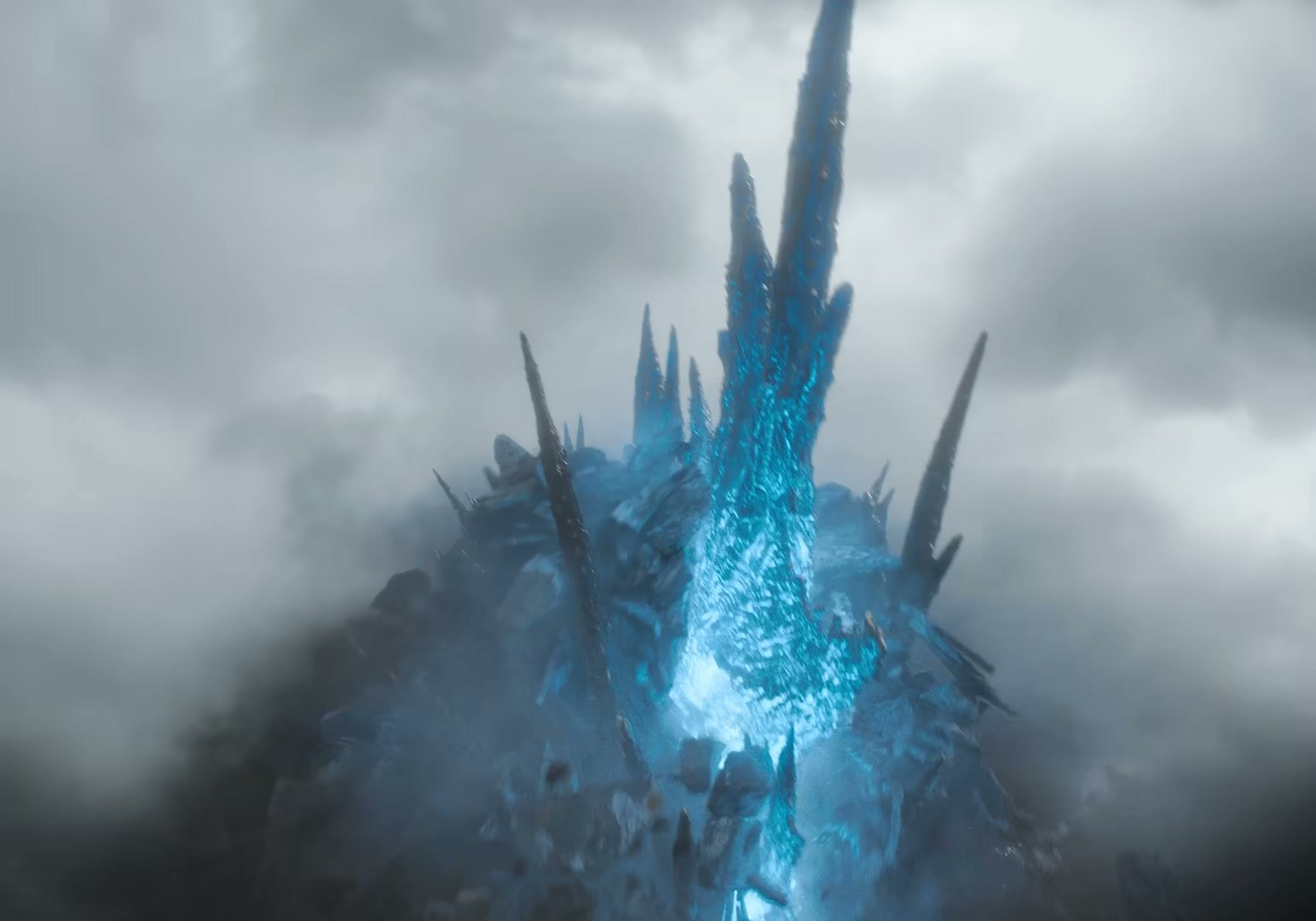
Then the frame opens and the second half is almost entirely spectacle. Godzilla stands in a landscape, grey and rocky and lit from behind. Propeller aircraft climb in formation against a blue sky, which is a very deliberate echo of how the first film solved its problem. There is a cockpit two-shot, a forest valley, and a shot of a town street where the light between the power lines has gone an impossible electric blue. That blue is the tell. The dorsal spines charge, the atomic breath builds, and everything after it is fire: planes coming apart mid-air, a white blast that swallows the screen, a clock tower standing in the middle of it.
The arithmetic is worth stating because it is so lopsided. Forty-five distinct shots across eighty-four seconds, and the split falls at almost exactly the halfway mark: twenty-four shots in the narrow frame, twenty-one in the tall one. Every one of the twenty-four is people, machinery or aftermath. Every appearance of Godzilla is in the other twenty-one. Even the dialogue keeps its distance from the monster while the frame is narrow, the driest example being a woman in a car offering, in the middle of a national emergency, “May I suggest a plan B?” The film is letting the bureaucracy have the first half.
It also lands on top of something we wrote about a fortnight ago. When Toho took “Godzilla Minus Zero” into IMAX cameras it became the first Japanese production to shoot that way, and at the time the interesting question was whether the format would be used for anything beyond size. This trailer is the first evidence either way, and the answer is that the aspect ratio is being treated as a storytelling switch rather than a bigger canvas. That is a more sophisticated idea than most tentpoles manage with the same equipment.
Splitting the trailer this way is not just a nice visual gag, it is an argument about what the sequel is for. “Godzilla Minus One” worked because it was a post-war drama with a monster in it, and the monster was frightening in proportion to how small the people were. Giving the human half of this trailer the narrower frame and reserving the taller one for Godzilla says the sequel understands its own appeal. You get the office, the hard hats and the arguing before you get the spines. The scale is the point, and scale only means something if you have spent time at the bottom of it.
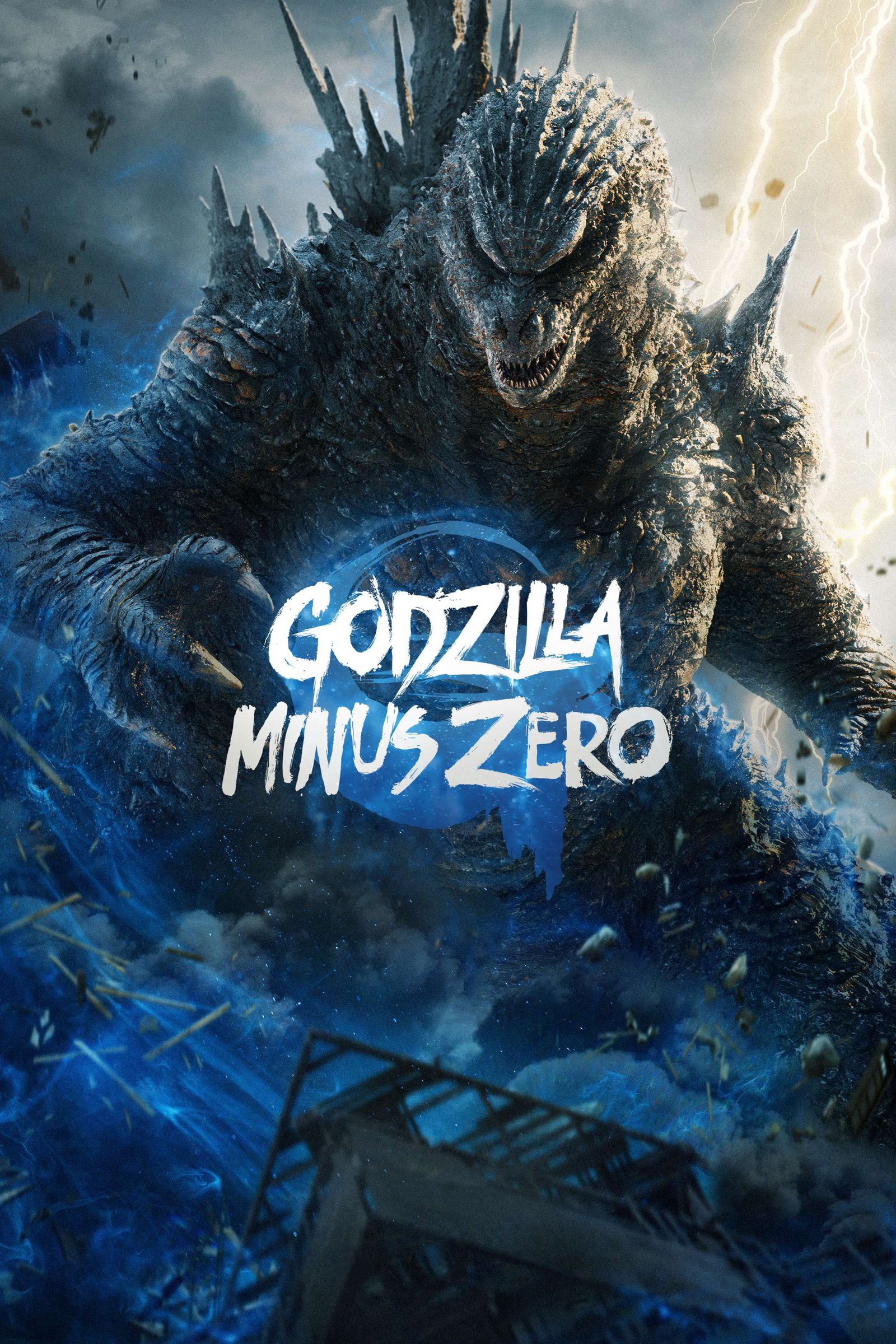
The release date carries its own small piece of theatre. “Godzilla Minus Zero” opens on 3 November 2026, which is three years to the day after “Godzilla Minus One” opened in Japan on 3 November 2023. Toho has not said a word about that, and it did not need to.
There is a risk sitting inside all of this, and it is the same one every sequel to a surprise carries. “Minus One” was made cheaply, won an Oscar for effects against studio films that cost twenty times as much, and became the most successful Japanese Godzilla release in decades on the strength of being unexpected. A sequel filmed for IMAX with a returning ensemble and an organised government task force is a bigger machine by definition, and bigger machines are harder to steer. The first film’s best trick was that its monster barely appeared. This trailer spends its whole second half on the monster.
Set against that, the widescreen half is genuinely reassuring. Somebody in that cutting room knew the crowds mattered as much as the spines, and built the trailer so you cannot get to one without sitting through the other. If the film holds that discipline for two hours, “there is no third time” will read as a promise rather than a threat. We find out on 3 November.
What Do You Think? Does shooting the whole thing for IMAX risk turning a small, sad monster movie into exactly the spectacle it was praised for avoiding? Is bringing back the survivors of the first extermination effort a promise of continuity or a sign the sequel is short of new ideas? And after “Minus One” won the effects Oscar on a modest budget, does Yamazaki doing his own VFX again stay an advantage at this scale?
Catch up properly: every Godzilla film in chronological order on our Timeline Hub’s Godzilla timeline.
See you on the next binge!