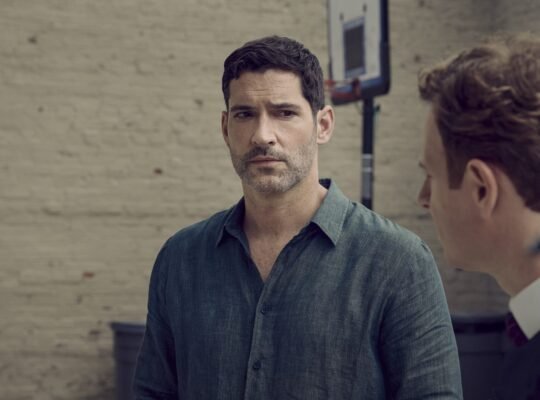

Juliette Nichols (Rebecca Ferguson) walked into a burning airlock at the end of last season, and the fire did not kill her. Three minutes without oxygen did something worse. “Silo” comes back three months later with its hero installed as the mayor of Silo 18, and the premiere’s opening act is not about what she intends to do with that power. It is about the fact that she cannot remember earning it. The suit held. The memory did not.
The episode is called “Who Are You?” and it puts that question to almost everyone in it, starting with the one woman who ought to have the clearest answer. Juliette has holes in her past, and the people helping her fill them in are the people who made the holes. Robert Sims (Common) and Camille Sims (Alexandria Riley) run the silo from behind her chair while she does the waving, and the show lets you watch them do it for a full hour before anyone inside the story suspects a thing. Warning beyond this point there are spoilers for “Silo” Season 3, Episode 1, including the truth about how Bernard Holland died and the episode’s closing scene.
Juliette has holes in her past, and the people helping her fill them in are the people who made the holes.”
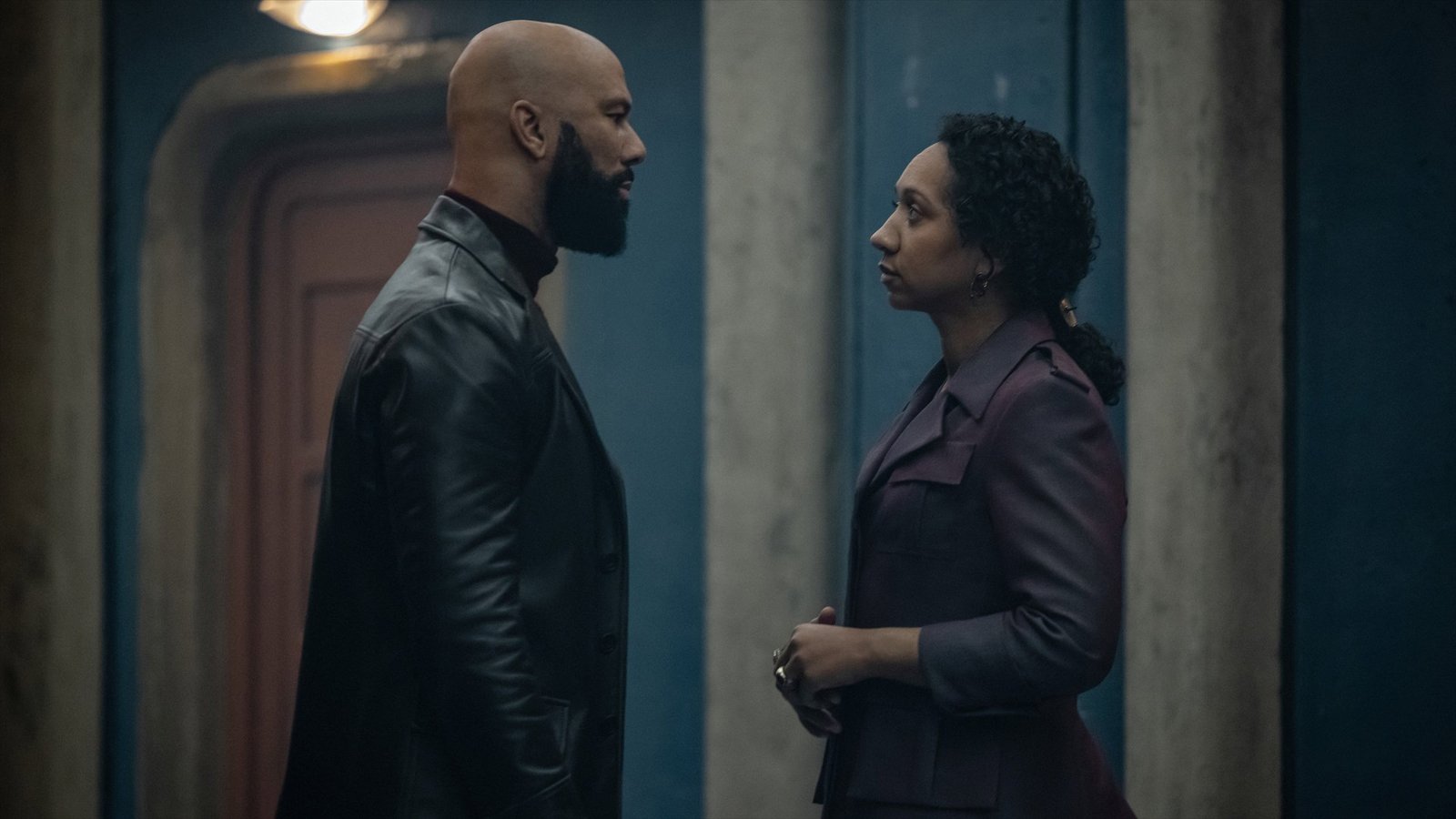
The mechanics of the cover-up get laid out with a patience that makes them land harder than a twist would have. Camille sits Juliette down and plays her the helmet footage from outside: a version of events where she waited out the dust in a refuge hut, found an insulated suit and came home. It is staged as a kindness, the gentle business of giving a traumatised woman her own story back. It is a script. Camille is also dosing her, and the dosing is not Camille’s idea. It comes down from something the show calls the Algorithm, which is the first real signal this season that the silo’s chain of command does not stop at a human being.
Sims handles the other half of the lie. He tells Juliette that Bernard Holland (Tim Robbins) died of his burns and the poisoning that followed, which is the sort of explanation that survives precisely because nobody wants to go and look at the body. Then the episode shows us what actually happened. Bernard came out of that fire alive, and Sims finished him. Handing an audience that information in a premiere rather than saving it for a mid-season reveal is a real choice, and it pays immediately: every subsequent shot of Sims steadying Juliette’s elbow becomes a man managing the only witness to his own murder.
What keeps this from being a story that happens to Juliette rather than one she is in is that the memory does not stay buried. It leaks. She dreams her last moments with Bernard on a loop, and the flashes are cut like intrusions instead of exposition, arriving when a sound or a face knocks something loose. She questions the people around her. She notices the shape of the answers she gets, which is the same instinct that made her a good mechanic, pointed at a machine built out of people. Ferguson plays the whole hour on that edge, competent in the room and quietly certain that something is wrong with the floor.
The silo she is nominally running has been redecorated rather than reformed, and the premiere is sharp about the difference. The cameras have come down. There is a new council with representation from every level, and its first meeting is almost funny in how ordinary it sounds: Knox reports that the generator is holding thanks to Juliette’s own repair, Paul Billings reports that crime is down. Everything visible says the uprising won something real. Everything underneath says the same office is still deciding what people are allowed to know, only with better manners.
The rebellion has noticed. Masked figures move through the levels carrying signs that read “This is the truth. The display is a lie,” which is a neat inversion of this show’s oldest image. For two seasons the screen showing the outside was the thing everybody stared at and argued about. Now the argument is about the screen itself. One of those masked rebels is injured during the episode, and the show pointedly declines to tell us who is underneath, which is the kind of withholding “Silo” has earned the right to do.
There is also a running theme of absence, and it is doing more work than it first appears. Martha Walker never appears, but word reaches us that she has sealed off the access at the very bottom of the silo, the level that holds the machine that talks about the Safeguard. Lukas Kyle is gone too. Billings believes he is dead and that his body was misidentified, which is exactly the sort of tidy administrative conclusion this series has trained us to distrust. Patrick Kennedy is being sighted all over the silo and is never there when security arrives. Orla Kent is working the question of what the rebellion has quietly been taking. Three hundred years in, the infrastructure keeps failing on schedule, and nobody with authority is telling anybody the truth about any of it.

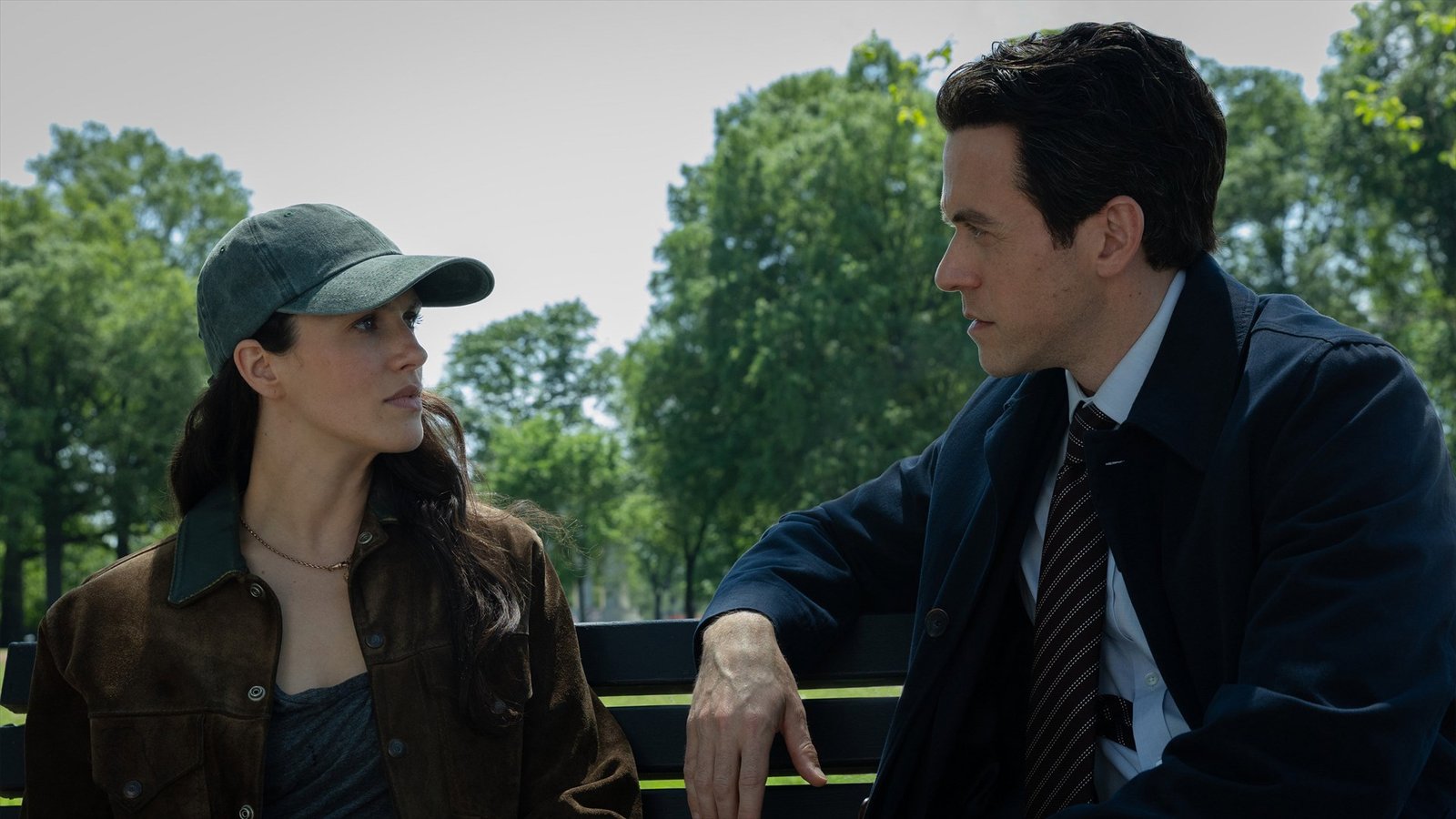
The other half of the premiere is the swing, and it is the largest structural change the show has made since it started. “Silo” now runs a second timeline in the world before the collapse, in a Washington that still has weather and traffic and a working press. Congressman Daniel Keene (Ashley Zukerman) is the way in, a man known publicly as the saviour of New Orleans on the strength of the underground drilling technology that made his name. Journalist Helen Drew (Jessica Henwick) is circling the same story from the outside, and the episode is content to let both of them look like people with careers rather than pieces of a puzzle.
That timeline pays off in the air, and it is the best sequence in the hour. Daniel’s sister Charlotte Keene (Jessica Brown Findlay) is a Navy pilot flying a retaliatory strike after a dirty bomb attack, and at fifty thousand feet her squadron runs into something black that has no business being at that altitude. It disables their systems. One pilot’s missiles detonate on the rails. Charlotte goes down, and when Daniel finally reaches her bedside in a facility rather more advanced than a military hospital has any business being, she has a traumatic brain injury and she does not know who he is.
That is the whole trick of the episode, and it is why the two halves belong in the same hour instead of feeling like two shows sharing a slot. Silo 18 opens on a woman whose memory has been taken from her deliberately, by people who need her compliant. Three centuries earlier, another woman loses hers in an event that nobody will explain. The premiere never once says the two are connected. It sets them beside each other and trusts you to do the arithmetic, which is a great deal more respectful than the version of this episode that spells it out.
And then it closes on the smallest possible object. Juliette finds a capsule hidden in her bowl of chowder, carrying a note: want to know the truth, leave your bowl upside down, go to the marketplace. She burns it and hands the bowl back. Somebody in that silo knows what was done to her, and after an hour of watching two people manage her like a problem, the sight of one person taking a real risk on her behalf lands like a door opening. It is a controlled, paranoid, confident restart, and it leaves the season with a much better question than who is in charge. It asks who gets to decide what happened.
What Do You Think? Is the Algorithm handing Camille her orders the same authority that wrote the Safeguard, or is this a second system nobody in the silo has met yet? Does killing Bernard make Sims the villain of this season, or the man who will be forced to pick a side the moment Juliette’s memory comes back on its own? And if Charlotte losing herself at fifty thousand feet is how this show plans to explain where the founders learned to erase a person, whose idea was it first?
See you on the next binge!