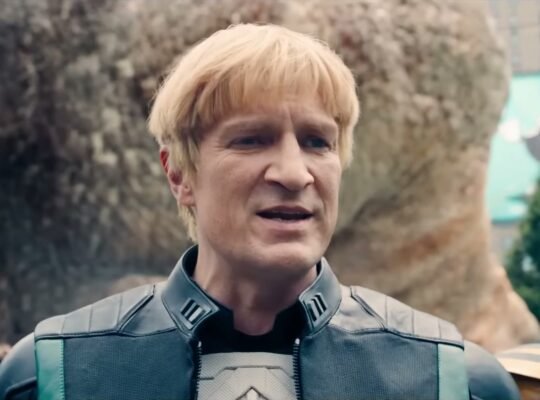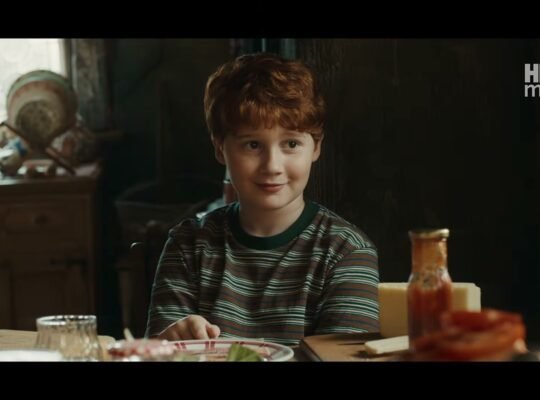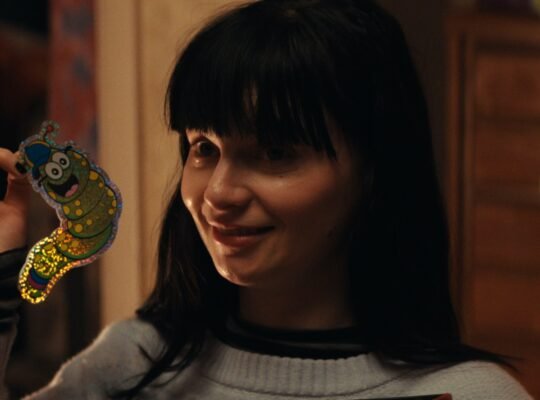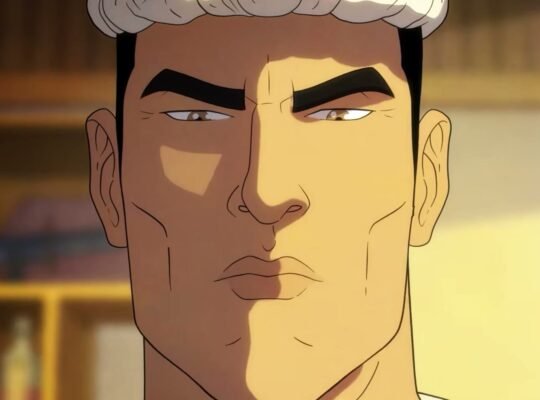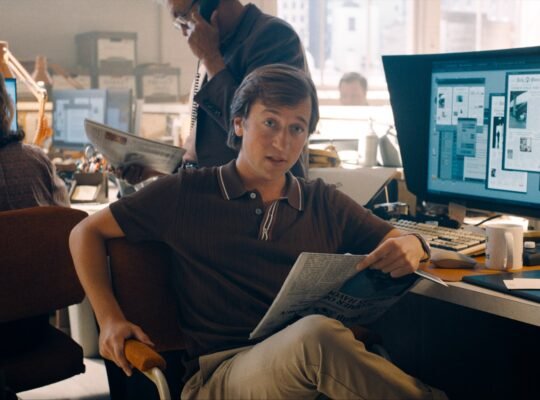
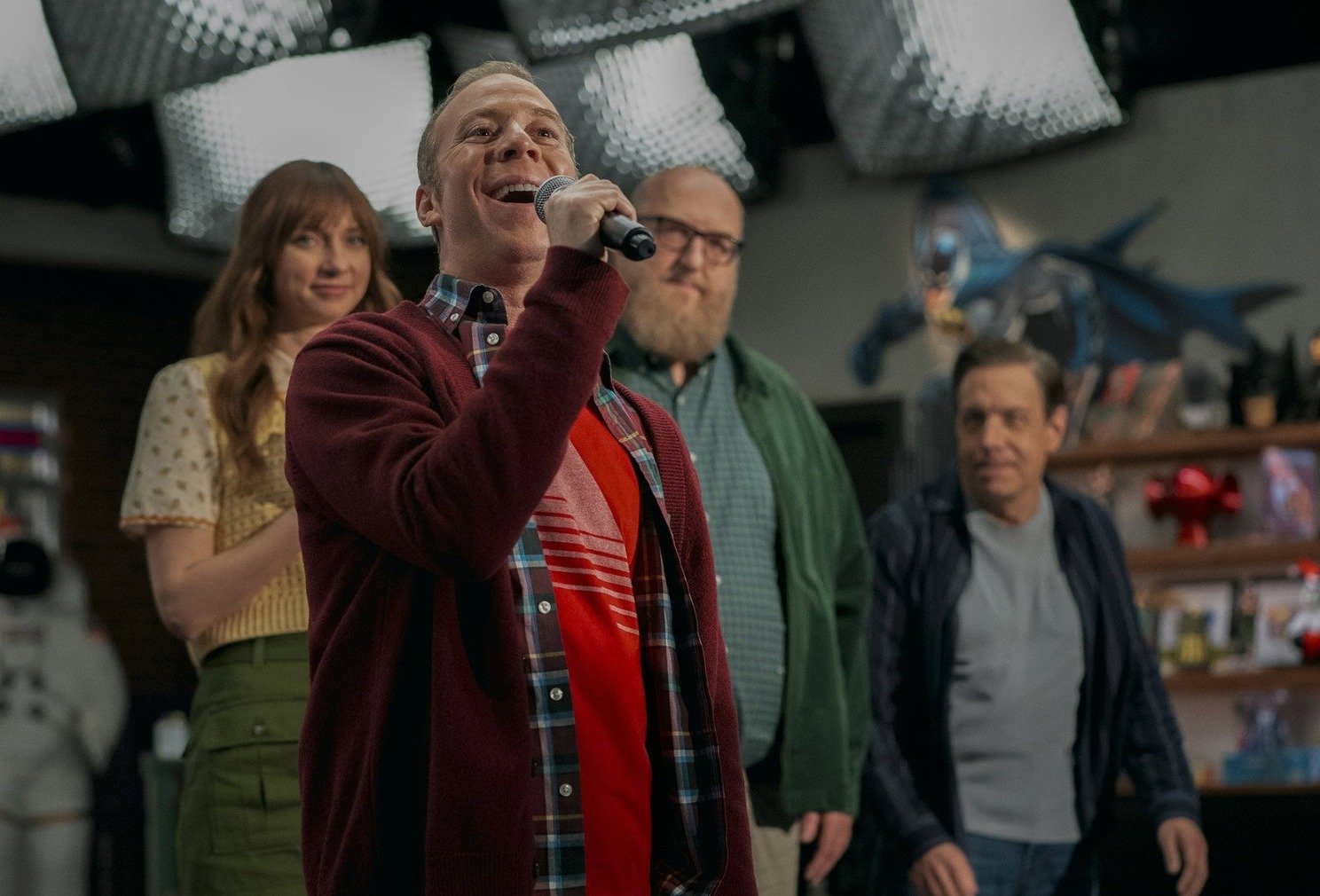
“Stuart Fails to Save the Universe” ended its first season on Thursday by turning itself back into “The Big Bang Theory”. The HBO Max finale is called “Spoiler: Filmed Before a Live Studio Audience”, and it means every word of that title. For one episode, a single-camera sci-fi comedy becomes a multi-camera sitcom, complete with a laugh track that only one character can hear. Then it pulls the set apart in front of its own cast, which is the boldest thing the show has tried and a move that mostly lands.
The setup matters, so here it is quickly. Stuart Bloom (Kevin Sussman) broke reality by knocking a multiverse device off a table in Leonard and Howard’s lab. He has spent ten episodes trying to fix it with Denise (Lauren Lapkus), Barry Kripke (John Ross Bowie) and Bert (Brian Posehn), and by the penultimate episode they had lost the device and been trapped inside a comic book. Warning beyond this point there are spoilers for the “Stuart Fails to Save the Universe” season one finale and for its ending.
For one episode, a single-camera sci-fi comedy becomes a multi-camera sitcom, complete with a laugh track that only one character can hear.”
The finale opens as if none of that happened. It is Denise’s birthday, the apartment looks like a sitcom apartment, and everyone is behaving a little too neatly. Food appears from nowhere, and people walk from one room to another without any sense of how they got there. Kripke can hear an audience laughing at his lines, and nobody else can. It is a very funny premise, and Bowie plays it perfectly, as a man slowly realizing that his life has become a format.
The recaps agree on how the rest unfolds. Bert notices the problem next and then the others do, and the more of them who see the seams, the less stable the sitcom world gets. At one point the wall behind the cameras dissolves into clouds. The show uses the old sitcom grammar against itself here, and it is clever, because every convention that “Big Bang” relied on for twelve seasons becomes a symptom of something wrong.
The episode also names the villain. Kyle explains that the force behind the season is the Adversary, an ancient consciousness that existed in silence before the Big Bang. It resents the universe for existing at all, and it has resented Stuart in particular since he cracked reality open. That explains the sabotage the gang has faced all season, from the manipulation of Trevor and Kyle to the comic book prison. It is a big swing for a show that started as a joke about the guy from the comic book store.
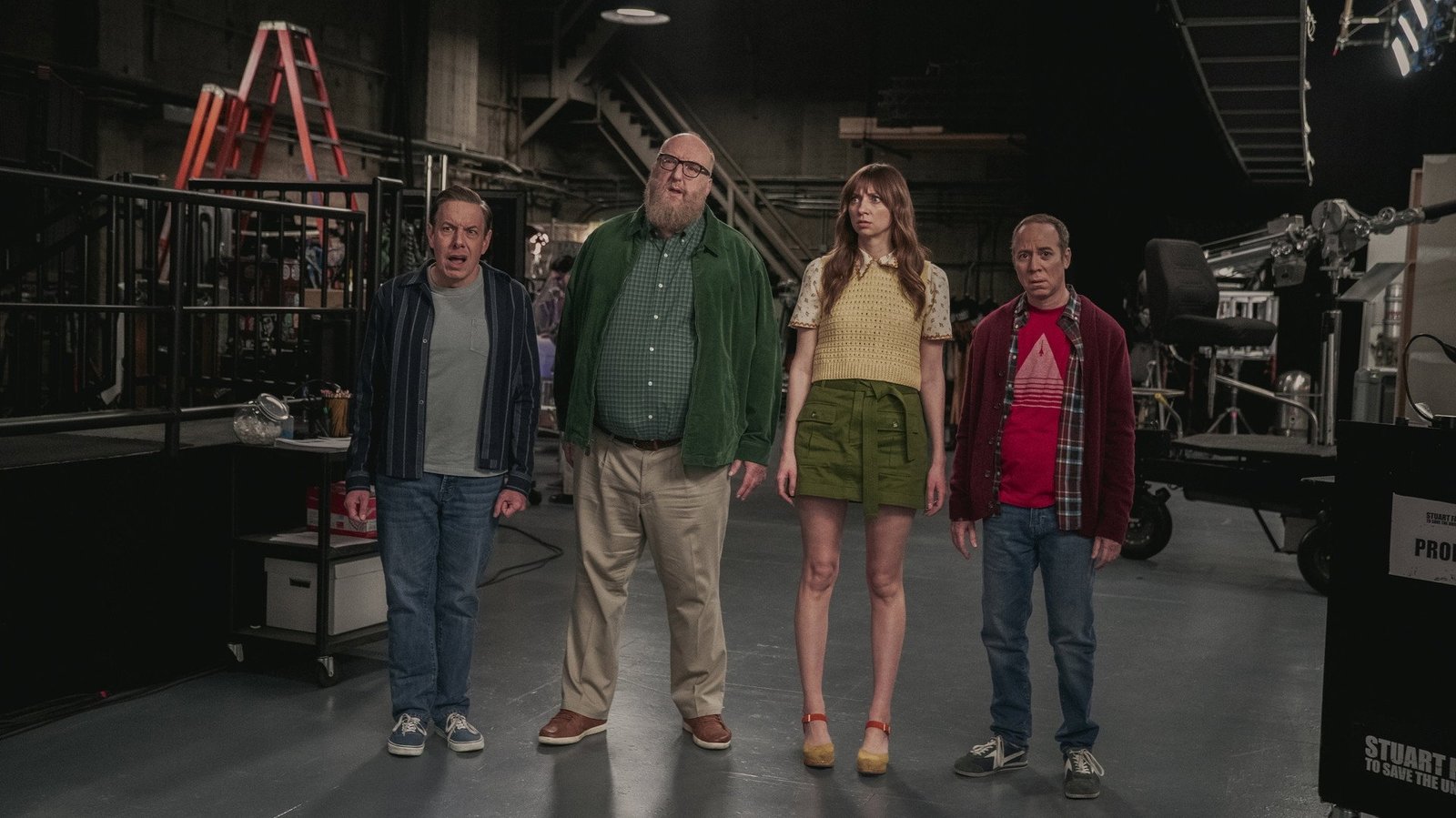
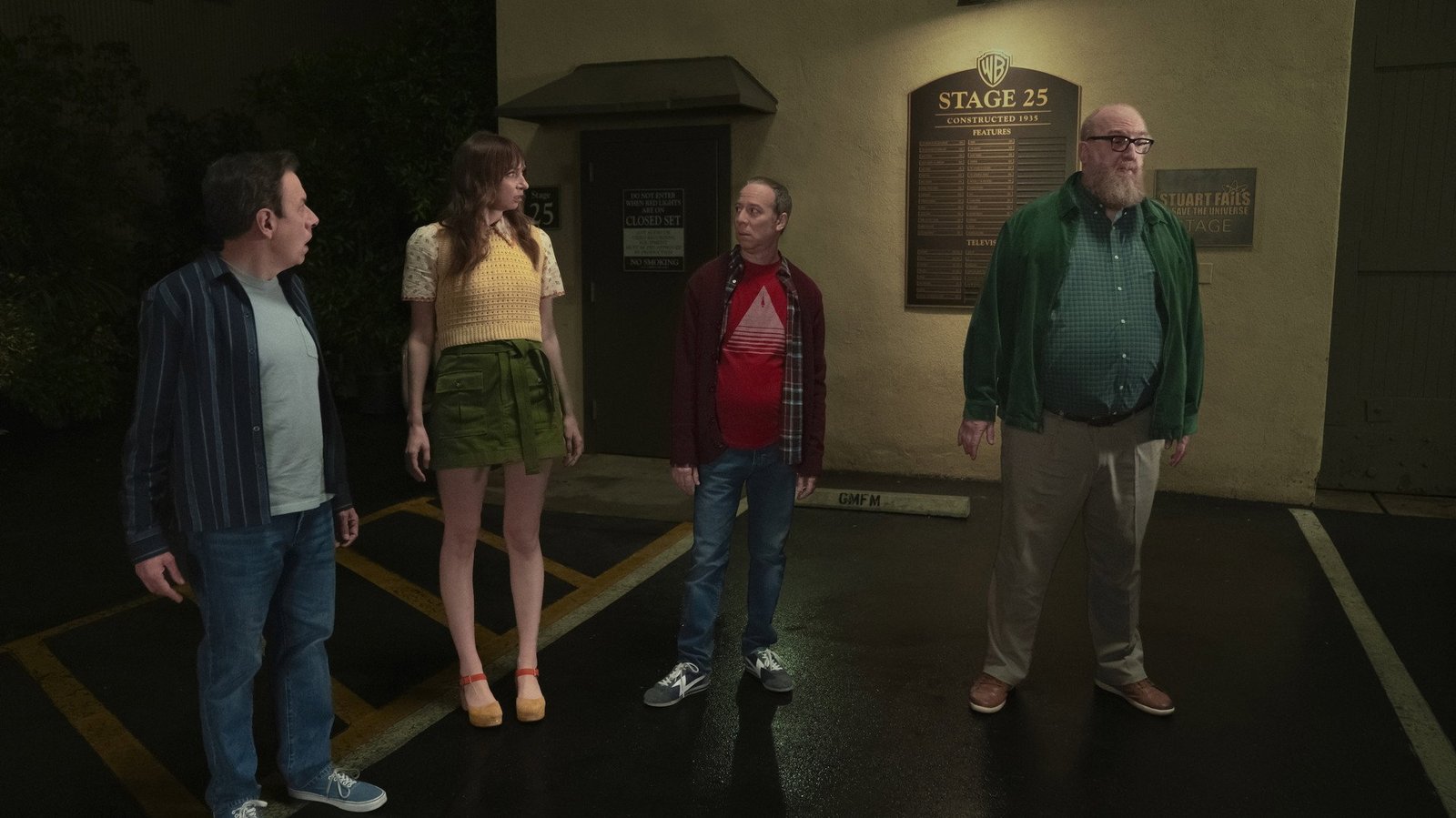
Then comes the image the whole season was building to. Stuart, Denise, Kripke and Bert step through the set and watch a curtain call. On stage, taking their bows in front of a live studio audience, are Sussman, Lapkus, Bowie and Posehn, so the characters are looking at the actors who play them. The cast has called filming it one of the most surreal things they have done, and it plays that way on screen.
Here is why that matters for the franchise. “The Big Bang Theory” was one of the last great multi-camera sitcoms. It ran for twelve seasons and 279 episodes, taped in front of an audience on the Warner Bros. lot. The spin-offs have bounced between formats ever since. “Young Sheldon” went single-camera, and then “Georgie & Mandy’s First Marriage” went back to a live audience and joked about the switch in its very first cold open, with Georgie explaining that “Frasier” is a “laughin’ show”. This show went single-camera again. So when its finale switches formats, it is not just a gag. It is the spin-off pointing at the show it came from and asking what that show actually was.
The answer the episode gives is surprisingly melancholy. The group does not use an escape device, because they no longer have one, and they simply walk off the soundstage together and out into the night. That is growth for Stuart, who has spent the season panicking, but it is also a strange place to leave four people. They have just learned that someone somewhere is filming their lives for laughs. One reviewer summed up the question the finale leaves: what is the point, if none of it is real?
Lapkus has offered a less bleak reading. She has suggested the sitcom reality may be just another alternate universe rather than proof that they are fictional, and that fits the show’s own rules. Stuart has been hopping between versions of reality all season, and a world where he is a TV character is just one more version. It also keeps the door open for the multiverse story to continue in season two.
There is a lot left hanging for season two. Stuart still does not know why the universe picked him. Someone has been sending the gang cryptic hints all season, and nobody knows who. Kyle has been left behind in a frozen comic book store, and he also showed them a comic of themselves underwater, with gills, which he said had not happened yet. And the Adversary is still out there. Chuck Lorre and Bill Prady have said they have not fully mapped season two out yet.
The renewal came early for a reason. HBO Max handed the show a second season four weeks into its ten-episode run, and the company said the first season was its second-biggest comedy launch ever worldwide. That is a remarkable number for a spin-off built around a supporting character who ran a comic book store, and it explains why the finale felt free to take a risk this large. A show that is still fighting for its life does not dismantle its own set in the last episode. A show that already knows it is coming back can afford to.
Not everything works. The episode leans hard on the audience knowing “Big Bang” inside out, and some of the sitcom jokes only land if you remember how that show was shot. The Adversary is also more of an idea than a character so far, and a swirling cosmic force is hard to fear on a sitcom budget. But the finale’s central trick is strong enough to carry those weaknesses, and it gives the season a real ending rather than a pause.
The bigger point is what this says about the franchise. Chuck Lorre has now spun “The Big Bang Theory” into three shows, and this is the first one to turn the original’s format into the plot itself. That is a riskier path than “Young Sheldon” took, and after this finale it also looks like the more interesting one. Season two now has to decide what Stuart does with the knowledge that his universe has a studio audience.
What Do You Think? Was the switch to a multi-camera sitcom the right way to end the season, or too inside a joke for casual viewers? Is the sitcom world proof that Stuart and the gang are fictional, or just another universe in the multiverse? And who do you think has been sending them those cryptic hints all season?
Catch up properly: every show in the Big Bang Theory universe in chronological order on our Timeline Hub’s Sheldon-verse timeline.
See you on the next binge!