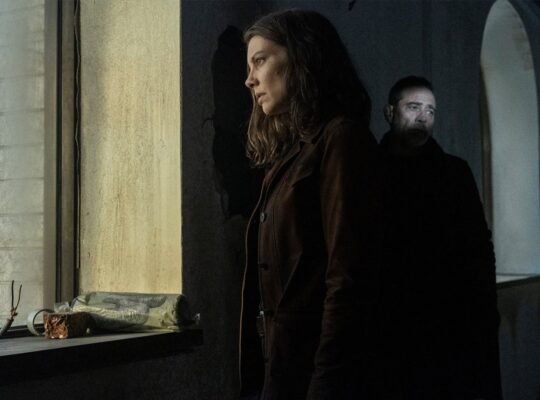

The Walking Dead has spent sixteen years insisting that the world ended and nobody gets it back. On Sunday night it spent an hour taking that back. “Genesis”, the sixth episode of “Dead City” season 3, drops the apocalypse entirely and runs a full hour in a New York where the outbreak never happened, where Christmas markets are busy, where Maggie Greene (Lauren Cohan) and Negan (Jeffrey Dean Morgan) have never met, and where Beth Greene (Emily Kinney) is alive, in her twenties, and singing in a bar in Brooklyn. It is the strangest hour this franchise has produced and it is also, unexpectedly, one of the warmest.
The way it gets there is the best joke the show has told in years. We pick up exactly where episode 5 left us, with Negan having just killed Fabian and gone to work on Dillard’s pet walker, and Dillard approaching the door. You brace for more of it. The door opens, and it is Beth. That is the cut. No dream frame, no coma, no white light, no explanation offered then or later. The show simply changes worlds mid scene and dares you to keep up. Warning beyond this point there are full spoilers for “Dead City” season 3 episode 6, including the ending and what it sets up for the finale.
It is the strangest hour this franchise has produced and it is also, unexpectedly, one of the warmest.”
Beth in this world is a working singer, and the show is careful not to make her a saint about it. She meets Maggie in a park, and the conversation between them is not a reunion, because in this reality they were never separated. It is just two sisters catching up, which is somehow worse to watch. Their father Hershel is dead here too, of ordinary causes, and the family farm in Georgia is the thing pulling at Maggie. Beth’s advice is blunt: sell it, stop handing your entire life to a piece of land, go build something that belongs to you. Cohan plays Maggie’s resistance to that as something close to grief, which it is.
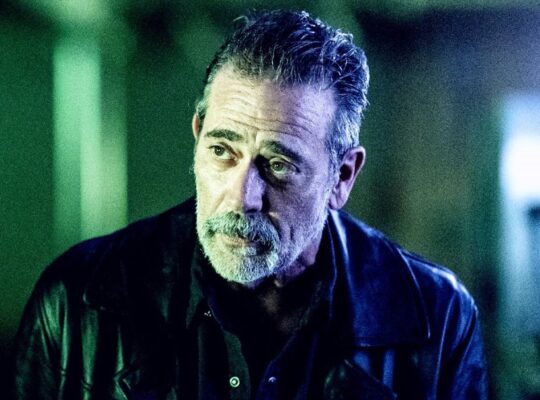
Then Maggie walks into a diner and meets a stranger. He clocks the Southern accent, he introduces himself, and he is immediately, exhaustingly charming in the specific way Negan is always charming right before he becomes a problem. There is no menace in it here, and that is the disorienting part. Morgan gets to play the character as a guy in a coat who talks too much, and the audience has to sit with the fact that this is recognisably the same man. He is nosy, he is funny, and he decides within about ninety seconds that Maggie is not getting on her flight home.
What follows is essentially a romantic comedy, and the show commits to it completely. They eat roasted chestnuts at a Christmas market. They end up at a restaurant where he reads through her business plan for the farm and tells her, kindly and correctly, that the numbers do not work. They go to a batting cage. Morgan has said in interviews that he called this their Hallmark episode and that he hit every ball pitched at him, a claim the footage does not entirely support. The whole stretch is shot like a first date, in a franchise where the last first date ended with somebody’s skull.
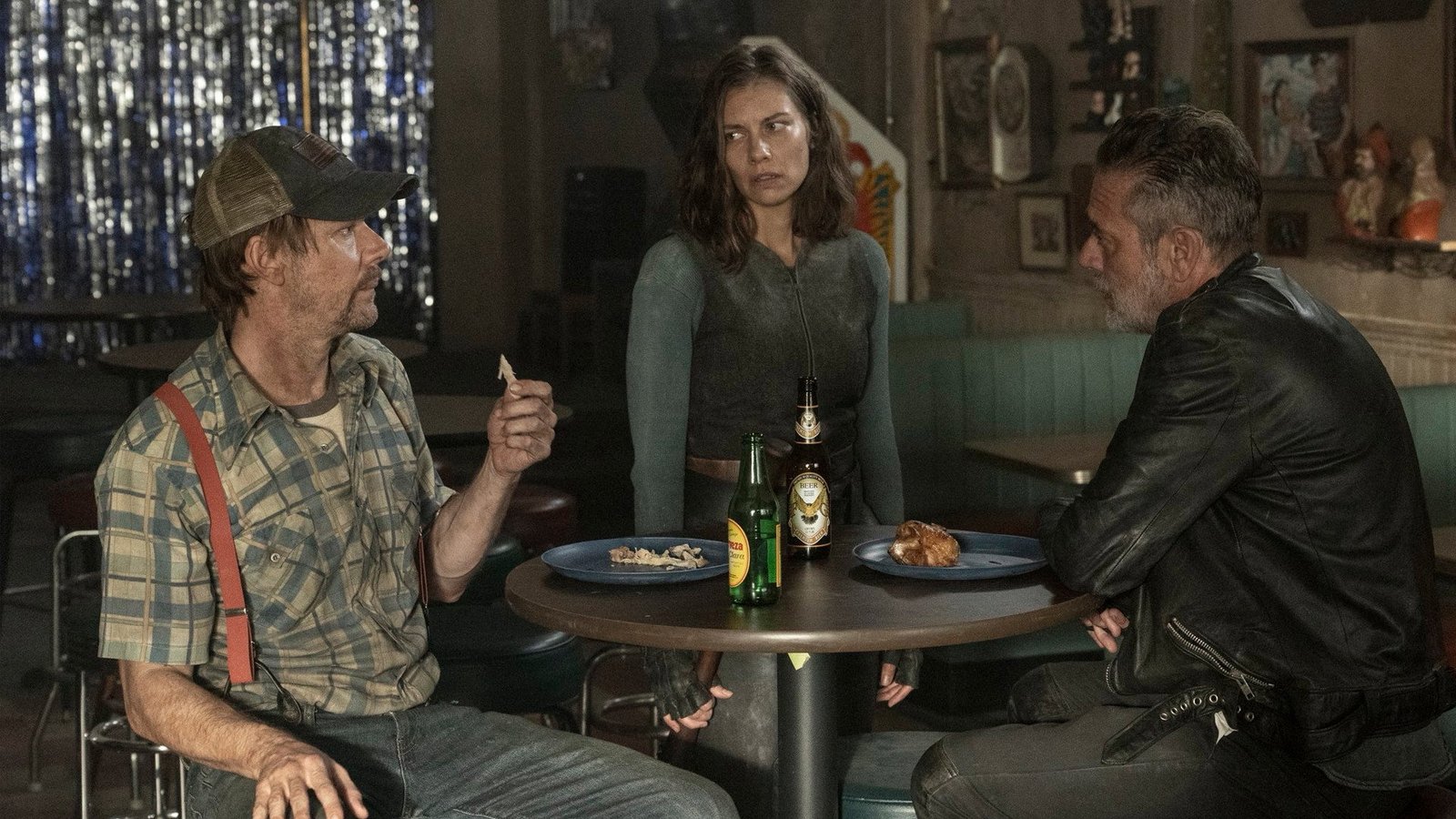
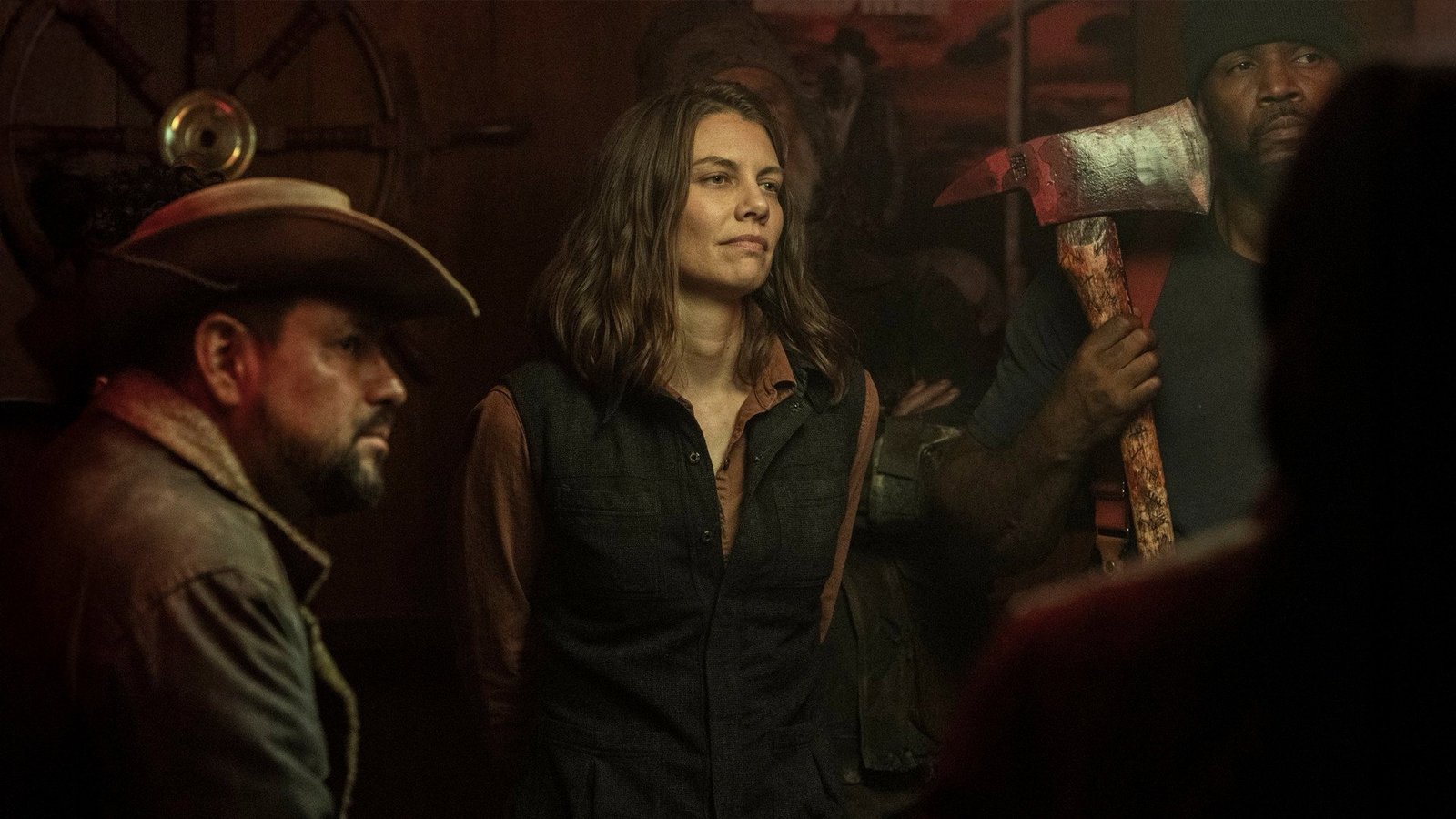
Underneath the charm, this Negan is still carrying something. He tells Maggie about a girl he used to coach and about a man named Alan who hurt her, and about what he did to Alan afterwards, which was violent enough to cost him years of his life. He is not in New York by accident. He came back to kill Alan, he is carrying a gun, and he hands that gun to Maggie for safekeeping in one of those gestures that reads as trust and is actually a confession. He also mentions, almost in passing, that he has a son he never sees. The specifics of his life here vary depending on which recap you read, so we are leaving the job title and the details of the sentence out of it, but the shape is consistent everywhere: a man who did something unforgivable for a defensible reason and lost everything anyway. Which is, of course, the entire character.
The episode’s thesis arrives via a fortune teller at the Christmas market, and it should be unbearable and somehow is not. She reads Maggie first and tells her she has been to this city before in another life. Then Negan sits down and she reads them together, and the answer is a karmic bond: these two are tied to each other and will keep finding each other across every version of their lives. In a lesser hour that is a groan. Here it lands, because we have watched the other version. We know what these two do to each other when the world ends. The show is arguing that Maggie and Negan were always going to collide, and that the apocalypse only decided which shape the collision took.
Beth’s set is the centre of the hour. Kinney has said the script she first received simply read that Beth sings a folk song, with no song chosen, and that when production asked whether she had ideas she pitched one of her own, a track called “Reasons to Stay Alive” that she released in 2023. She has said the lyrics lined up with the episode so precisely she felt she had to put it forward. On screen the performance becomes the sisters’ scene: a song the Greene girls know, played in a room where nobody has died. If you have carried Beth’s death around since 2014, this is the part of the episode built specifically at you.
And then Negan spots Alan in the crowd. He takes the gun back out of Maggie’s bag and follows him outside, and the show finally lets the temperature drop. He wants a confession. Alan will not give him one, and instead says something about Maggie, and Maggie punches him in the face before Negan can do anything at all. The two of them laugh about it afterwards, and it is the single most Maggie and Negan moment in an episode where they are supposed to be strangers.
Here is where we have to be straight with you: the accounts differ on what happens next. Some recaps have the hour ending with Negan firing at Alan in the street. Others have Maggie’s punch defusing it and the pair getting away before he can follow through. Watching it, the ambiguity feels deliberate rather than sloppy, and the show cuts before it owes you an answer. What is not ambiguous is the landing. Maggie gets word that her farm plan has been approved after all, reconsiders selling, and says the line the entire hour has been loading: maybe what she wants can wait a little longer, since it is not as though the world is ending tomorrow. Then we are back in Manhattan, in the real timeline, and her son Hershel (Logan Kim) is telling her that Negan has killed Fabian and left Dillard badly hurt.
Showrunner Seth Hoffman framed the whole exercise as a question rather than a gift: are these people better off for having gone through the apocalypse than they would have been without it? “Genesis” refuses to answer cleanly, and that is why it works. The alternate Maggie is lighter and less certain. The alternate Negan is charming and still dangerous. Beth is alive and it costs nothing and means nothing, because none of it is real, and the episode knows that. What it actually does is reload the last two hours of the season. We have just spent sixty minutes watching Maggie and Negan choose each other in a world with no blood between them, and now “Hourglass” and the finale “Tenebrae” have to deal with the two who have plenty. On the evidence of the episode 7 trailer, that goes about as well as you would expect.
What Do You Think? Did the alternate reality hour earn its sentiment, or does bringing Beth back in a world that does not count cheapen the death the show spent a decade honouring? Is Hoffman right that the apocalypse might have made Maggie and Negan into better people than peacetime would have? And after the karmic bond reading, do you read the finale as these two finding each other again or finally destroying each other?
Catch up properly: every Walking Dead episode, movie and spin-off in chronological order on our Timeline Hub’s Walking Dead timeline.
See you on the next binge!