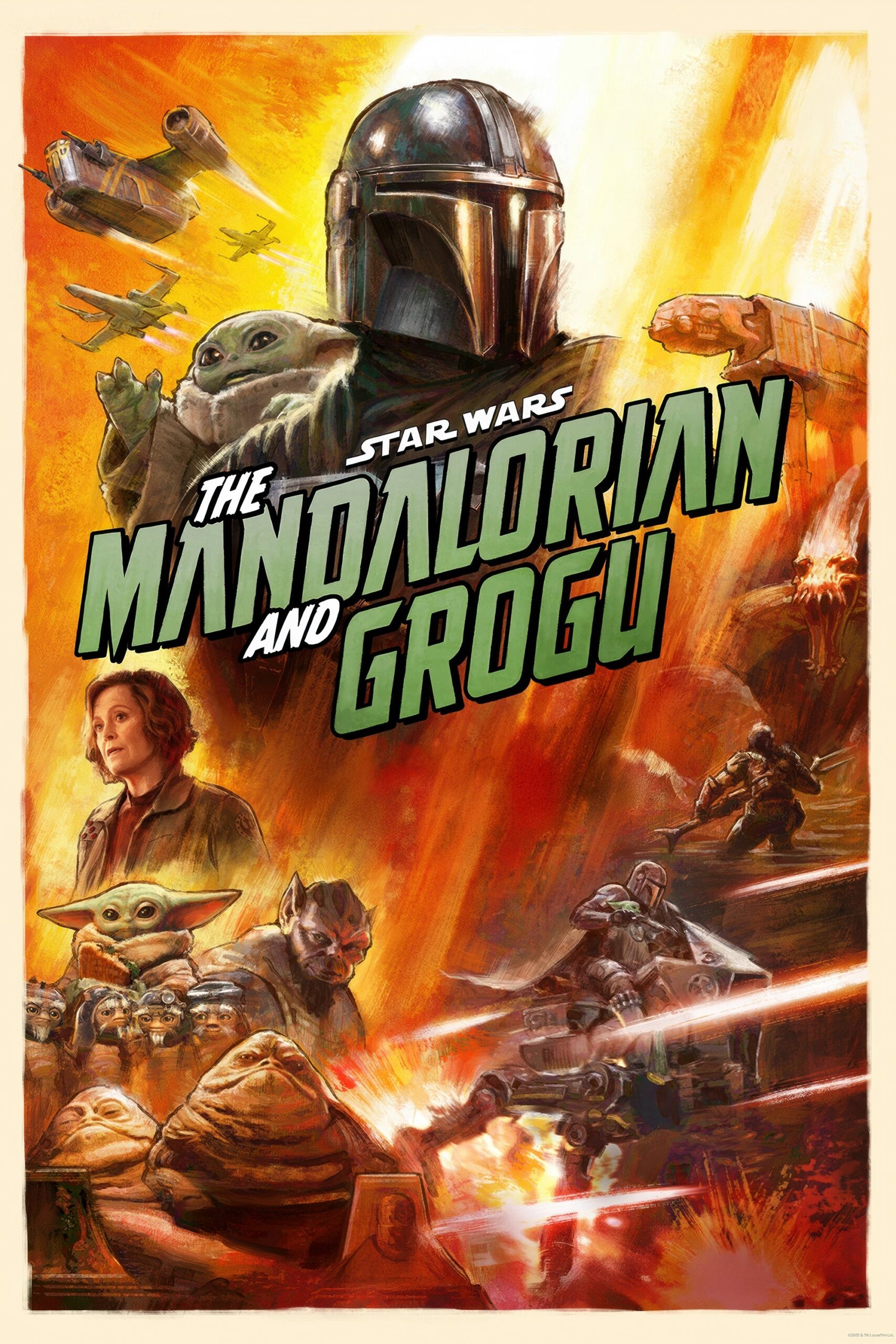
The numbers are in, and they tell a story with two very different endings depending on where you stand. “The Mandalorian and Grogu” opened to roughly $102 million across the four-day Memorial Day frame in North America, with about $82 million landing in the traditional three-day window, and another $64 million overseas for a global start near $165 million. If you are Disney’s accounting department, that is a real result for a film built from a streaming property. If you are a Star Wars historian, it is a flashing yellow light, because that four-day figure lands as the softest launch for the franchise since Disney bought Lucasfilm in 2012.
The comparison writing itself is the one nobody at Lucasfilm wanted. The previous Disney-era floor belonged to “Solo: A Star Wars Story”, which opened to $84 million over its three-day weekend and $103 million through the Memorial Day holiday back in 2018. “The Mandalorian and Grogu” has essentially matched that holiday number eight years later, without adjusting for ticket-price inflation, which means in real terms it is running a hair behind the film whose failure triggered the seven-year theatrical shutdown in the first place. History does not repeat, but it absolutely rhymes, and this rhyme is uncomfortable. Warning beyond this point there are spoilers for Star Wars and box office context and franchise strategy following ‘The Mandalorian and Grogu’.
History does not repeat, but it absolutely rhymes, and this rhyme is uncomfortable.”
Now let us complicate the doom narrative, because the BR team does not believe this is a Solo situation, and the reason is the audience score. Where “Solo” limped out with a fanbase that had already checked out after the previous entry, “The Mandalorian and Grogu” is posting an audience score in the high 80s, one of the warmest of the entire Disney era. That gap between a middling 64% critic score and a beloved audience response is the exact profile of a film with legs. Movies audiences love and critics shrug at do not crater in weekend two. They hold, and they play deep into the summer on family traffic.
The strategic read matters more than any single weekend, though. Lucasfilm made a choice to end the drought with its safest, most four-quadrant property rather than a risky saga swing, and a $165 million global start with strong word of mouth arguably validates that caution. The question is whether caution is a strategy or a symptom. A healthy franchise opens a TV-graduate movie to these numbers and calls it a soft launch of a new theatrical era. A nervous franchise opens its most bankable property to these numbers and quietly wonders what a non-bankable one would have done.
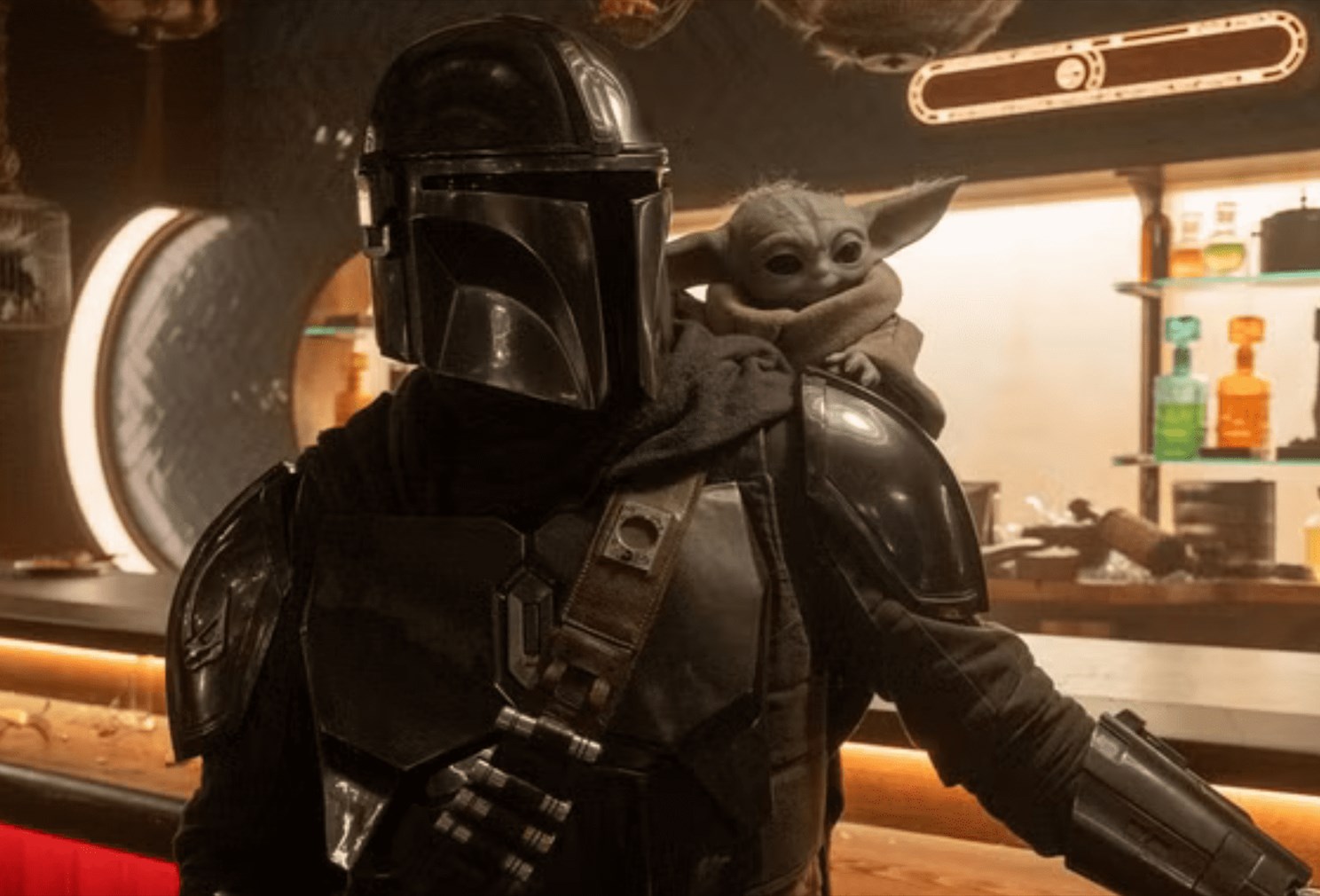
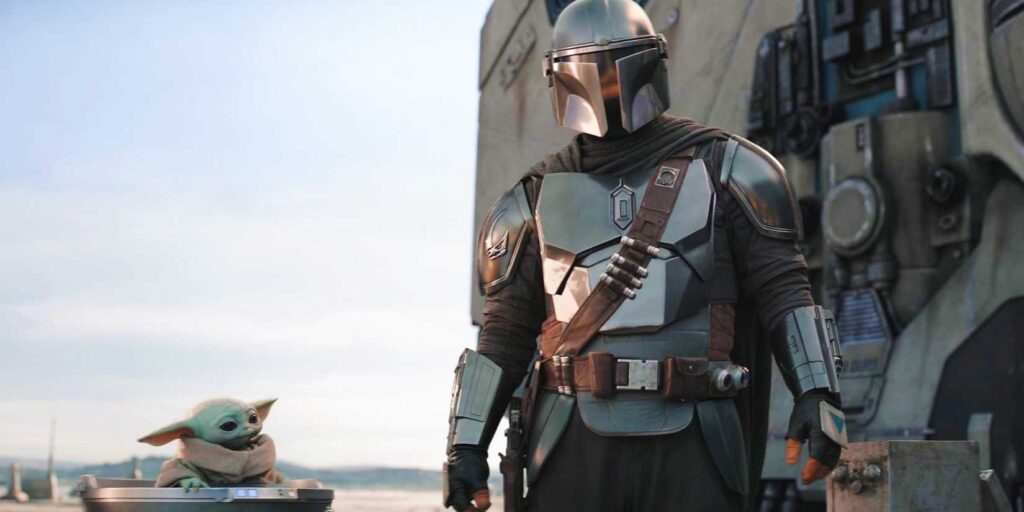
Din Djarin (Pedro Pascal) and his small green ward were always going to be the least risky way back into theaters, and that is precisely why the number carries weight. This was the layup. The reboot of the theatrical program was handed to the one property with a built-in family audience and a merchandising juggernaut for a co-lead, and the layup went in without swishing. What that says about the harder shots on the calendar, the saga films, the new-character gambles, is the conversation happening in every studio tracking meeting this week.
There is a production-economics wrinkle worth flagging, too. Because this film leaned on the volume stage and the established Mandalorian pipeline, its budget reportedly ran leaner than a typical saga entry, which changes the profitability math considerably. A $165 million global opening against a disciplined budget is a very different financial picture than the same number against a $300 million saga tentpole. Disney may lose the bragging-rights battle on the opening figure while comfortably winning the war on return. In the streaming-to-theatrical playbook, that trade might be the entire point.
For fans planning their summer, the practical takeaway is simple: this one is going to be around a while. High audience scores plus family demand plus a thin competitive field until the animated heavyweights arrive means “The Mandalorian and Grogu” should hold screens well into June. If you skipped the crowds this weekend, you are not going to miss it. The bigger question is not whether you will get to see it, but what Lucasfilm learns from a launch that succeeded and disappointed at the same time.
Our honest verdict on the weekend: this is neither the triumph the marketing wanted nor the disaster the headlines will imply. It is a base hit, a franchise proving it can still get on base after seven years on the bench, while quietly revealing it is no longer swinging for the fences. Whether that is prudence or fear depends entirely on what gets announced next. A confident Lucasfilm follows a base hit with a bold swing. We will be watching to see which one shows up.
It helps to remember how we got the drought in the first place, because the institutional memory here is short. After “Solo” underperformed in 2018, Lucasfilm did not just slow down, it froze, cancelling announced films, reshuffling directors, and retreating entirely to Disney+ for the better part of a decade. That overcorrection is the ghost haunting this weekend’s numbers. The fear is not that one movie made a soft $102 million. The fear is that a soft number triggers the same panic reflex and sends the franchise scurrying back to streaming for another five years. Confidence, not box office, is the fragile resource here.
The competitive calendar is the other half of the story, and it is not kind. The animated tentpoles of the summer are still ahead, and once they land, family audiences fracture across multiple options. That makes the next two weekends the whole ballgame for this film’s legs. Hold well, and it proves the streaming-to-theatrical bridge works. Drop hard, and the skeptics inside Lucasfilm win the argument about whether these shows belong in theaters at all. Every exhibitor in the country is charting this hold as a referendum on more than one movie.
What Do You Think? Does matching “Solo” numbers with vastly better word of mouth make this a comeback or a warning? Is building the theatrical relaunch around the safest possible property smart risk management or an admission that Lucasfilm has lost its nerve for saga-scale gambles? And with strong audience scores pointing to long legs, where does this film’s final gross need to land for Disney to greenlight the next theatrical swing with confidence?
Catch up properly: every Star Wars film and series in chronological order on our Timeline Hub’s Star Wars timeline.
See you on the next binge!